
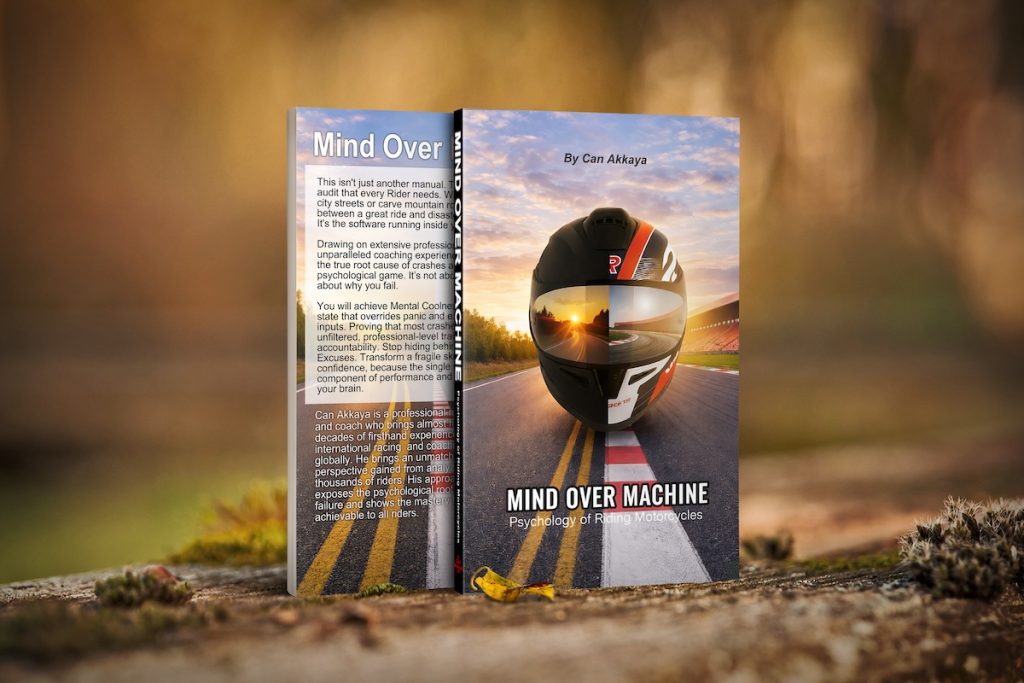

“Mind Over Machine” by Can Akkaya is the book that finally says what the motorcycle industry has been too comfortable to address — that the biggest threat to your safety on a sportbike is not your tires, your suspension setup, or your brake pads. It is your brain. The former FIM-licensed professional racer and founder of Superbike-Coach Corp has released what he calls a tactical autopsy of the industry’s failed safety culture, shifting the focus from mechanical hardware to the mental software of the rider. If you have ever frozen mid-corner, chopped the throttle in a panic, or ridden beyond your skill level because your ego told you to keep up with faster riders, “Mind Over Machine” was written for you.
What “Mind Over Machine” Addresses
“Mind Over Machine” argues that mental patterns — specifically fear, ego, and survival instincts — are the primary factors behind rider plateaus and accident rates, and that the motorcycle industry has historically prioritized hardware and physical drills while leaving the psychological dimension almost entirely unaddressed. Akkaya criticizes a culture that often prioritizes the aesthetic of speed over the reality of psychological competence, and the book is deliberately stripped of academic language and industry jargon. The narrative reflects the urgency of the track because, as Akkaya puts it, at the limit there is no room for sugar-coated theories.
The core topics in “Mind Over Machine” include the Locus of Control — shifting from external excuses to internal accountability in high-risk environments — the conflict between survival instinct and motorcycle physics, where natural human reactions often contradict what the bike actually needs from the rider, and ego management, analyzing the illusion of speed and its role in rider error. Each of these frameworks addresses a specific failure mode that mechanical training alone cannot fix.
The Superbike-Coach Foundation Behind “Mind Over Machine”
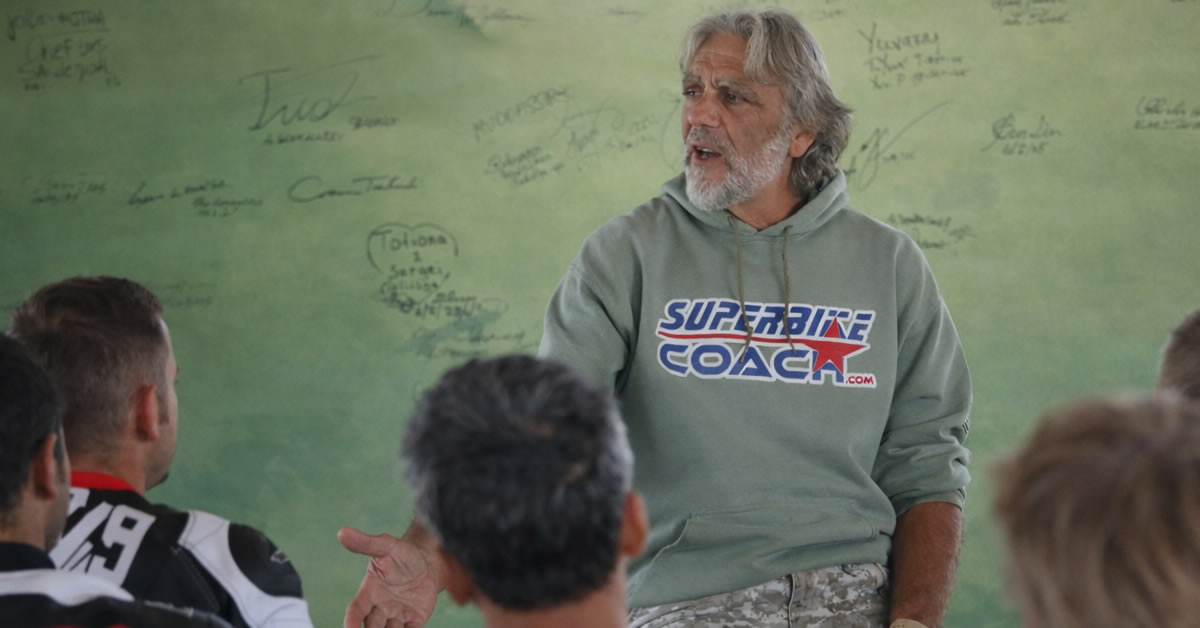
“Mind Over Machine” is not a theoretical exercise. It serves as the foundational text for the curriculum taught at Superbike-Coach Corp in Northern California, where Akkaya has built his “Defined Competence” philosophy through years of working with thousands of students. The school uses physics-based training to override hard-wired survival reactions like target fixation and mid-corner panic — the exact patterns that cause crashes when a rider’s brain overrides what their training should be telling their hands and feet to do. Programs ranging from specialized Wheelie Schools to Cornering Clinics serve as the real-world laboratory for the theories presented in the book.
Akkaya frames the problem with the kind of directness that his “Die Hard Honesty” coaching style is known for: he sees students every week who have the best gear and the fastest bikes but are paralyzed by a fear they cannot name, or worse, blinded by an ego that will not let them admit they are out of their depth. “Mind Over Machine” is about stripping that away so the real learning can begin. If you have been investing in faster machines and better hardware without addressing the software running between your ears, this book makes the case that you have been solving the wrong problem.
“Mind Over Machine”: Psychology of Riding Motorcycles is available now on Amazon in paperback, hardback, and eBook formats.

About The Author

1 thought on ““Mind Over Machine”: The Psychology of Riding Motorcycles”