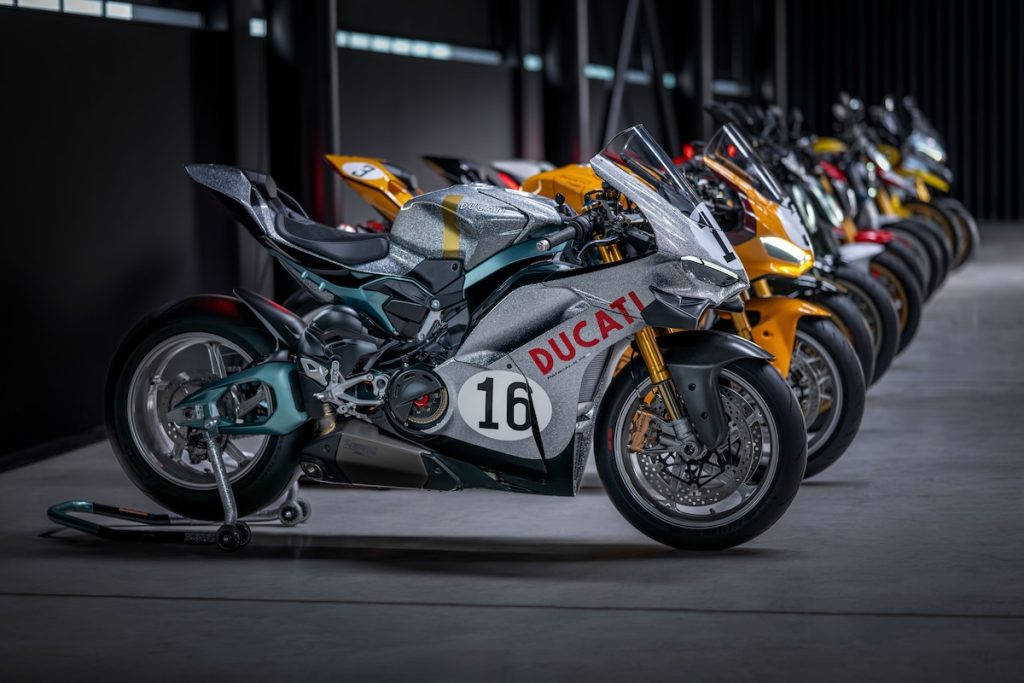

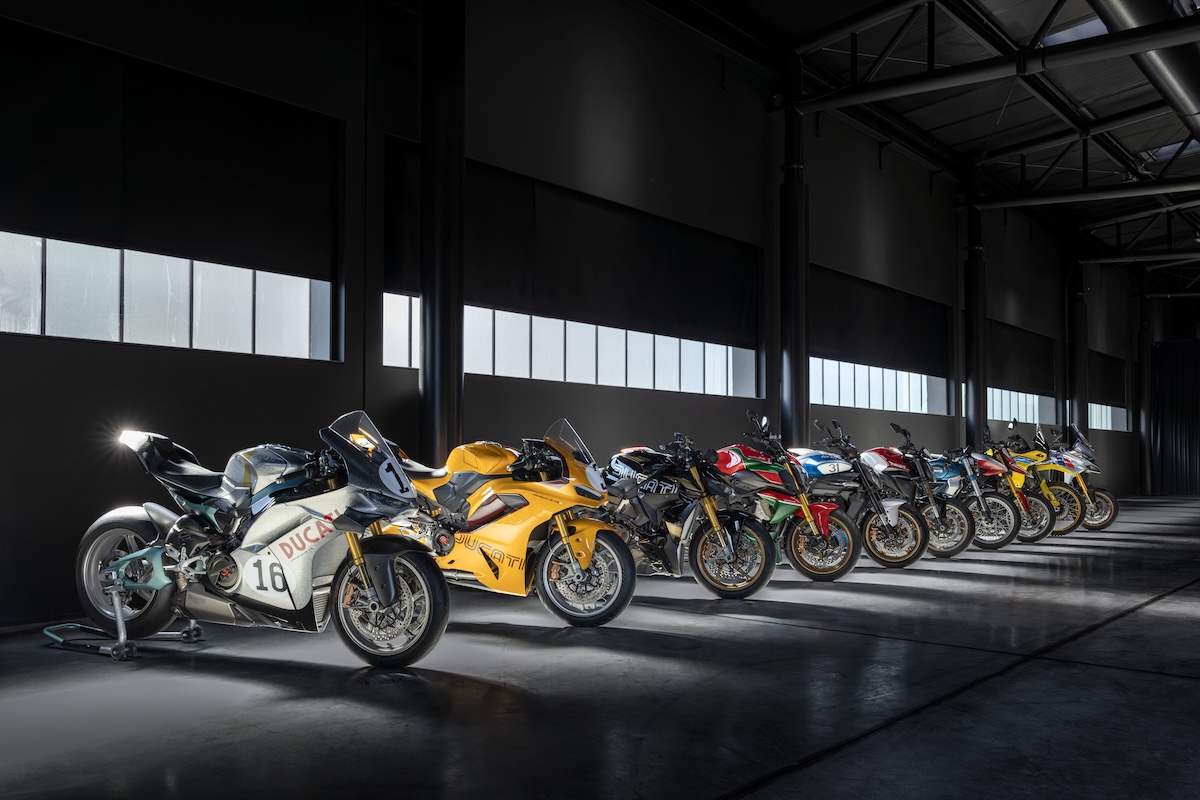
Ducati chose the Mugello straight to unveil the Ducati Collezione 100 — a centenary limited-edition collection — ten limited-edition motorcycles, each produced in a numbered series of just 100 units, each livery tracing back to a moment in the brand’s hundred-year history. The announcement came today, May 28, during the Italian MotoGP weekend, with Marc Marquez and Pecco Bagnaia on track aboard DesmosediciGP bikes wearing a combined Collezione 100 livery that merged all ten designs into a single fairing. The setting was deliberate: Mugello is where many of those pages were written.
The Ducati Collezione 100 follows the Superleggera V4 Centenario as the second major centenary release from Borgo Panigale this year, and it takes a fundamentally different approach. Where the Centenario is a single extreme machine, the Collezione is a collection — ten current production platforms, each reinterpreted through a historical lens, spanning the full range of what Ducati makes.
In This Article
What the Ducati Collezione 100 Is
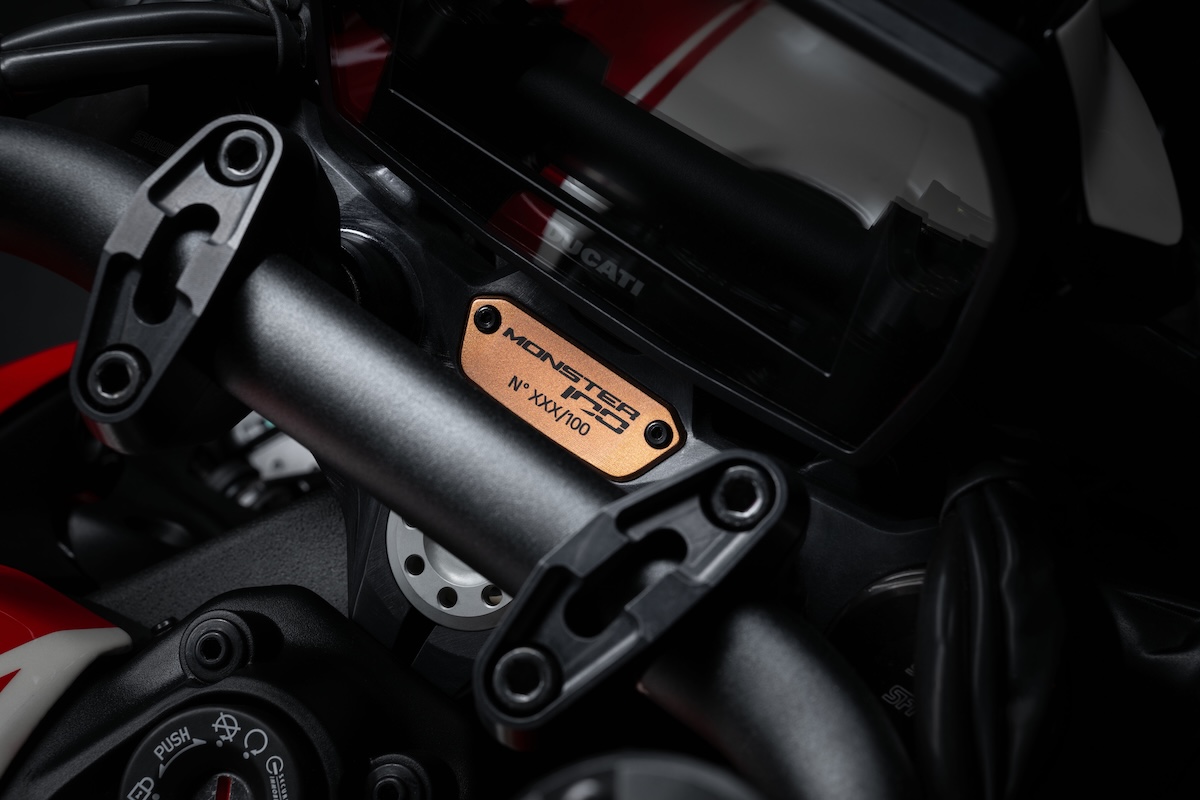
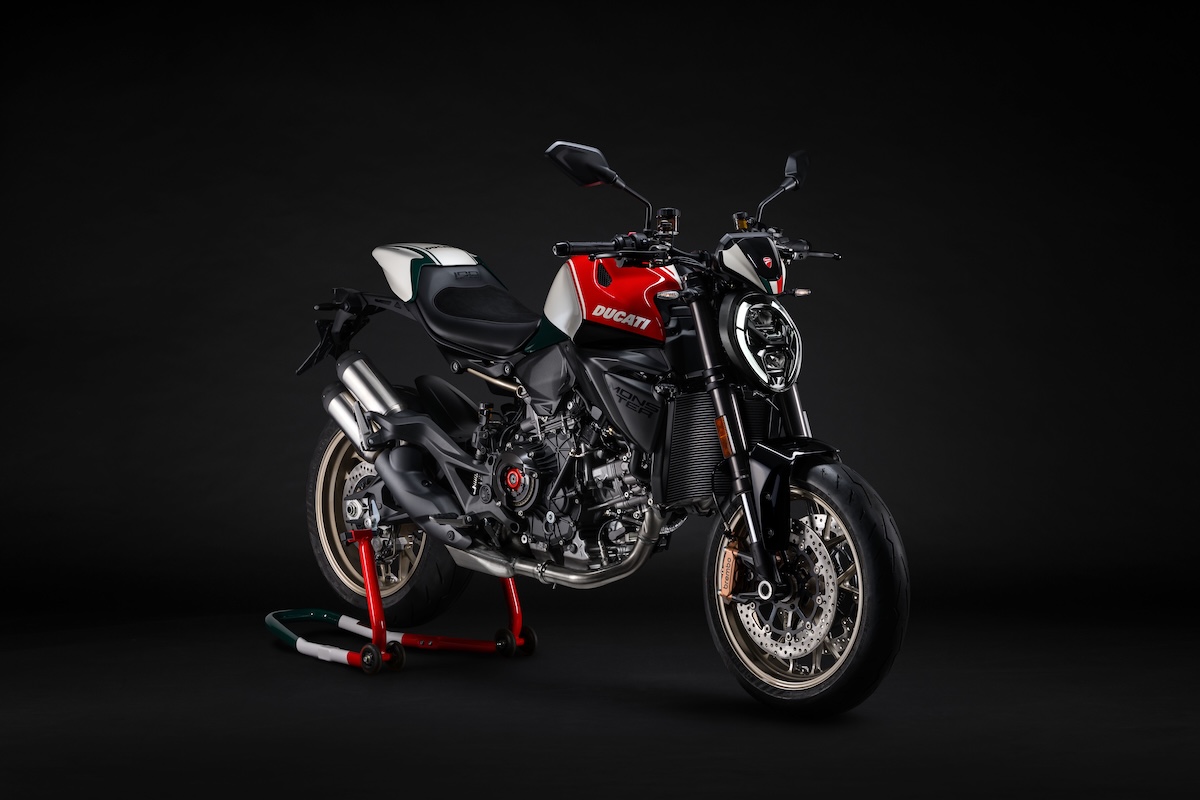
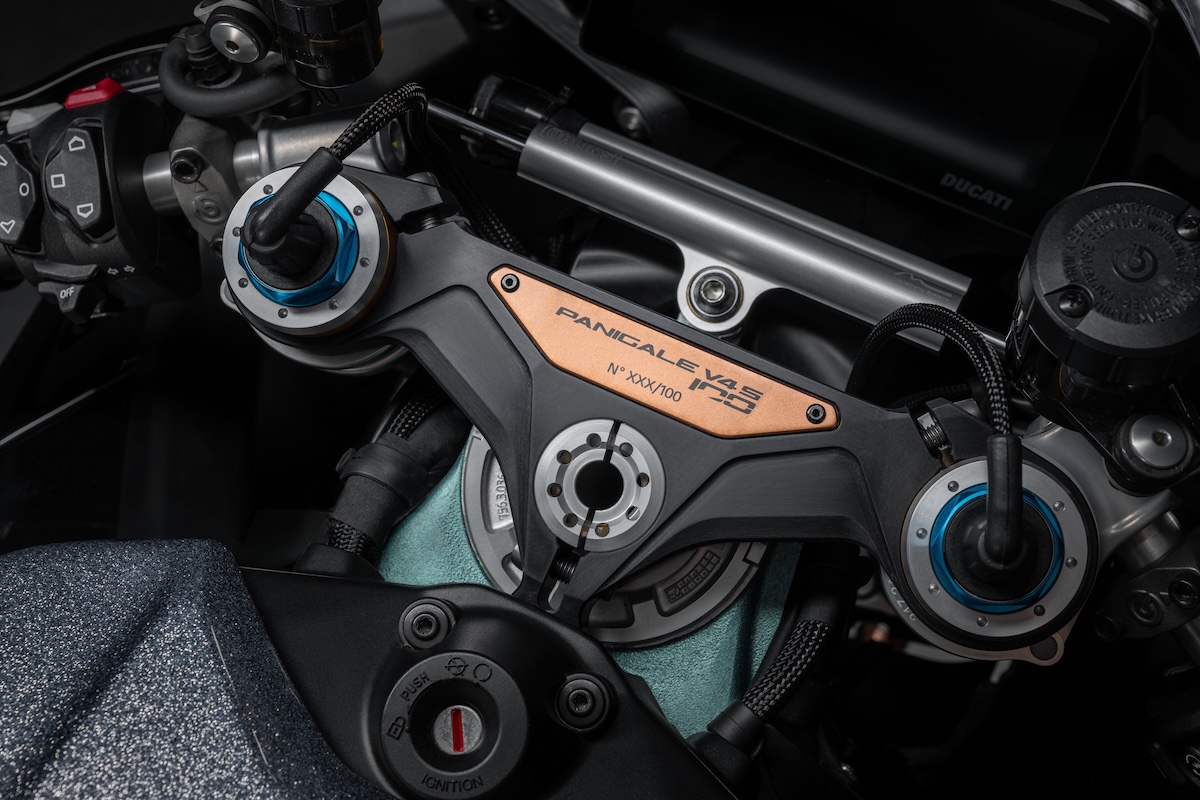
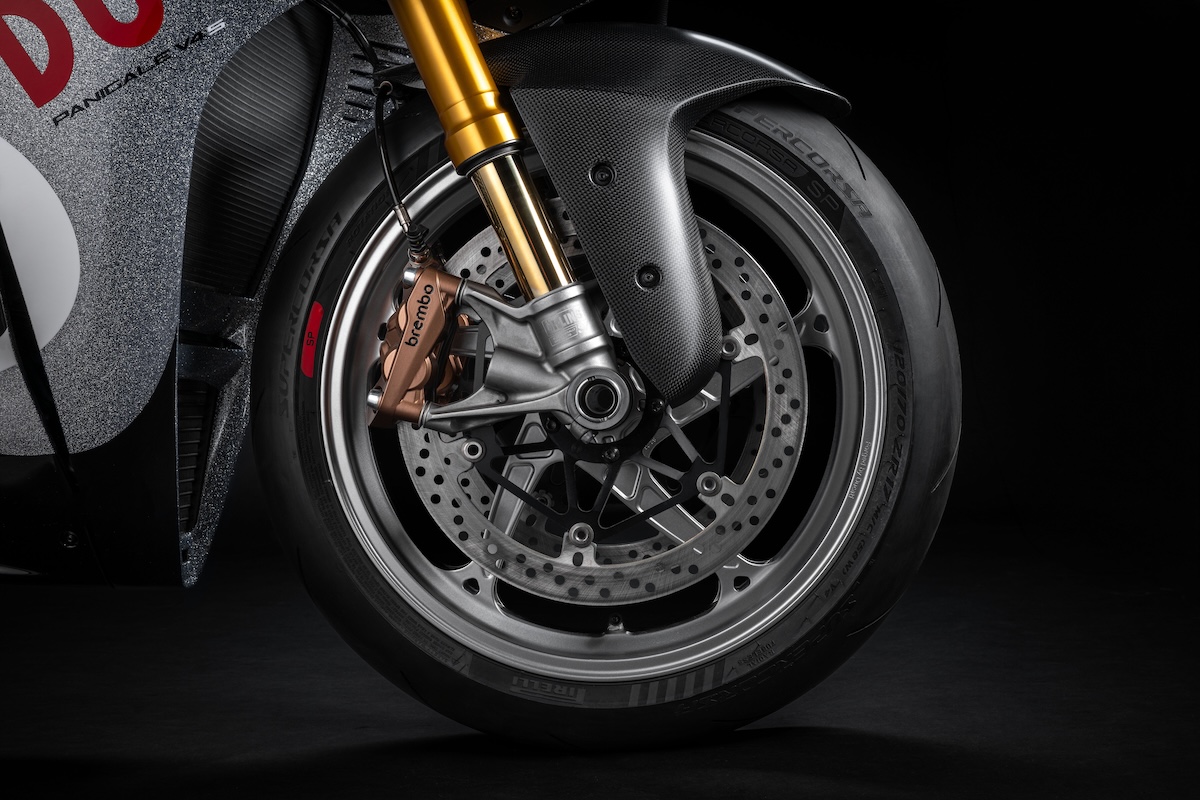
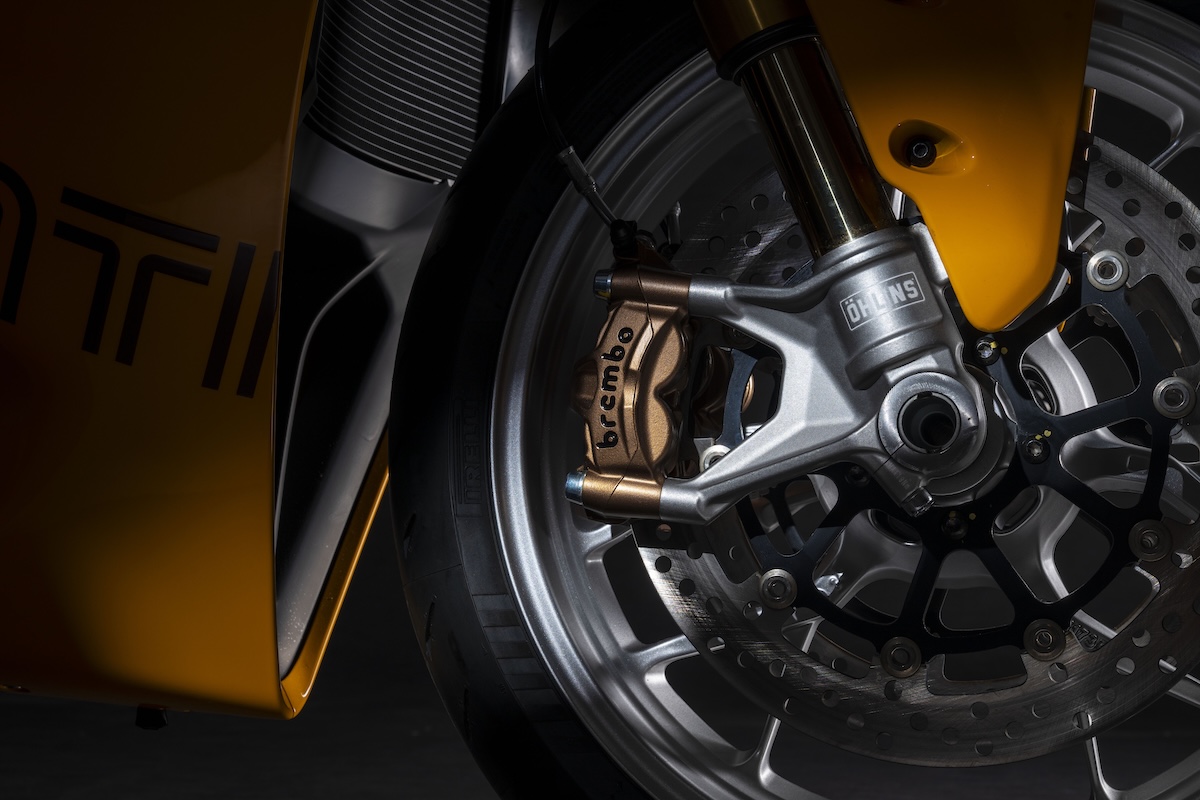
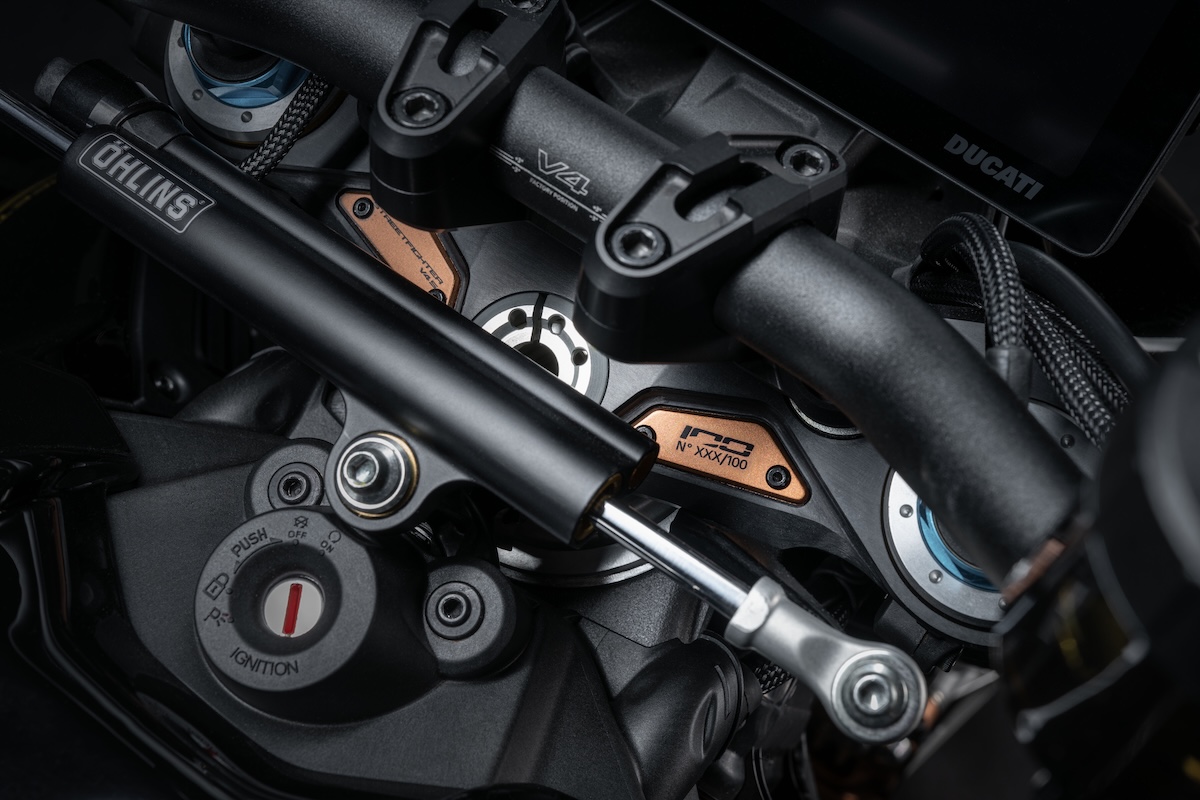
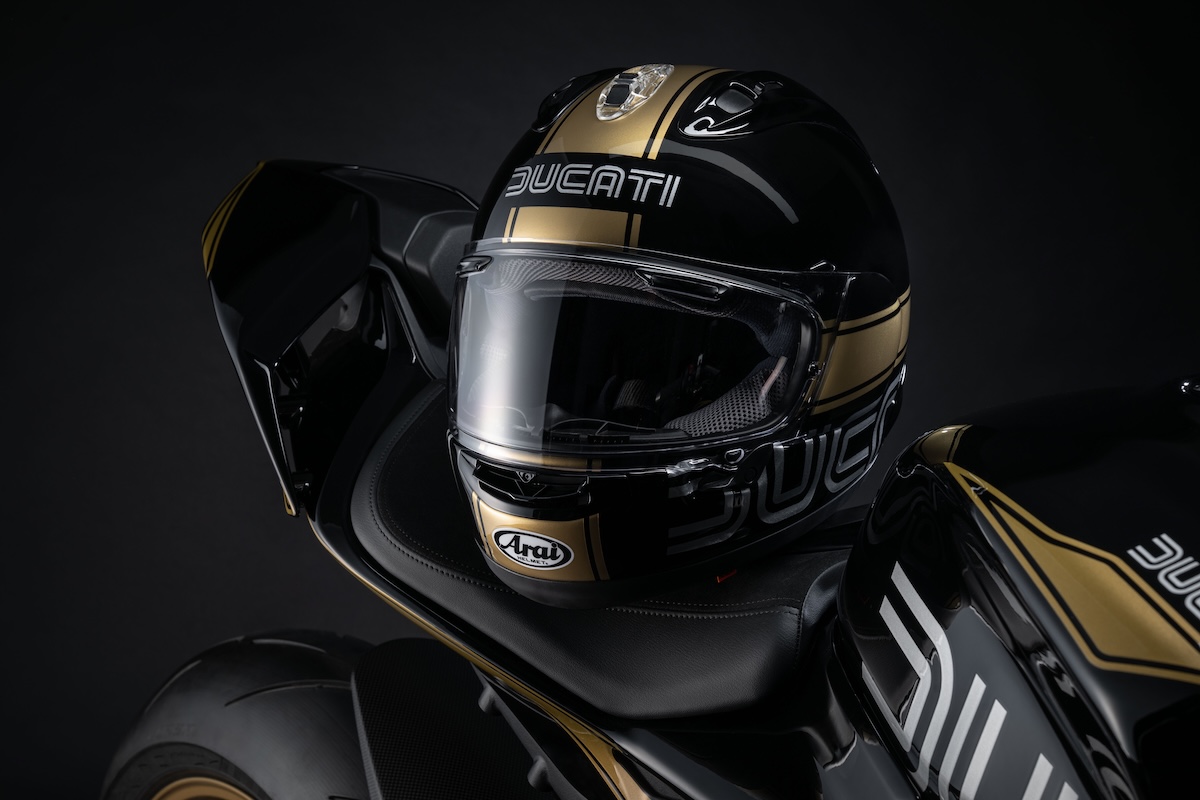
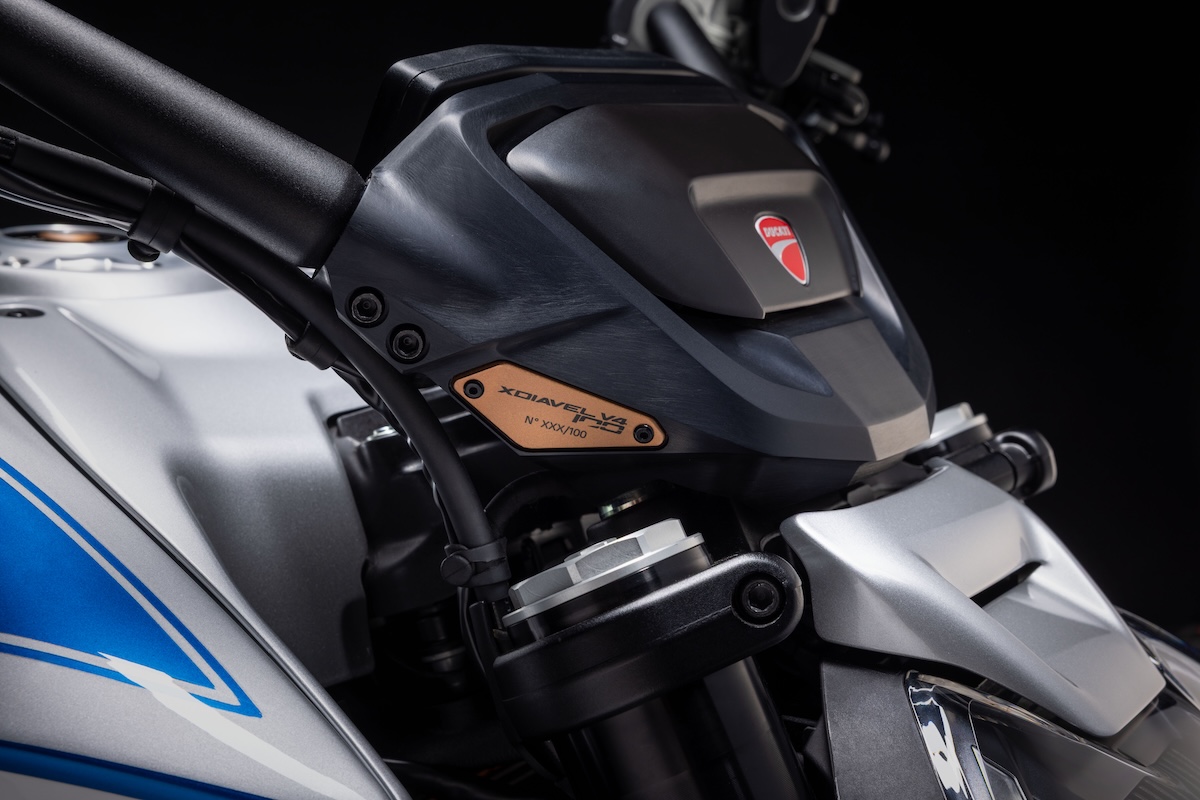
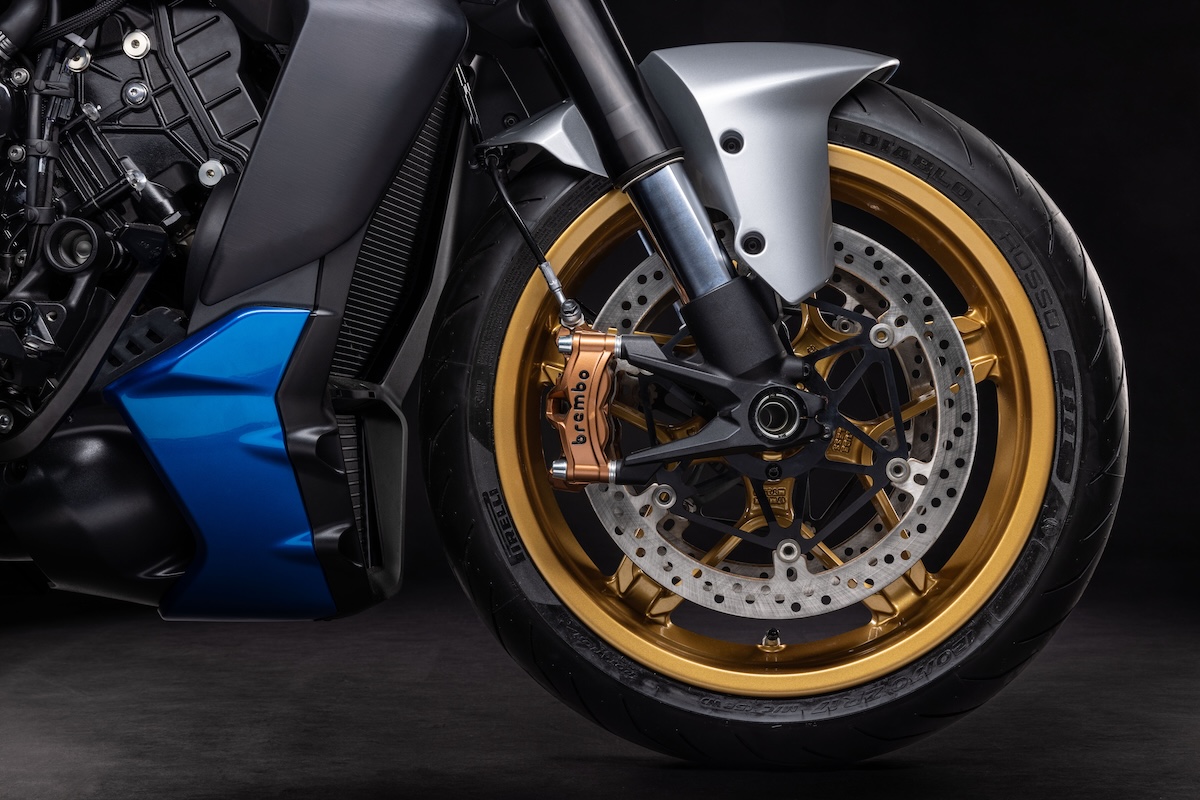
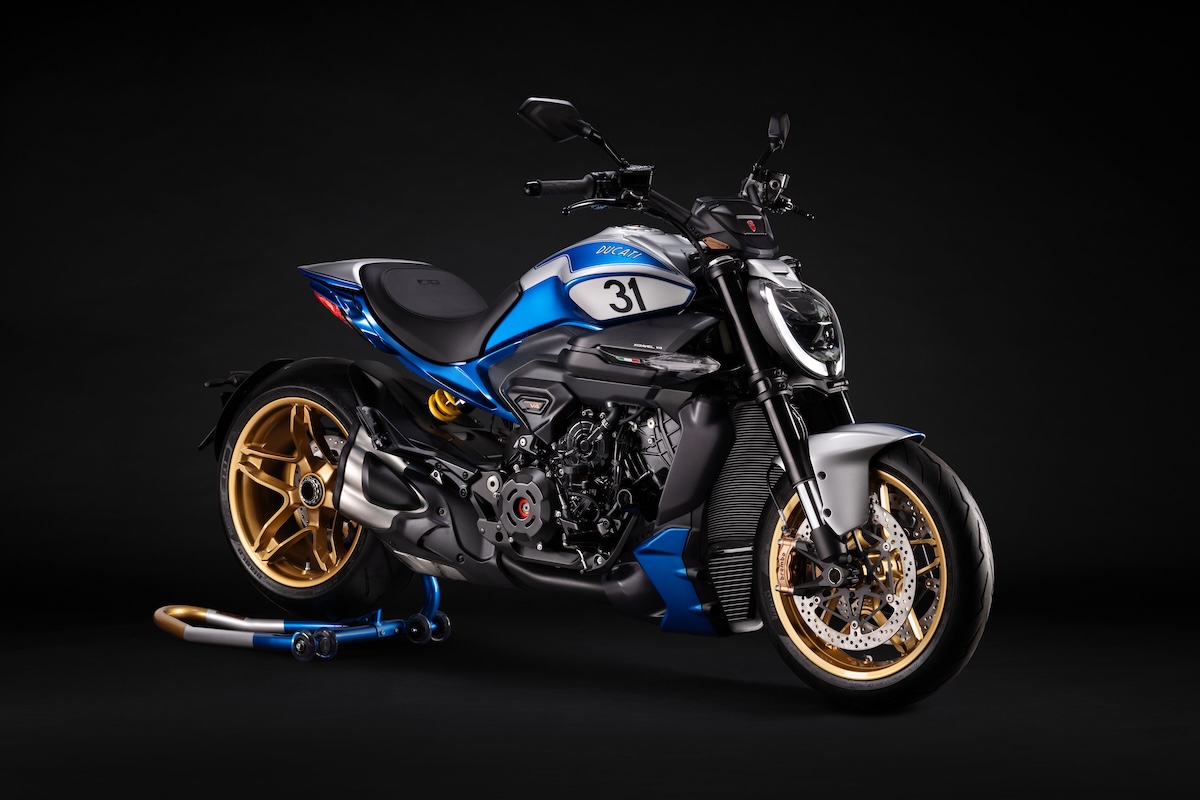
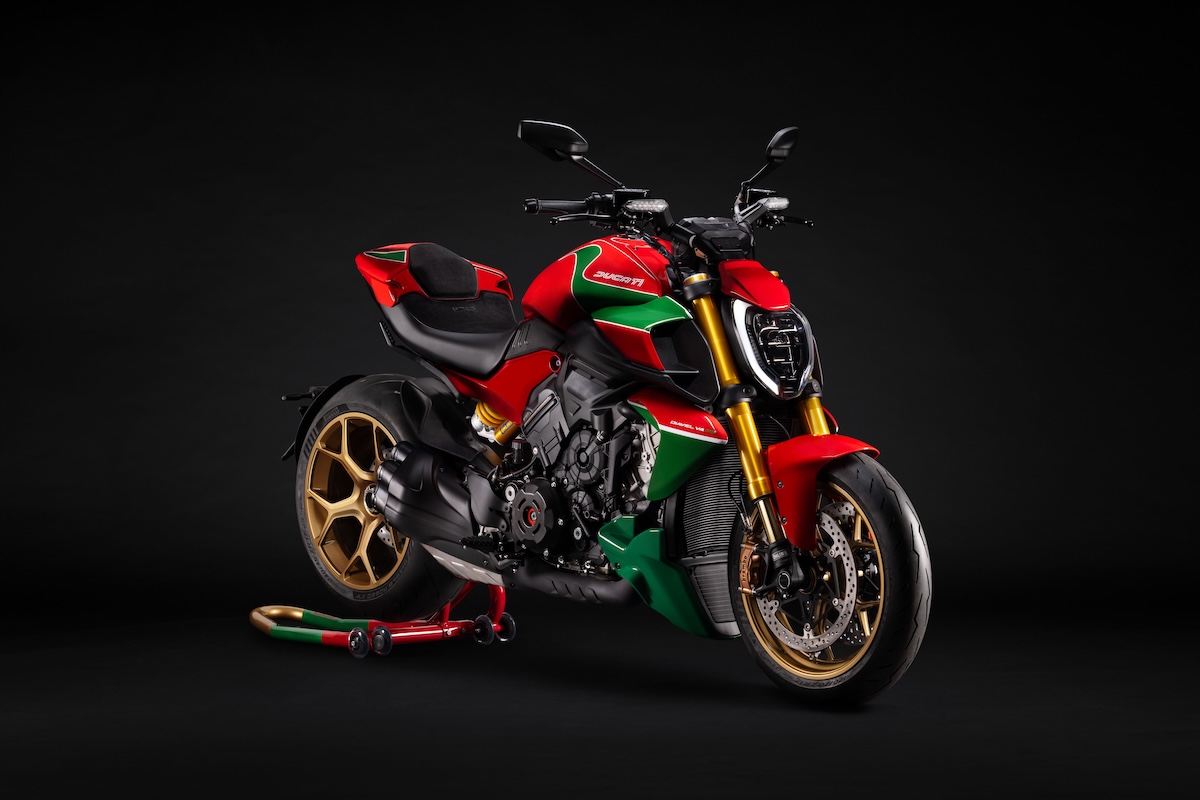
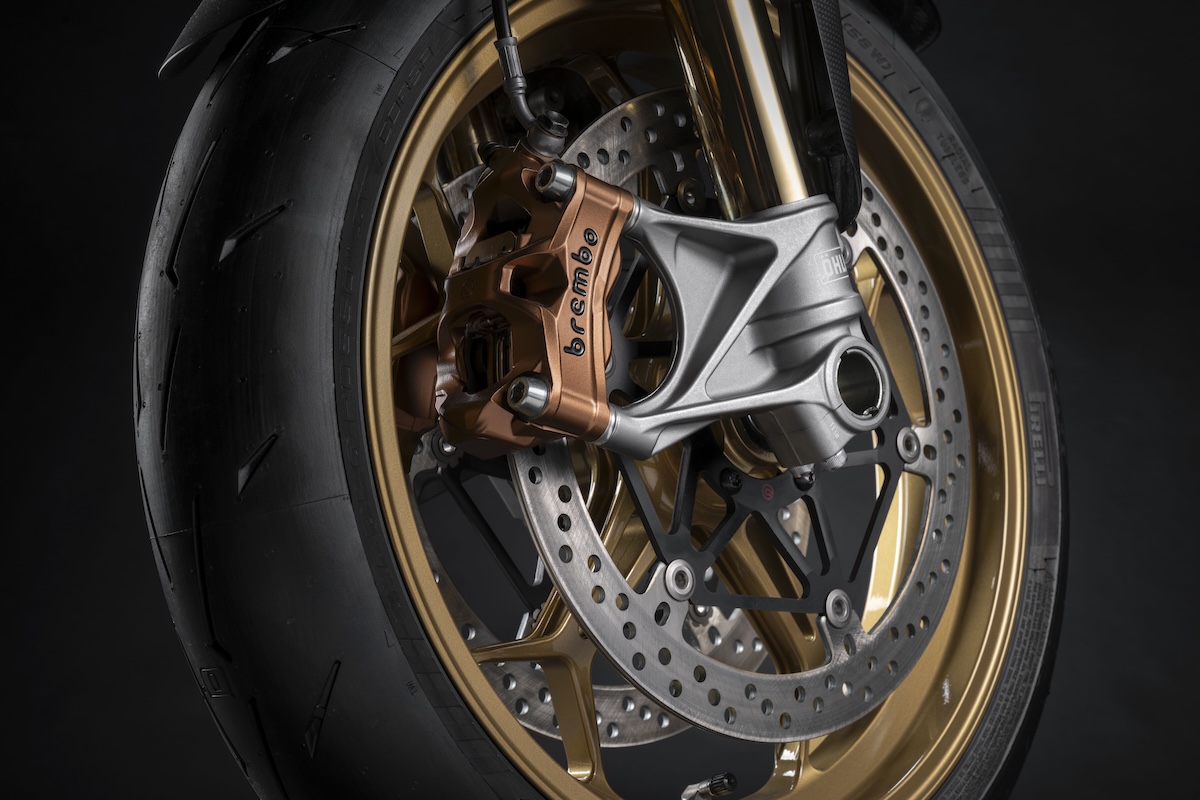
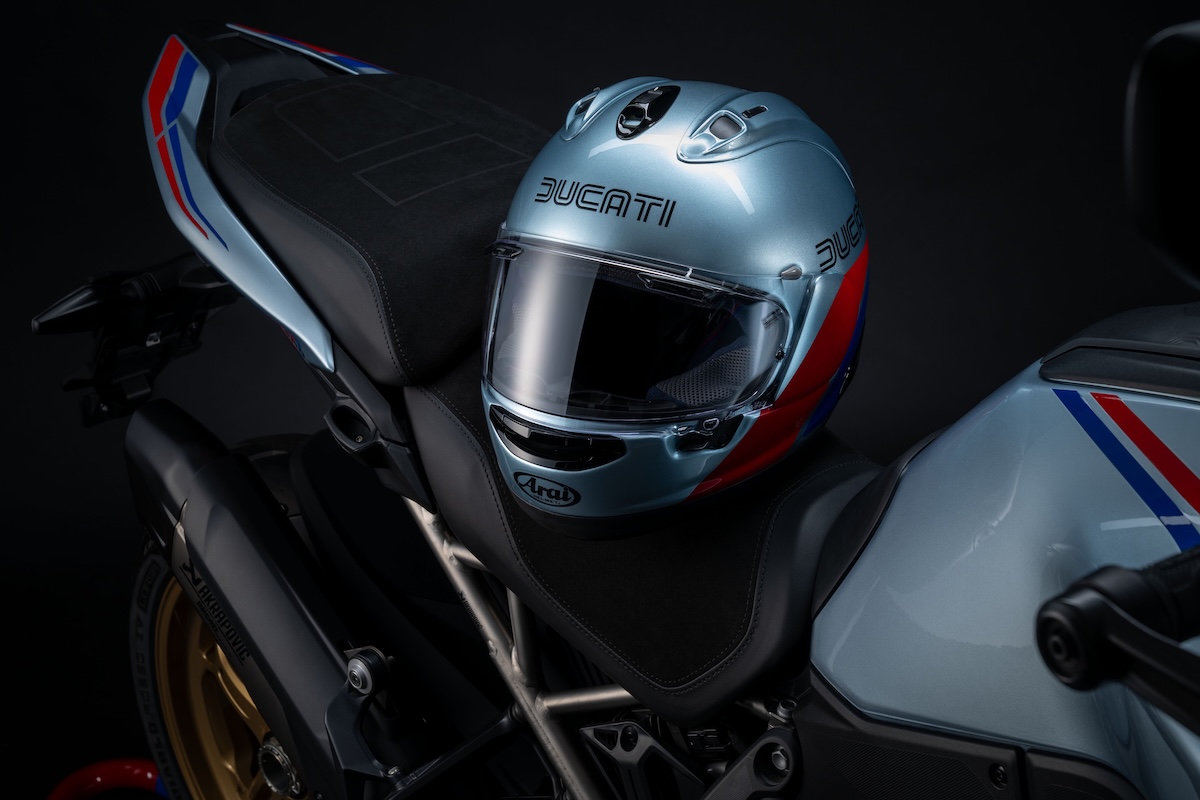
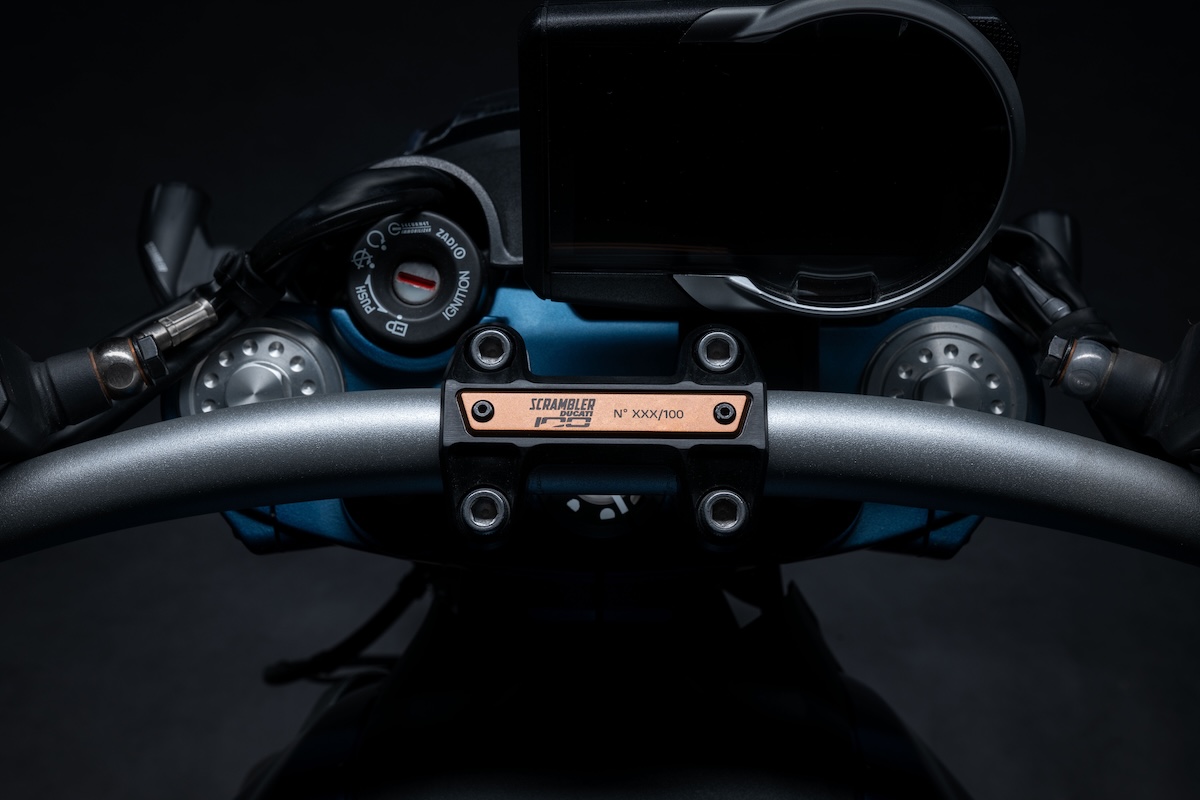
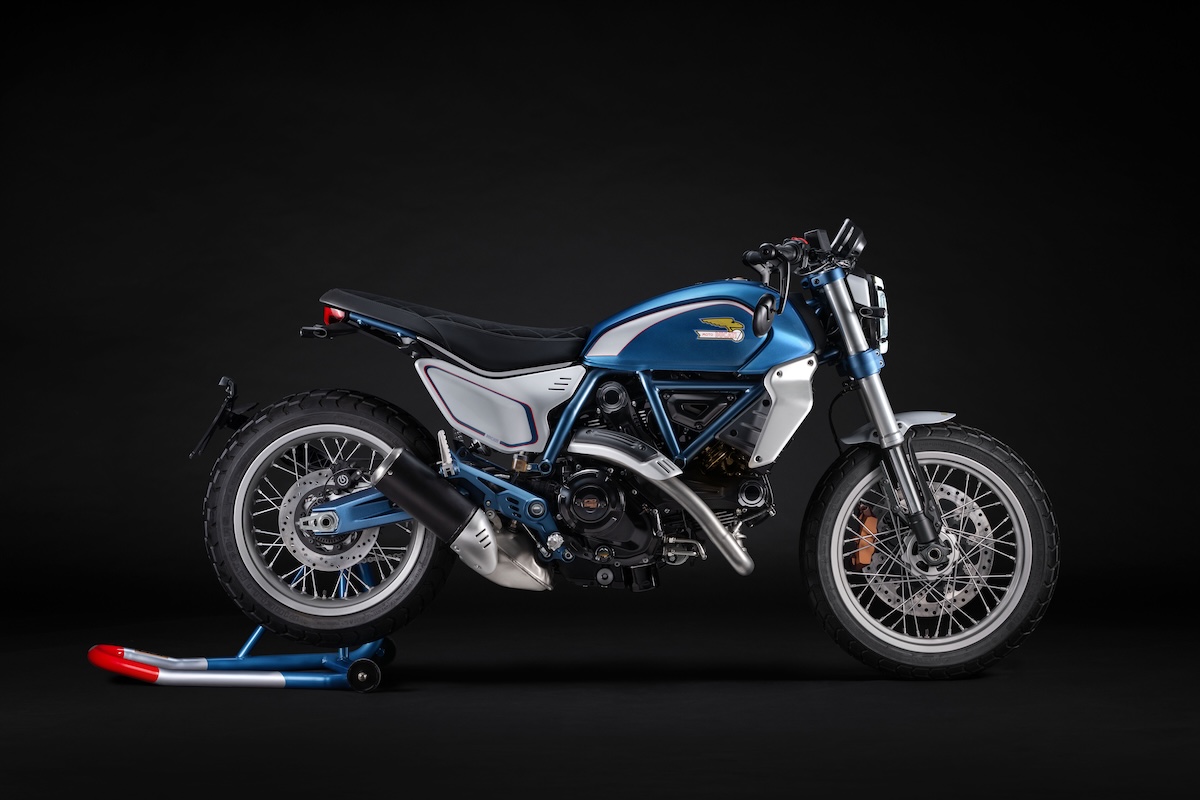
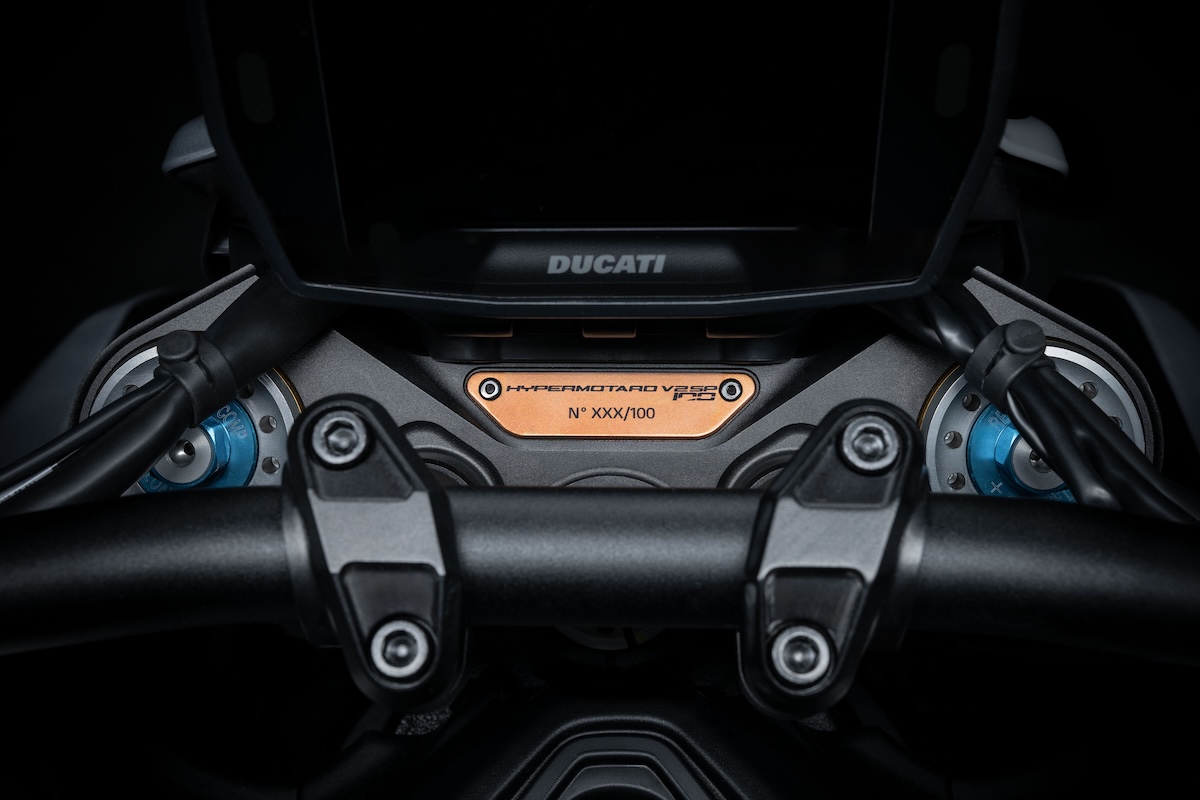
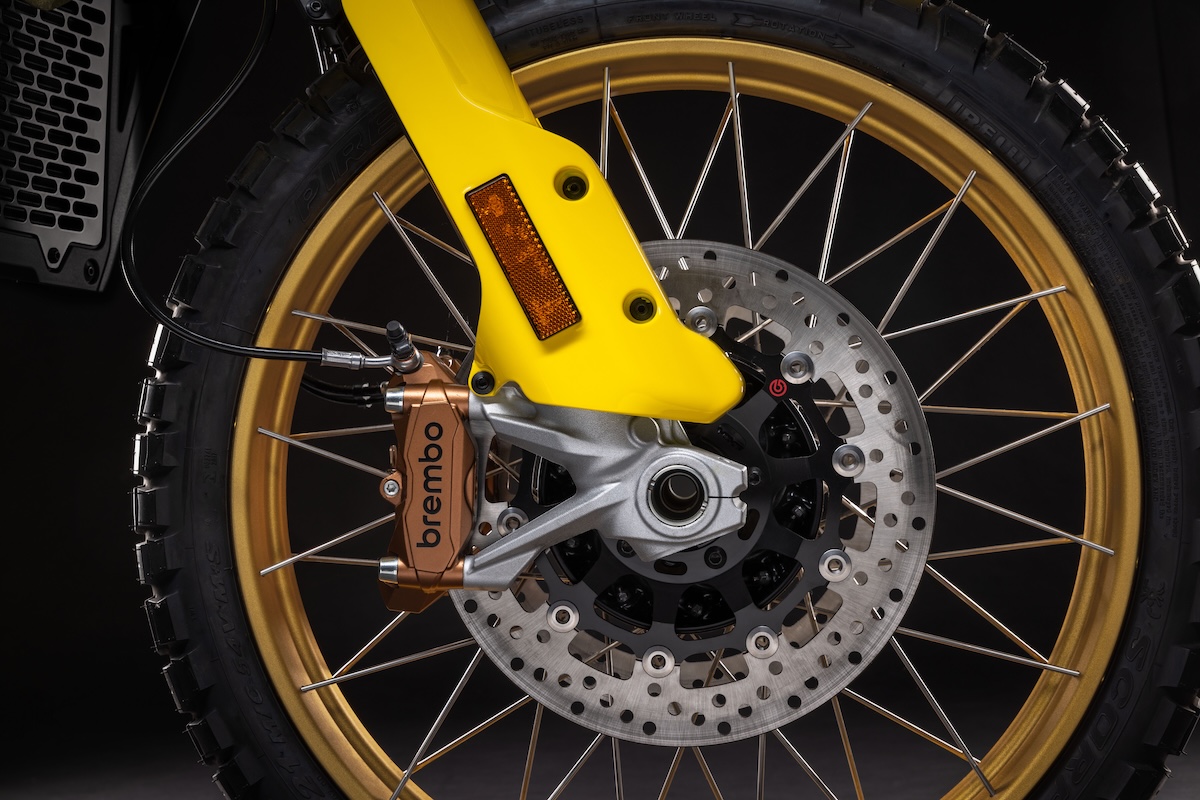
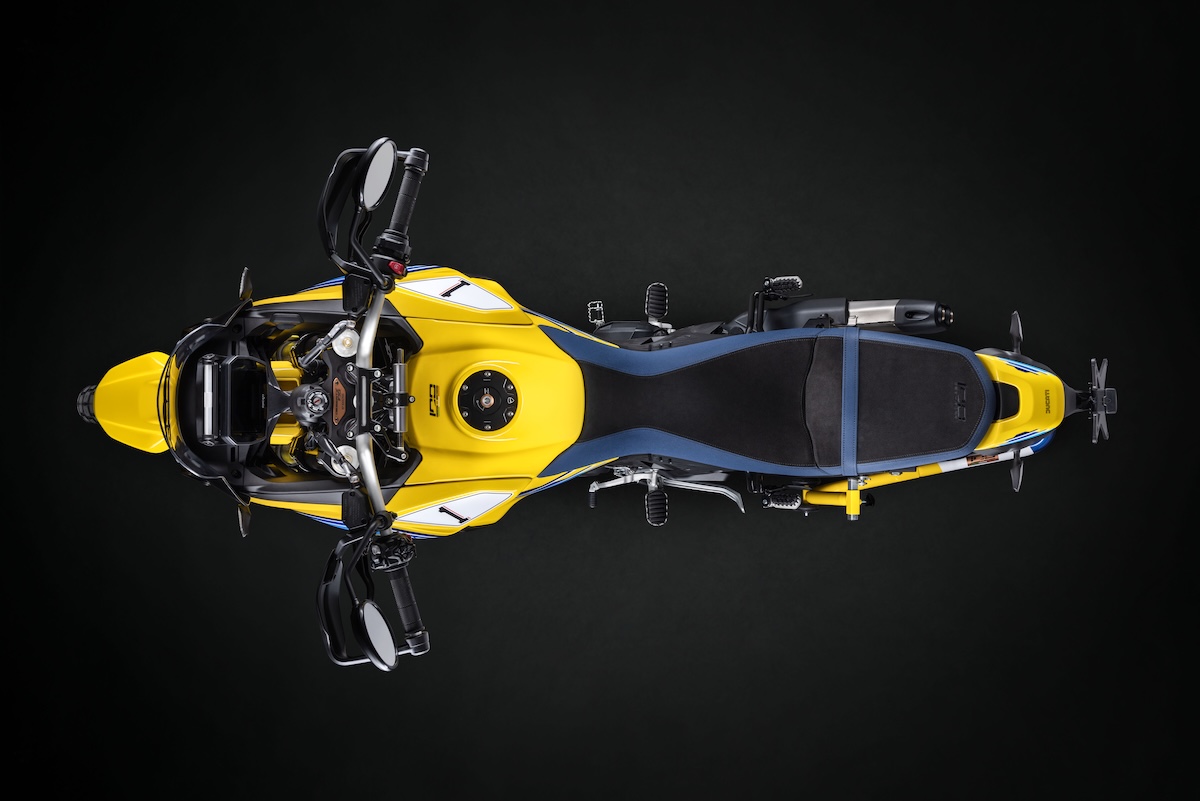
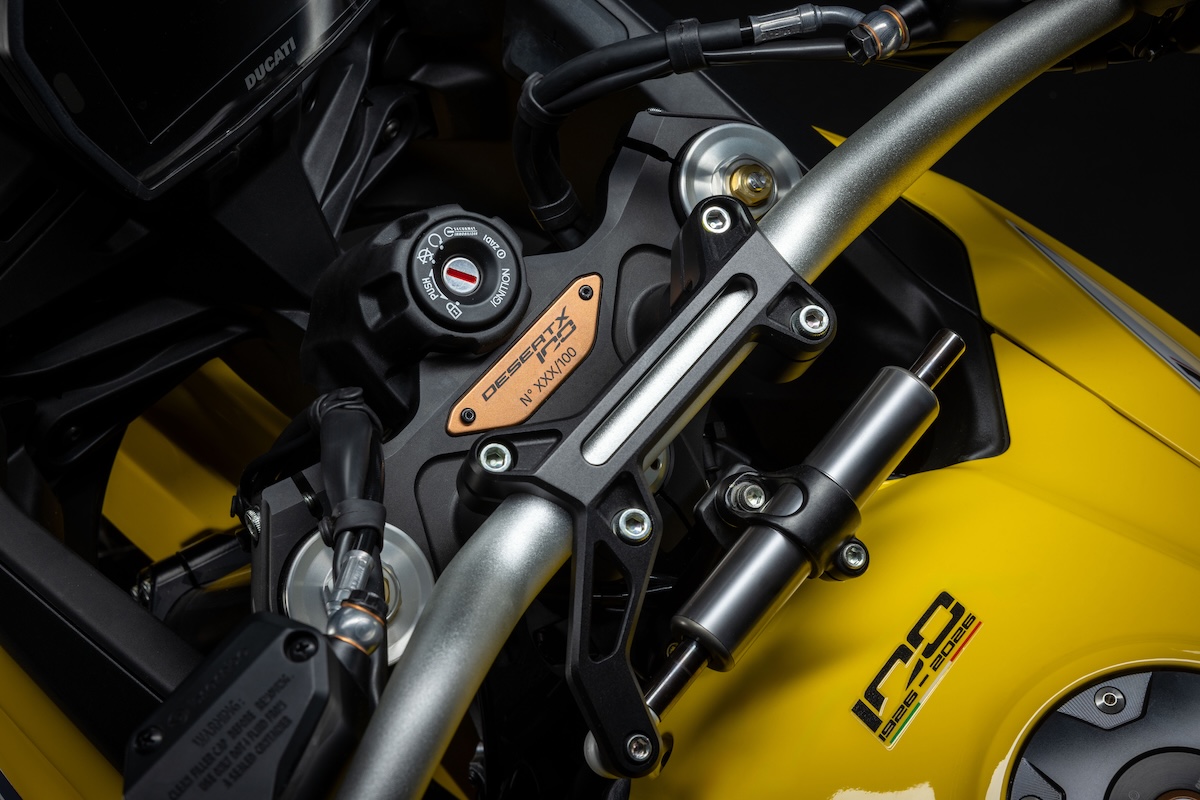
Every model in the Ducati Collezione 100 shares a common specification layer. Centenary Bronze brake calipers, Centenary Bronze fuel cap crown, and a numbered serial plate riveted to the steering head or billet triple clamps. Alcantara or leather seat with an embroidered Ducati 100 logo. A dedicated rear stand in matching livery colors, a bike cover, and a certificate of authenticity. The dashboard runs a dedicated ignition ceremony on startup. Each bike ships with two signed, numbered art prints by Ugo Nespolo — bearing the same serial number as the motorcycle — in which the Italian artist has interpreted both the Collezione model and the historic bike that inspired its livery.
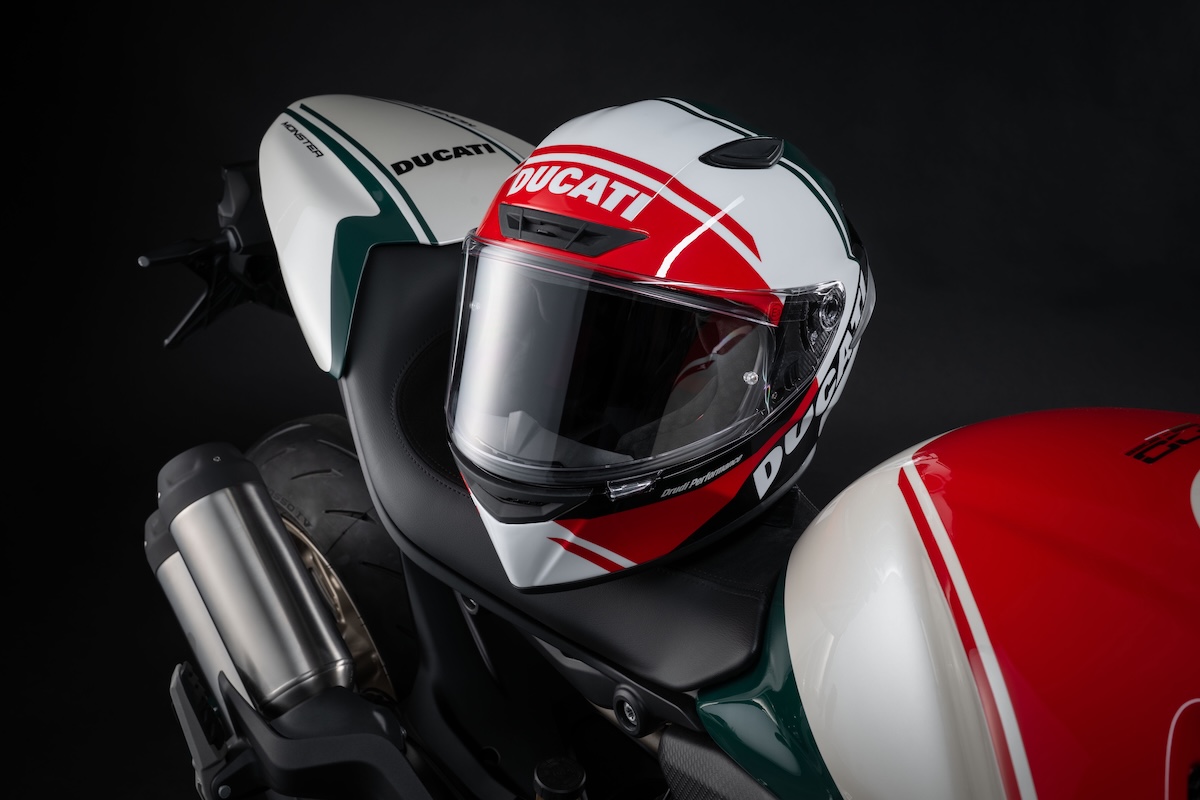
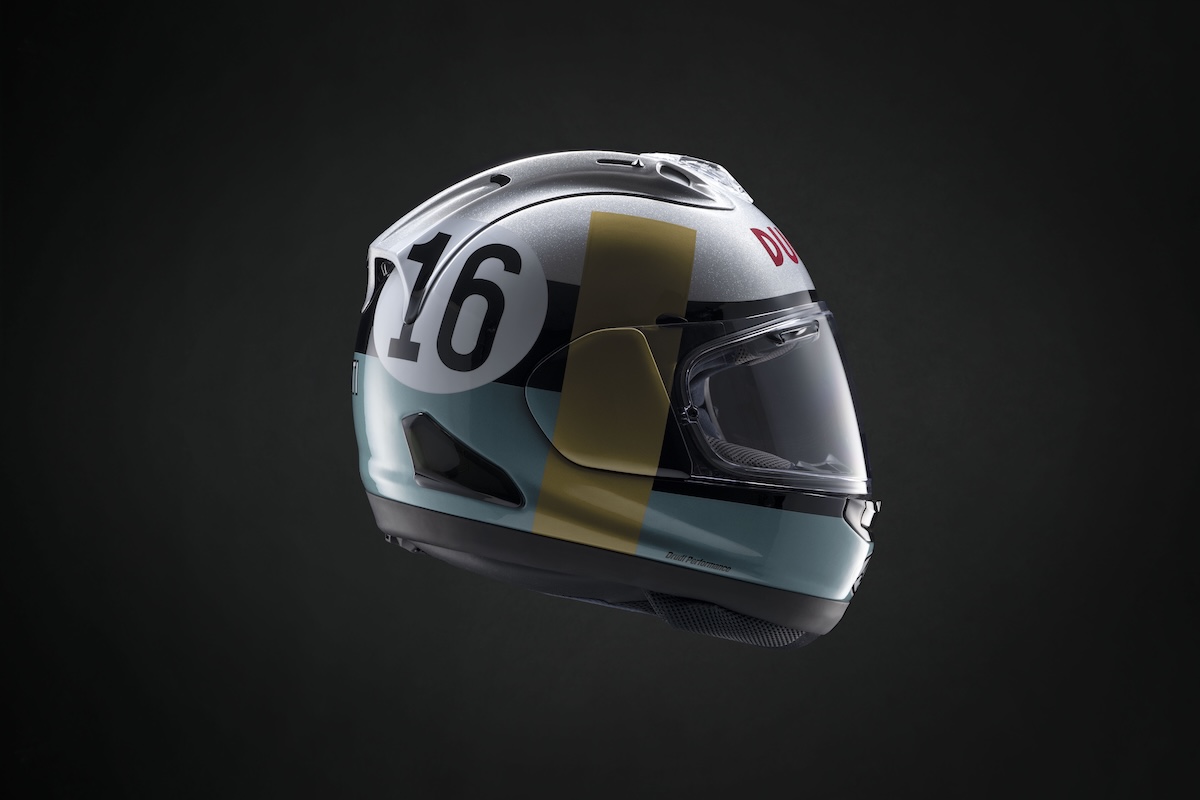
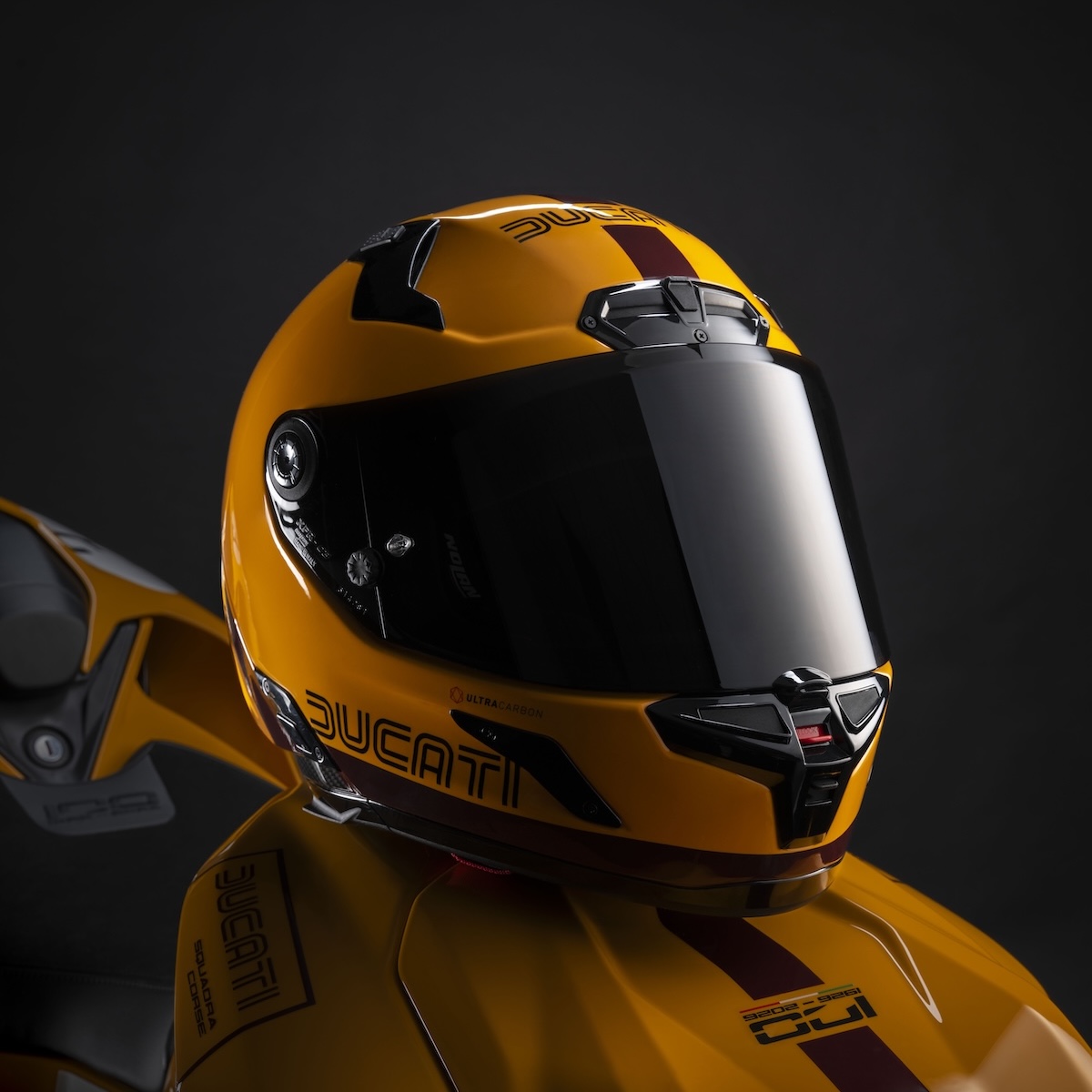
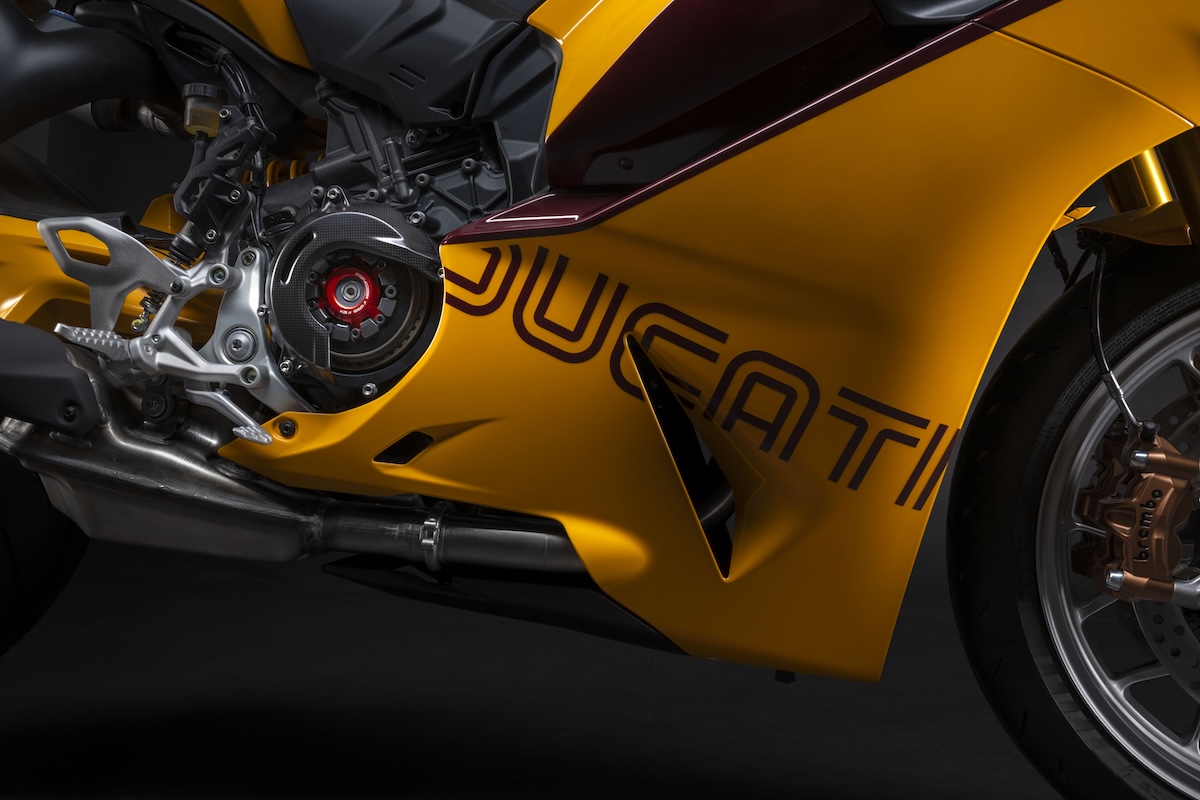
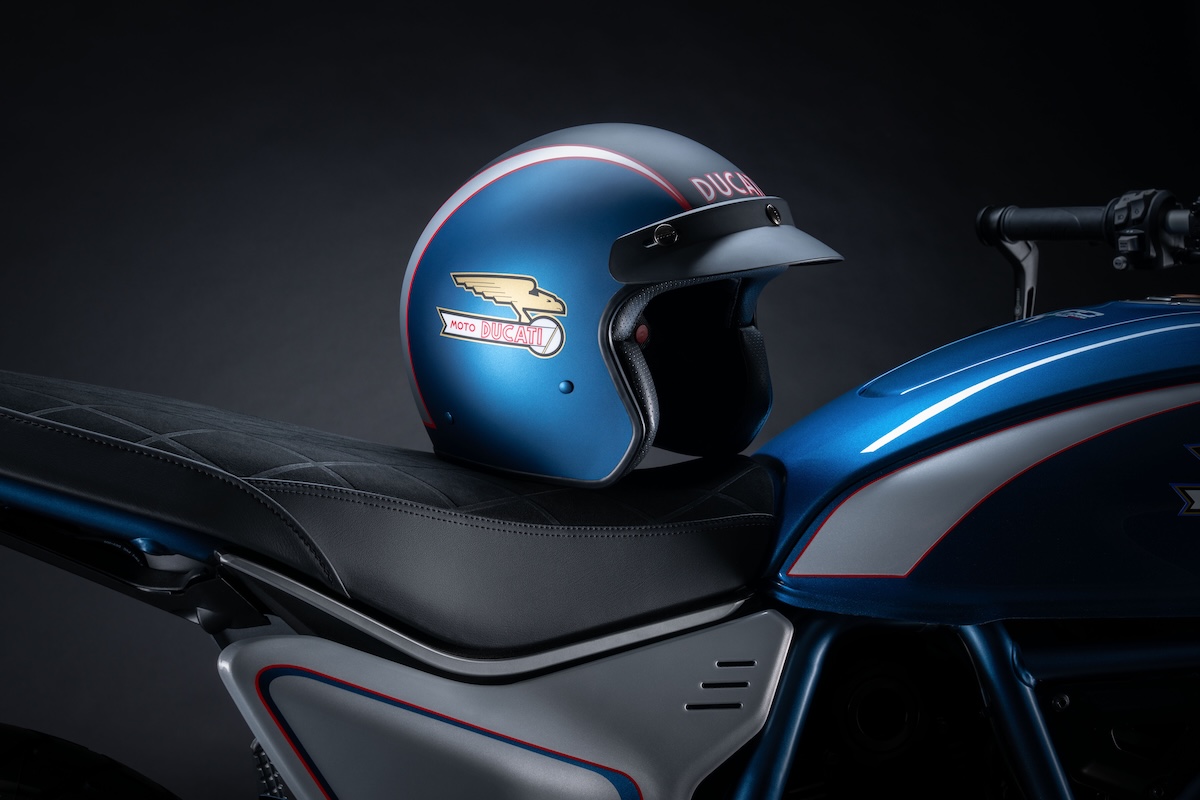
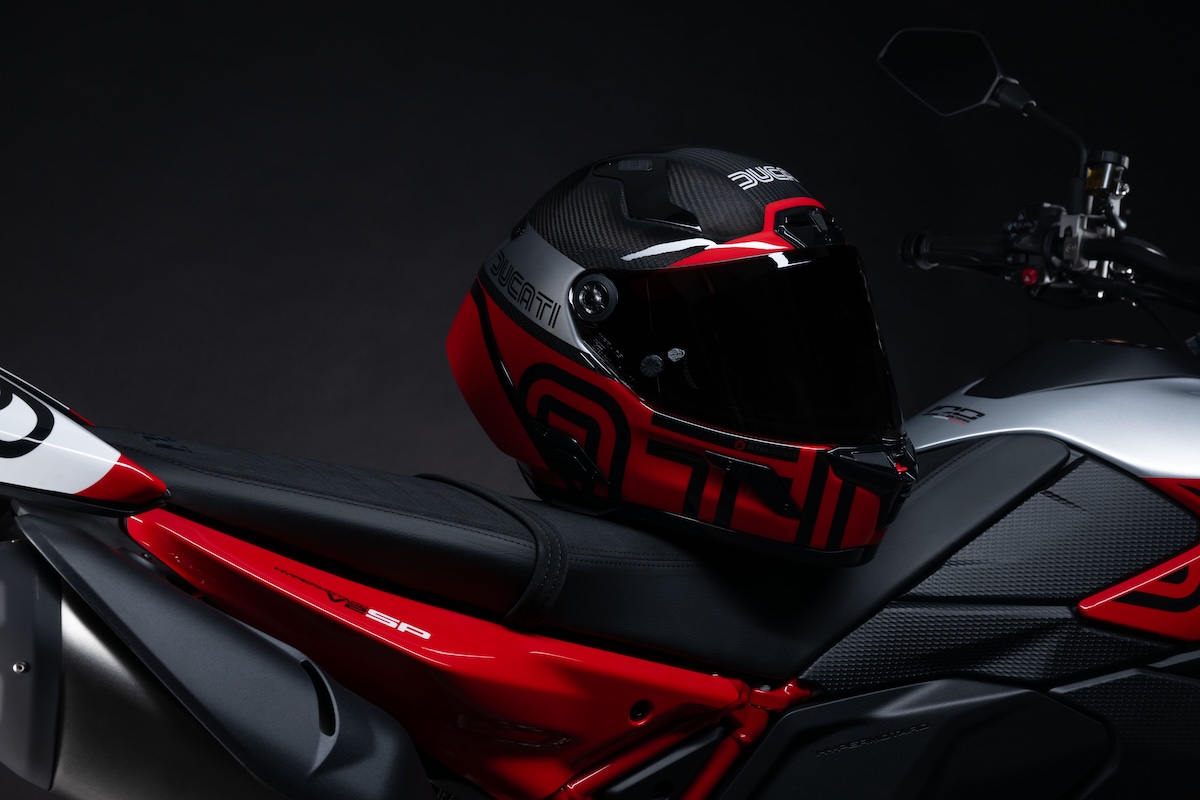
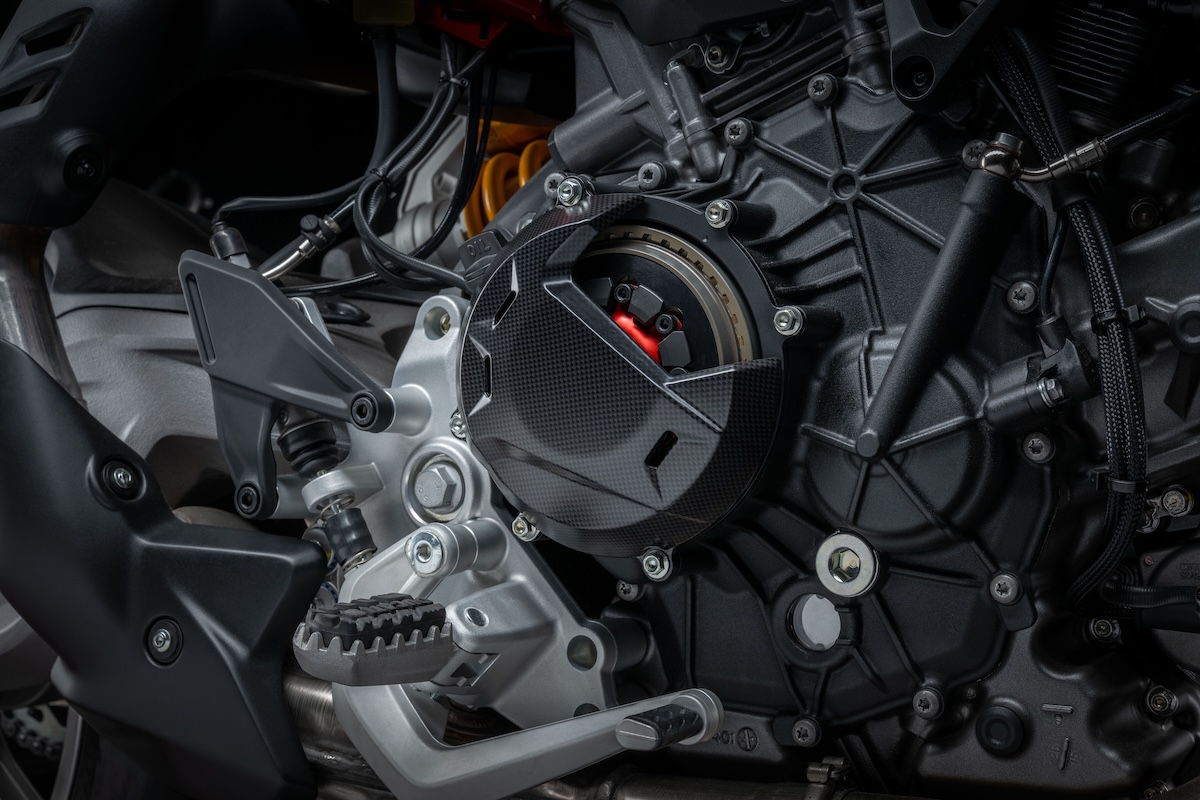
The dry clutch specification applies to eight of the ten models. It is absent only on the DesertX 100 and Scrambler 100. Notably, the Panigale V2 S 100 becomes the first model in Ducati’s new V2 family to carry a dry clutch — developed specifically for this collection. Owners can also add matching helmets and jackets in the model’s livery, with availability varying by country.
Ten Moments: The History Behind the Ducati Collezione 100 Liveries
The ten livery choices are not arbitrary. Each one traces to a specific race, a specific rider, or a specific cultural moment in Ducati’s history — and several of them will resonate immediately with anyone who knows the brand.
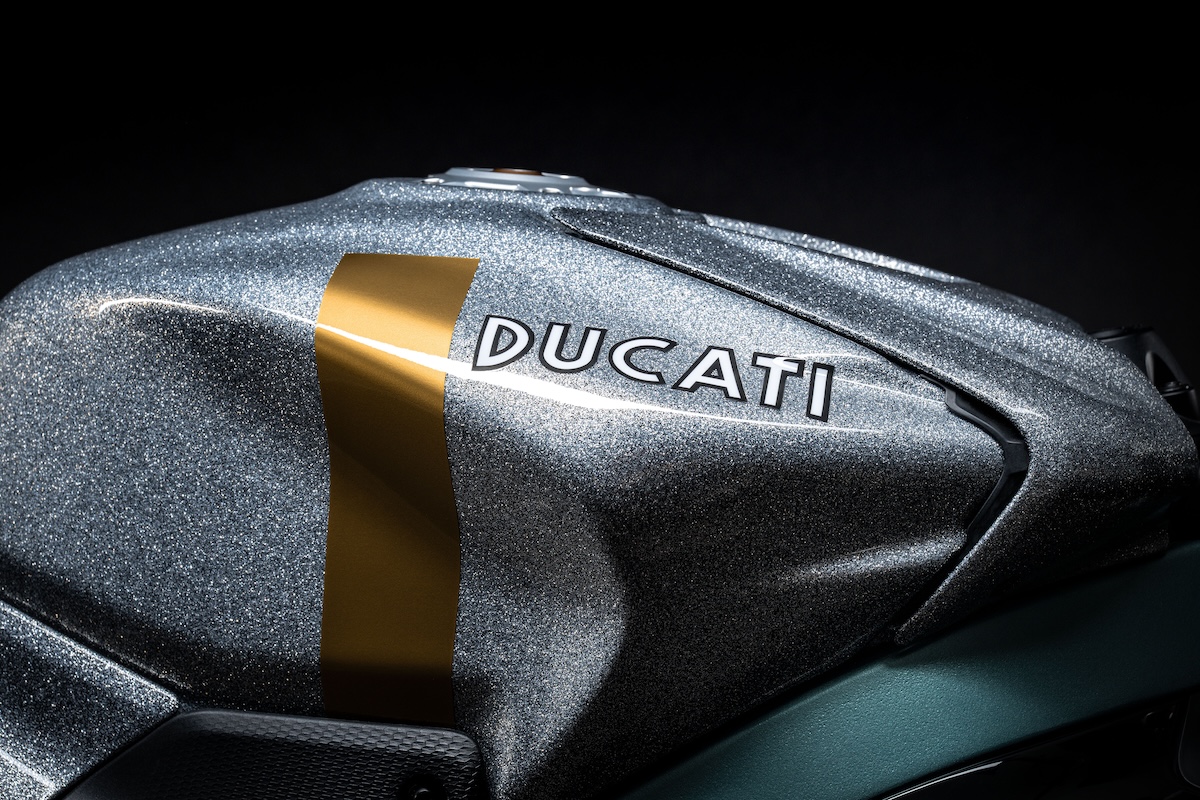
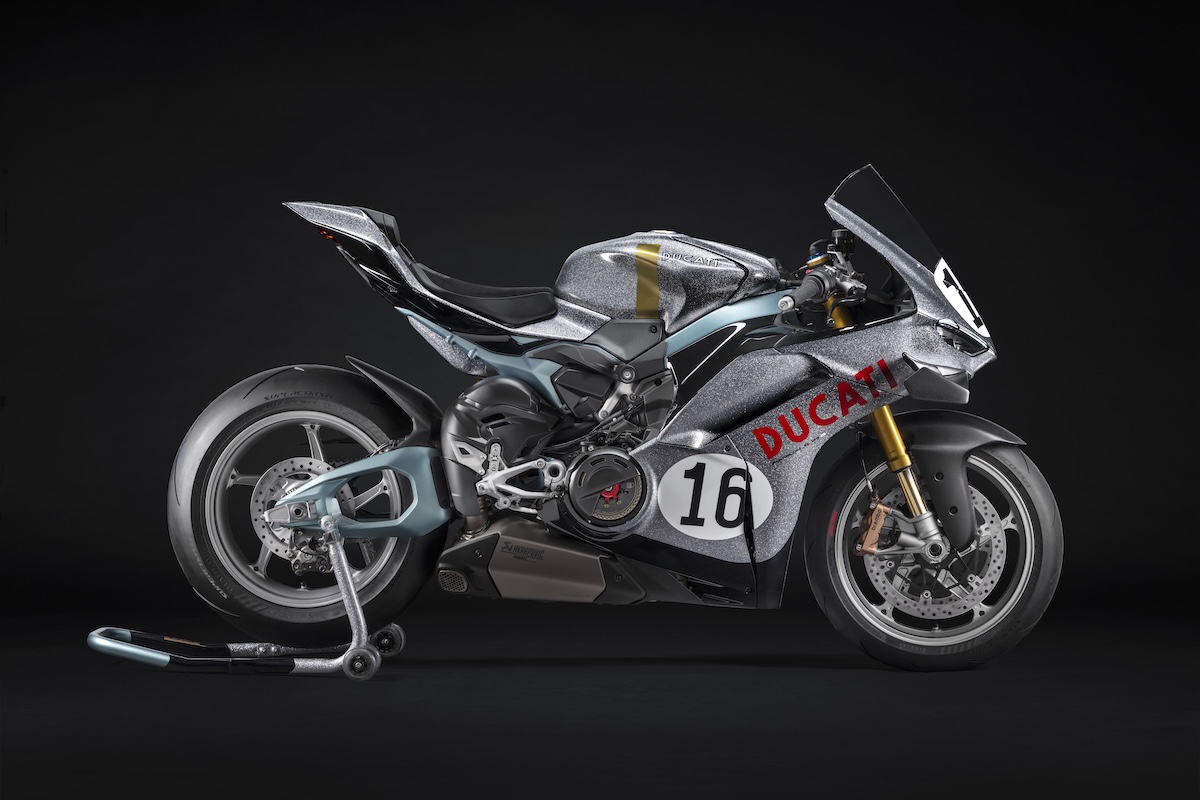
The Panigale V4 S 100 wears the livery of the 750 Imola Desmo from 1972 — the glittery silver of the bike Paul Smart and Bruno Spaggiari rode to victory at the Imola 200 Miles, defeating Giacomo Agostini’s MV Agusta. The triumph was so significant it generated immediate demand for a road-going version, which arrived the following year as the 750 Supersport Desmo, Ducati’s first twin-cylinder desmodromic road bike.
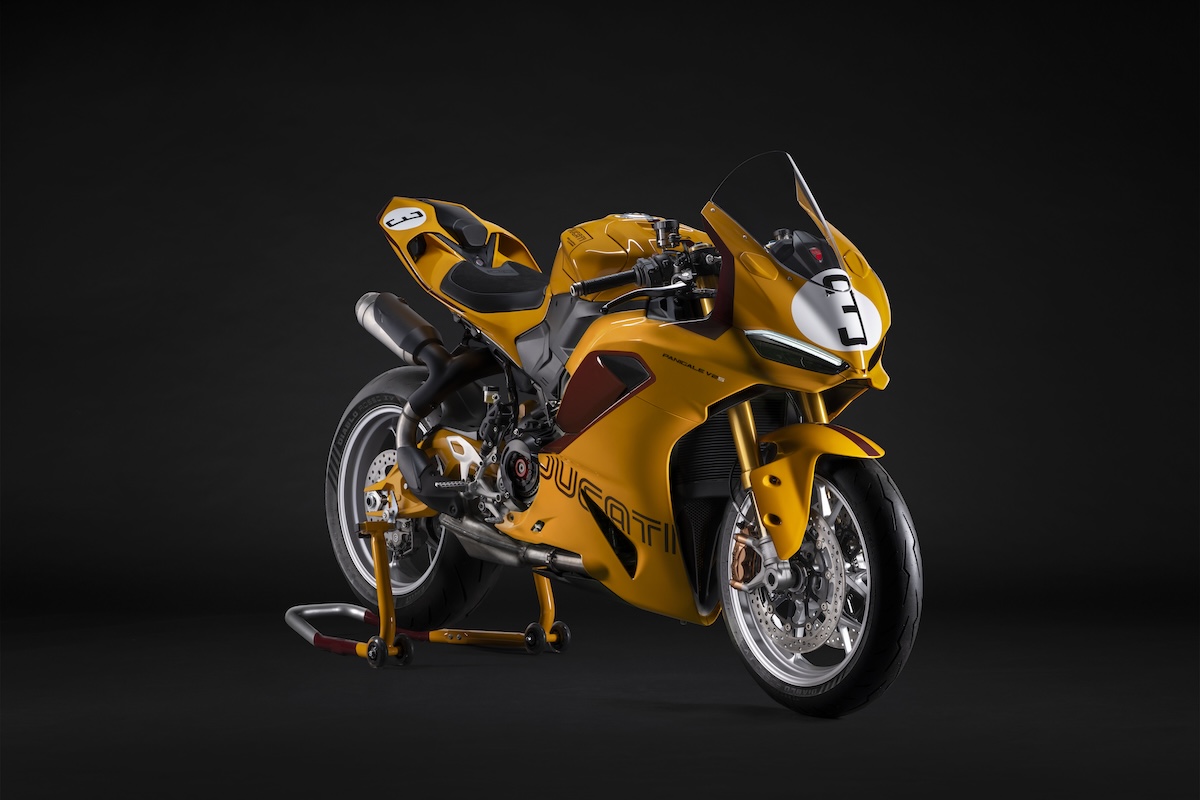
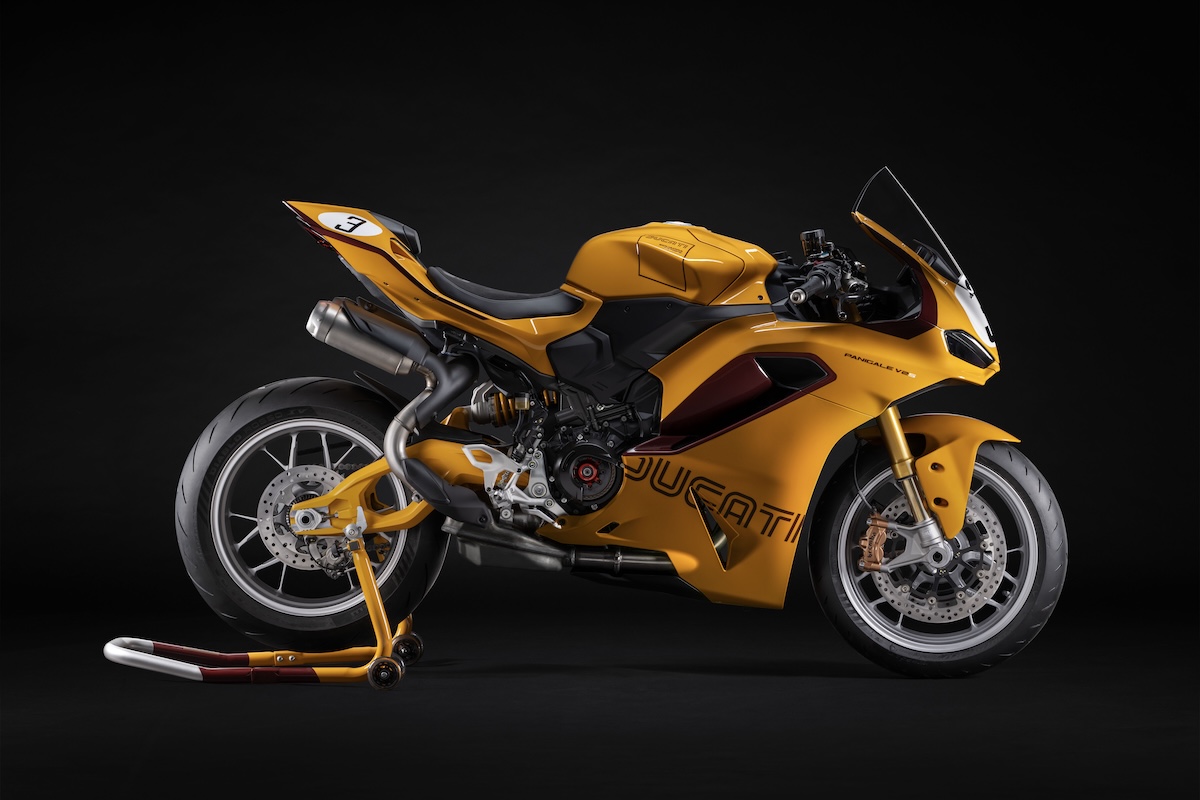
The glitter detail appears on the 2026 DesmosediciGP centenary livery as a direct reference. Titanium and carbon fibre Akrapovič exhaust and a dry clutch are standard. The Panigale V2 S 100 carries the yellow livery of the 750 Super Sport Desmo ridden by Franco Uncini to the 1975 Italian Championship title, with the distinctive brown/burgundy detail pulled from the color scheme Ducati used on marine engines it assembled in Borgo Panigale at the time.
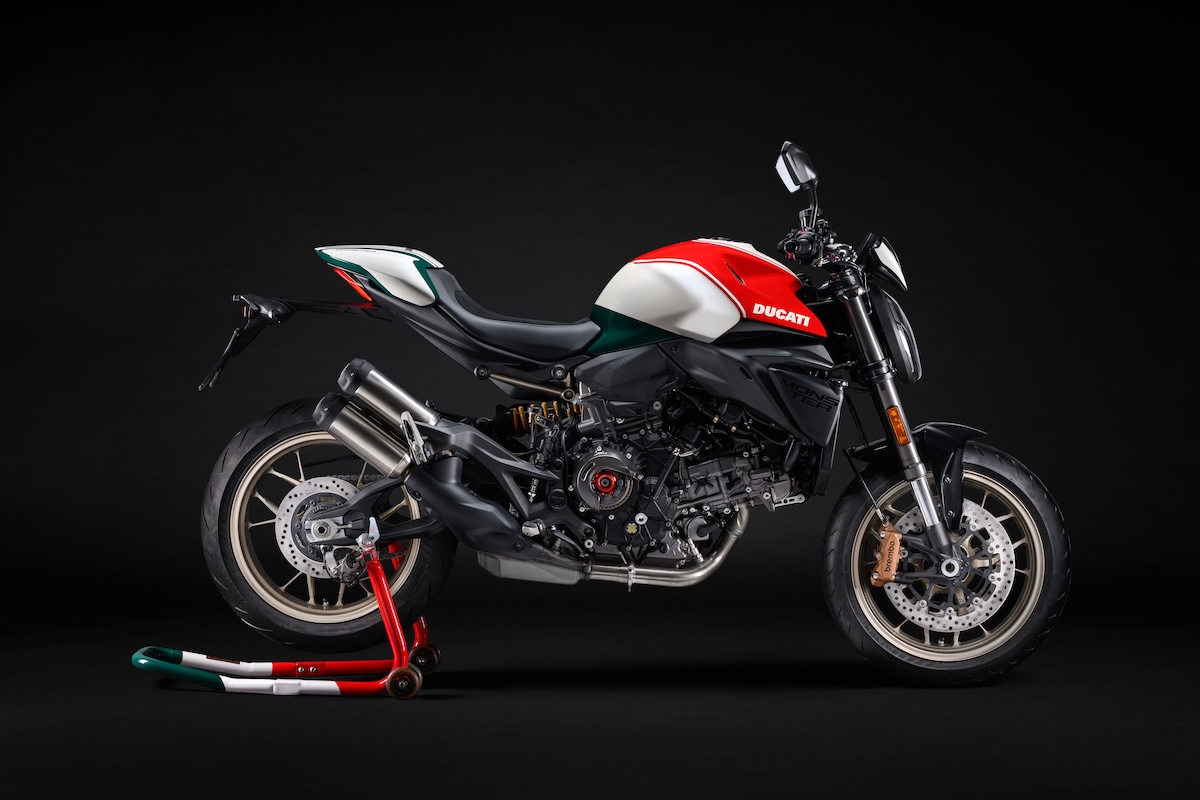
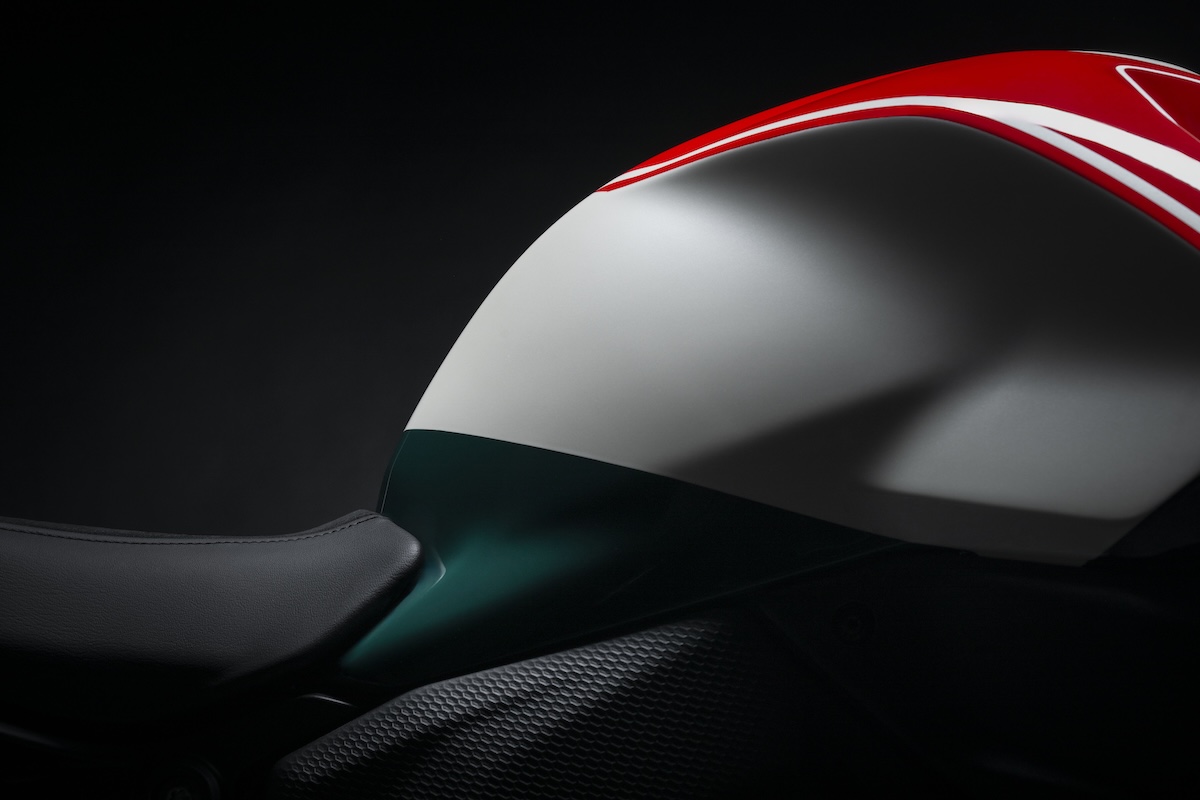
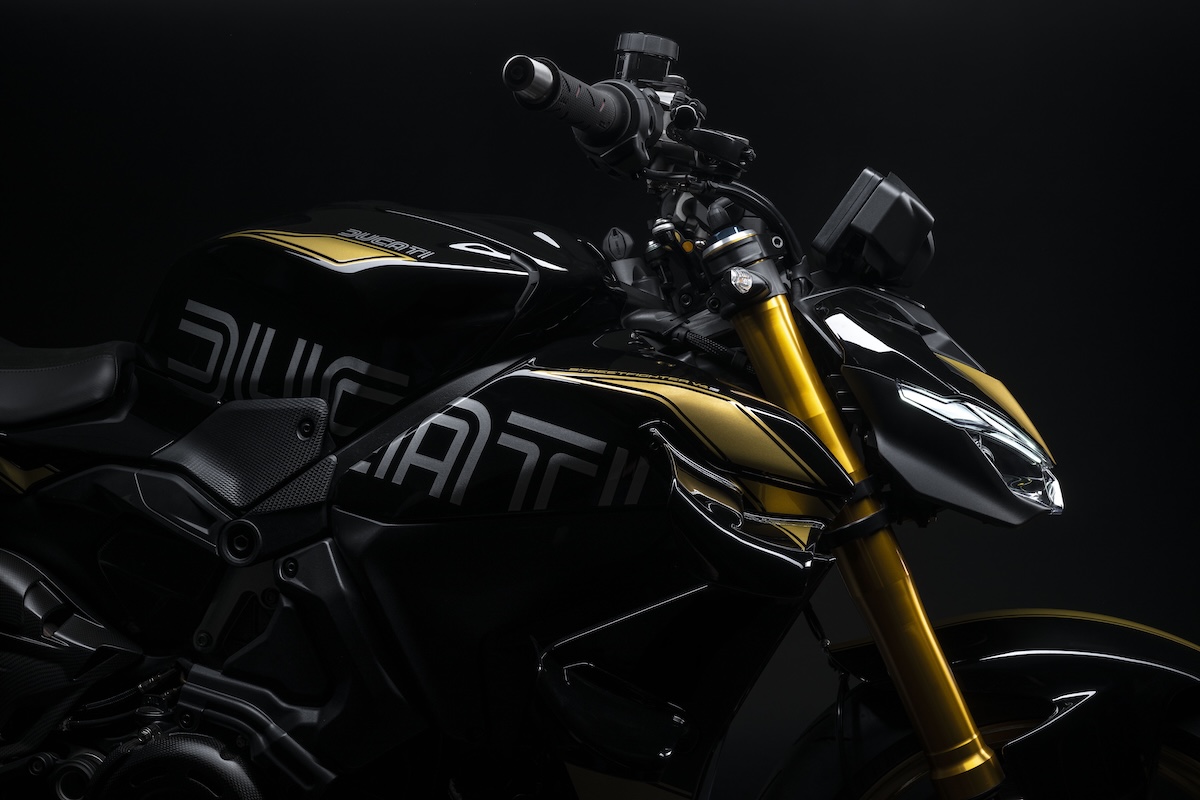
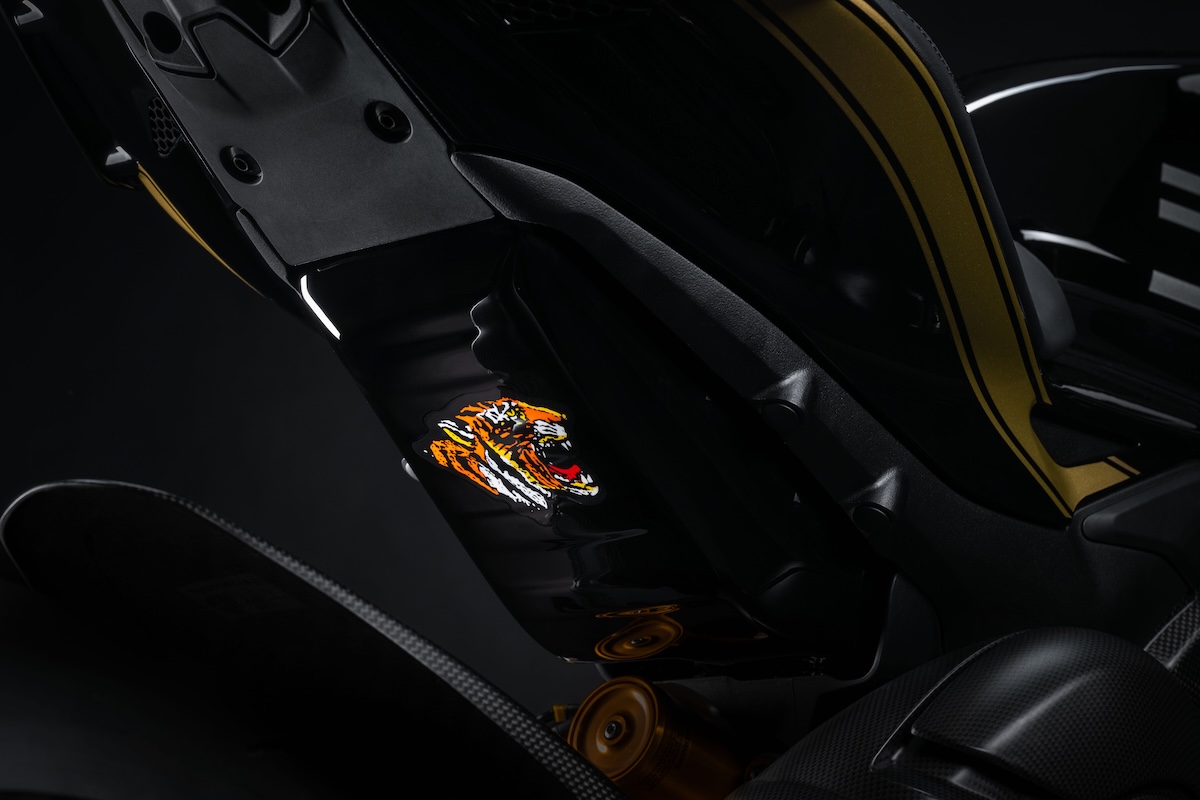
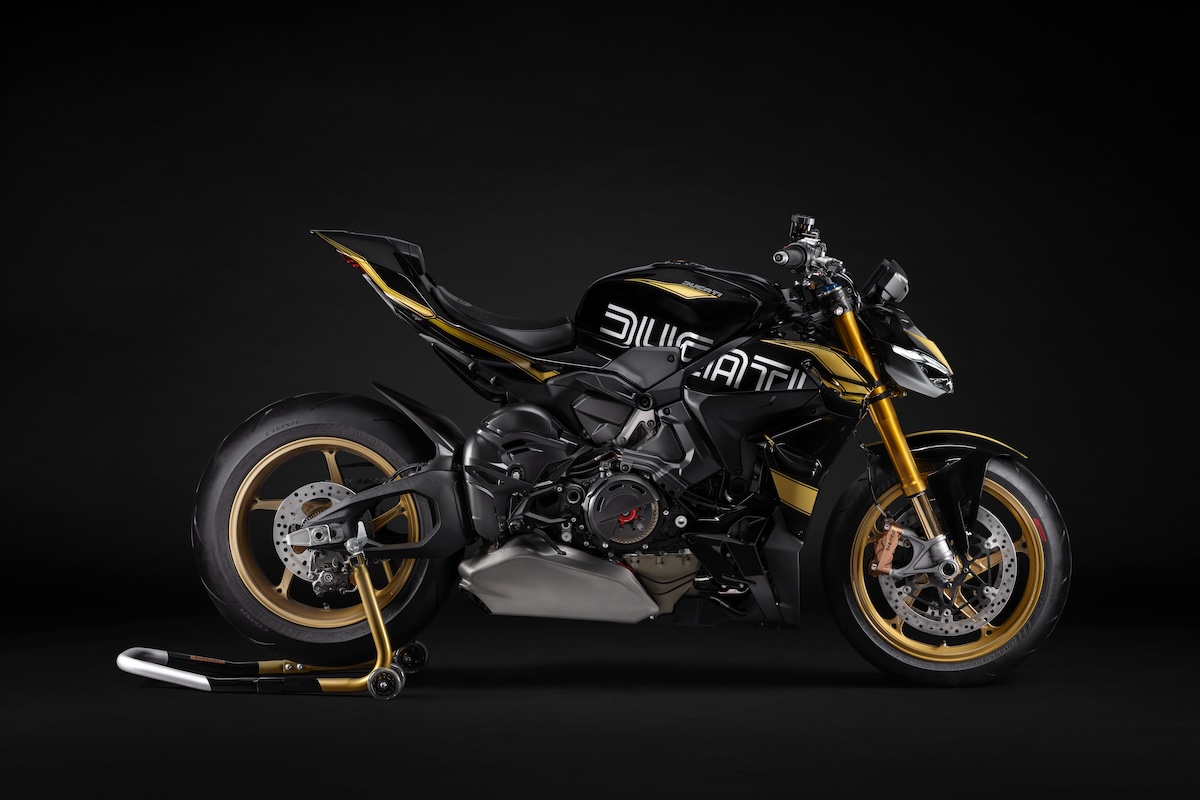
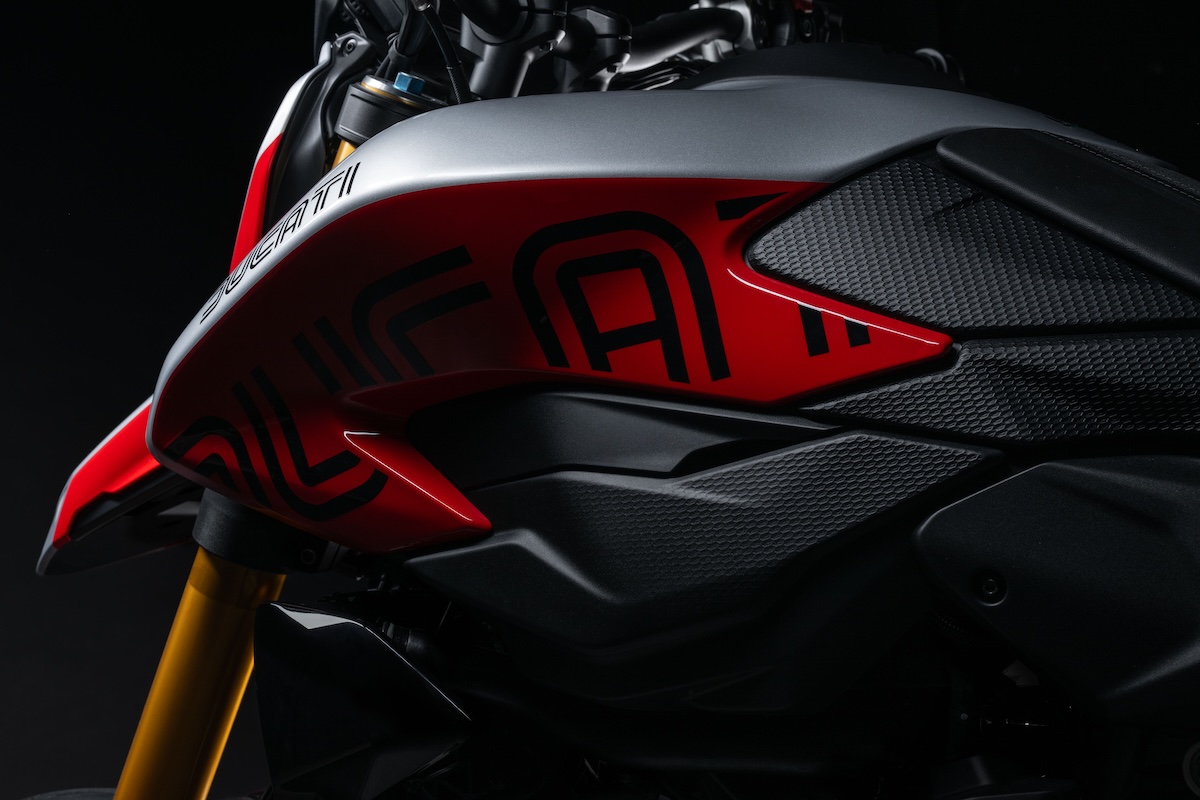
The Streetfighter V4 S 100 references the 1979 900 Sport Desmo Darmah — black and gold, the color language of 1970s motorsport, with the tiger head graphic that appeared on the Darmah’s side panels echoed in the Streetfighter’s undertail and in the matching helmet and jacket. The Darmah was, as Ducati’s own team describes it, a streetfighter before the category existed. The Monster 100 carries the tricolor livery of the 2008 Monster S4Rs Tricolore, effectively the final edition of the first-generation Monster — a model produced from 1993 to 2008 and one of the most recognizable machines in the brand’s history.
The XDiavel V4 100 is the one for the American chapter. Its livery references the 750 Super Sport “California Hot Rod” — the bike Cook Neilson raced to victory at Daytona in 1977, the first time an Italian motorcycle won a production-derived race in the United States. Before that win, Ducati’s American presence was essentially limited to the Scrambler; Neilson’s Daytona result changed the brand’s trajectory on this side of the Atlantic.
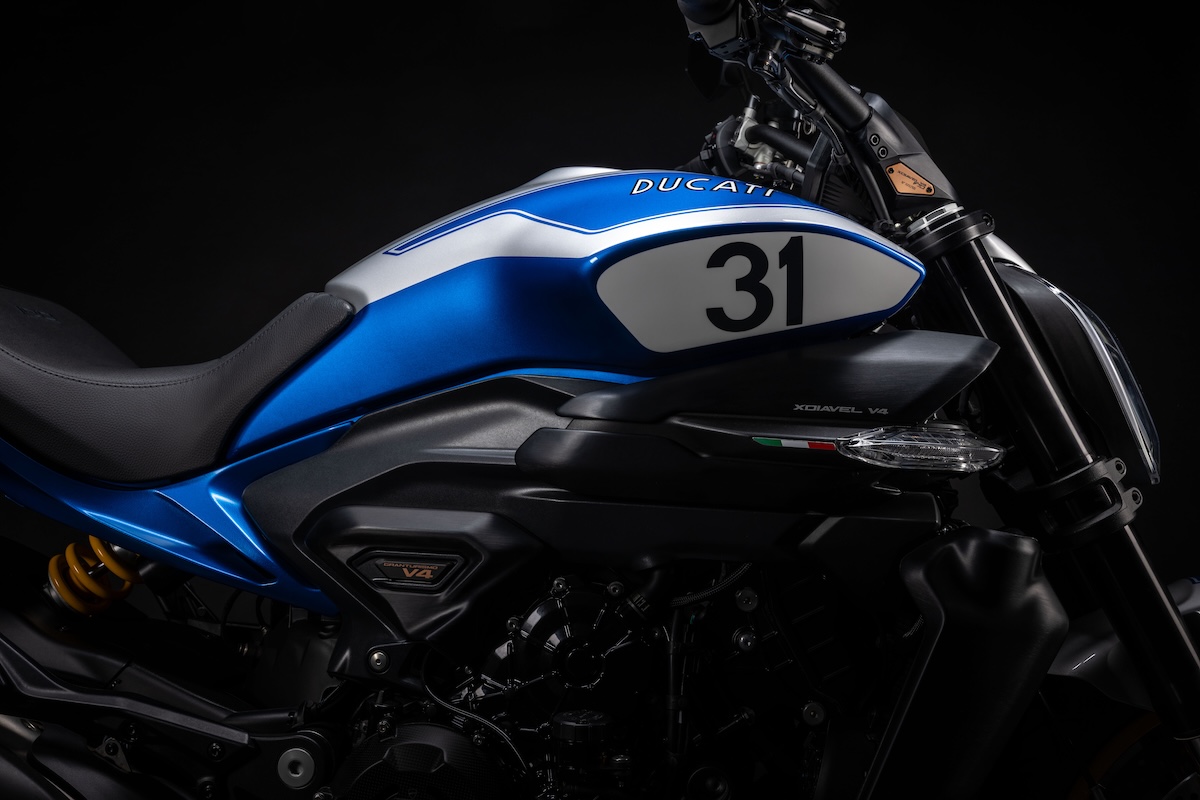
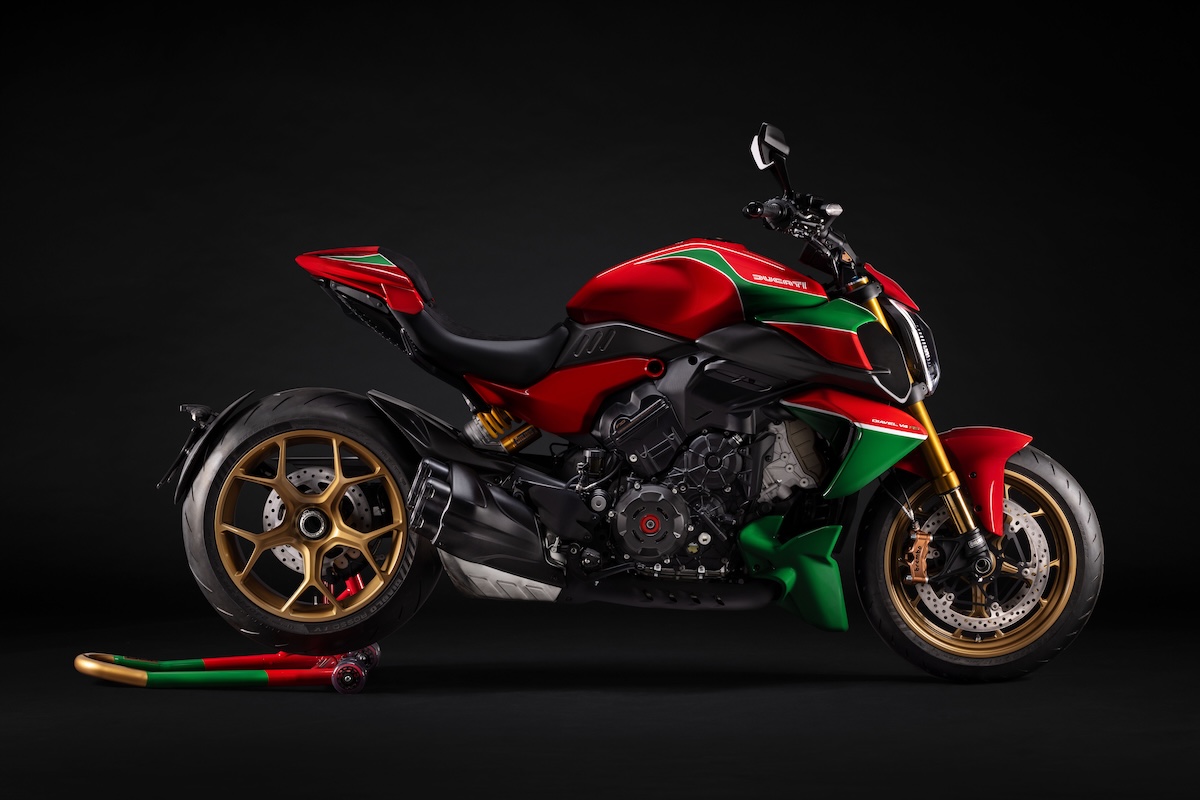
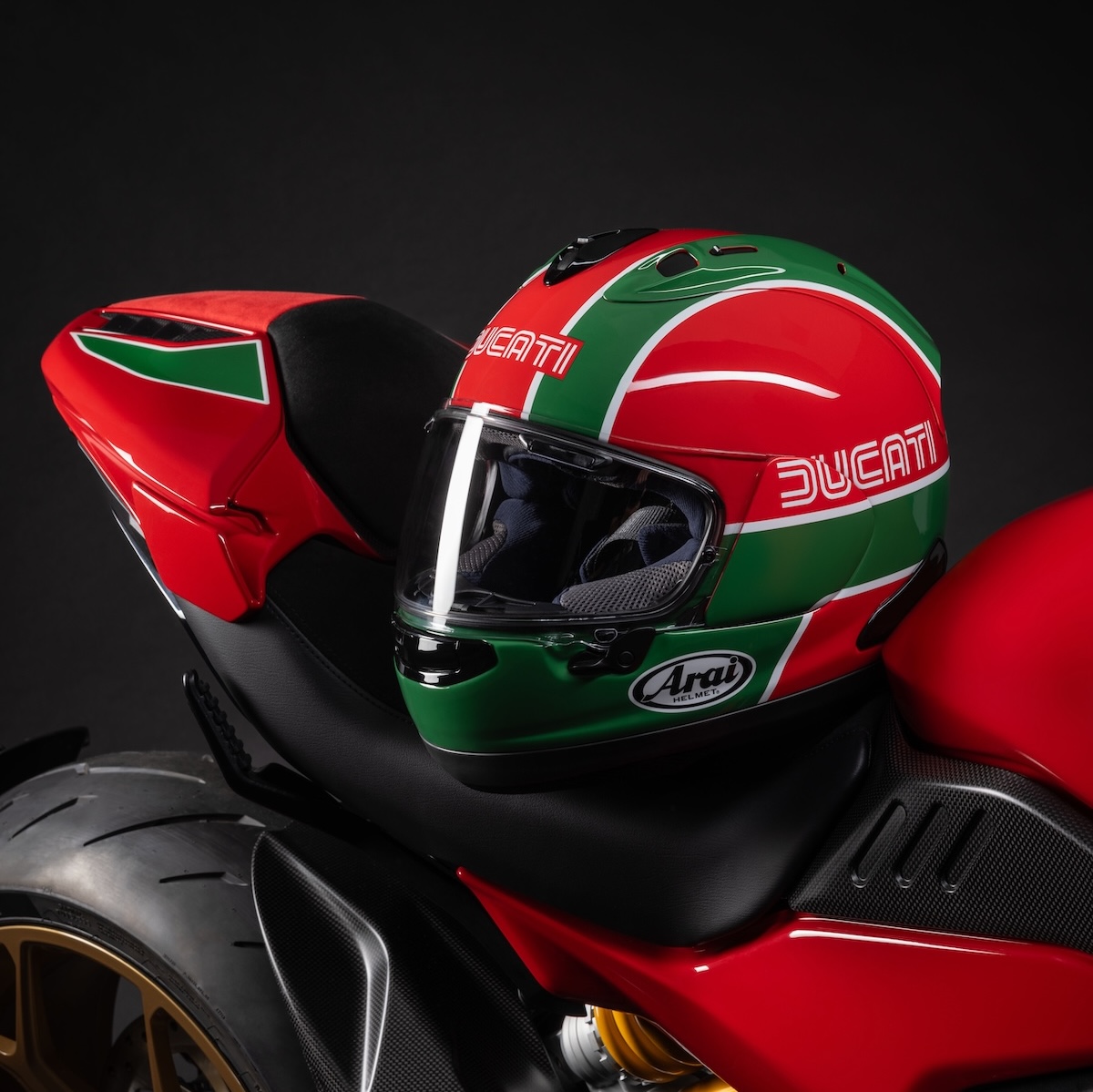
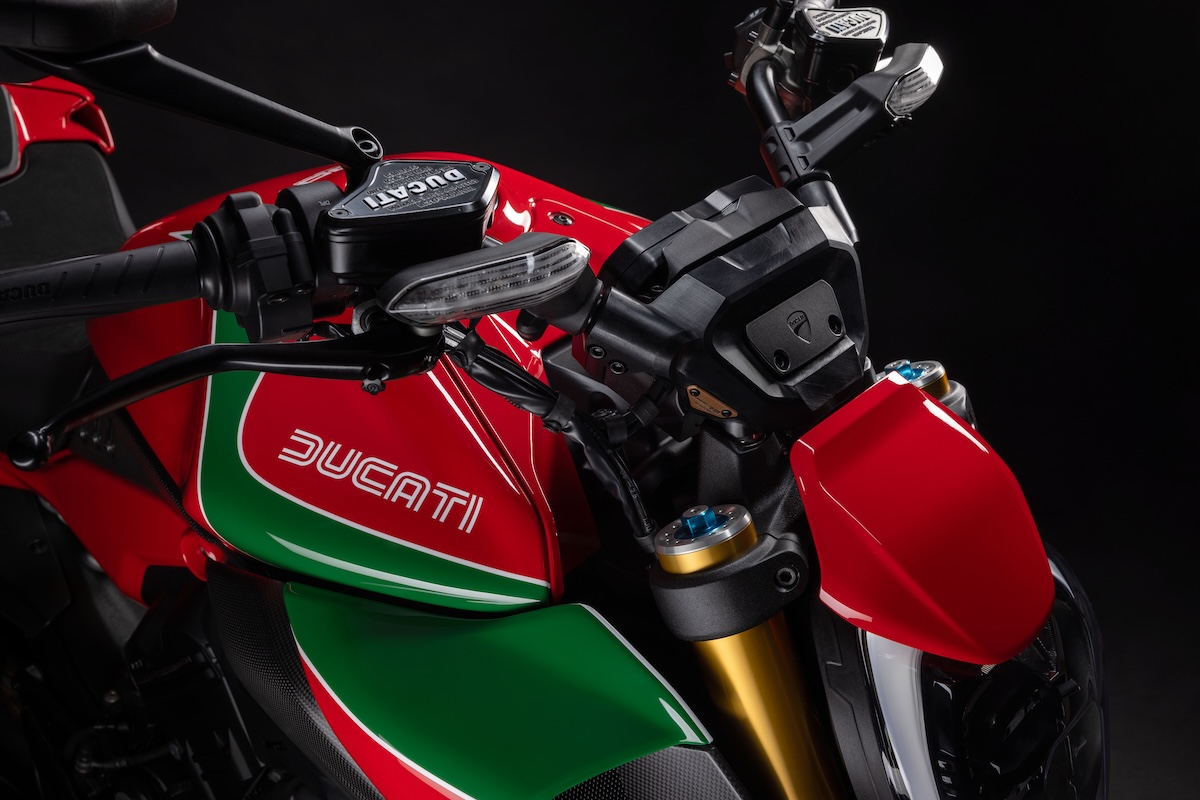
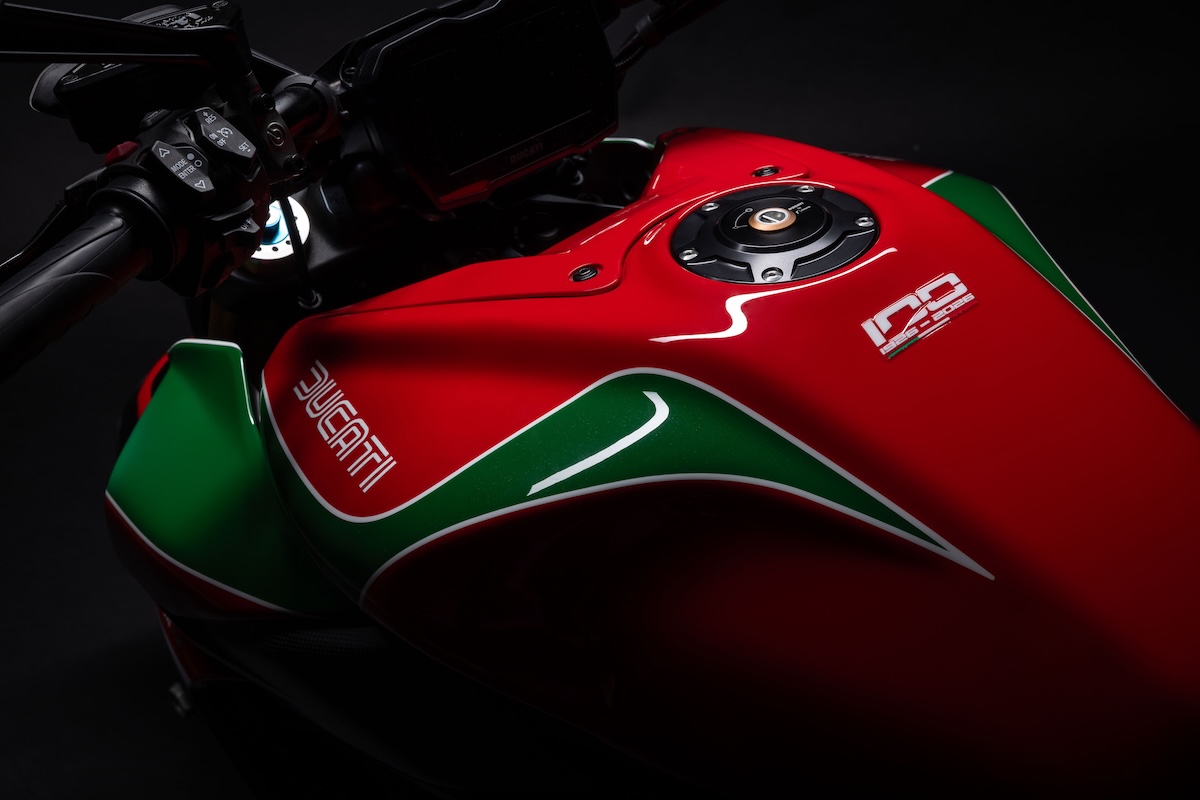
The Diavel V4 RS 100 carries perhaps the most historically loaded livery in the collection: the green, red, and white of the 1979 900 Replica, the first road-going replica of a Ducati racing bike, built following the brand’s 1978 Isle of Man TT victory. It was also the first time Ducati applied what Ducati calls an “almost Italian” color scheme to a production model.
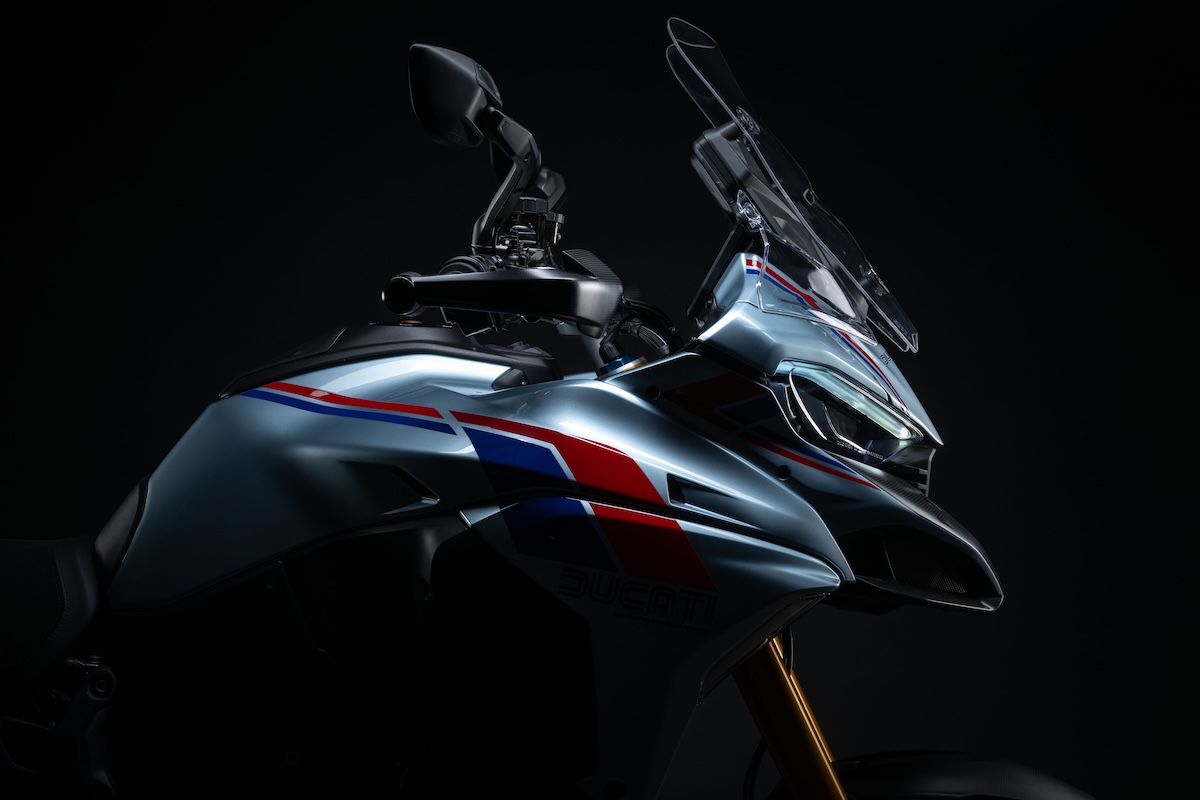
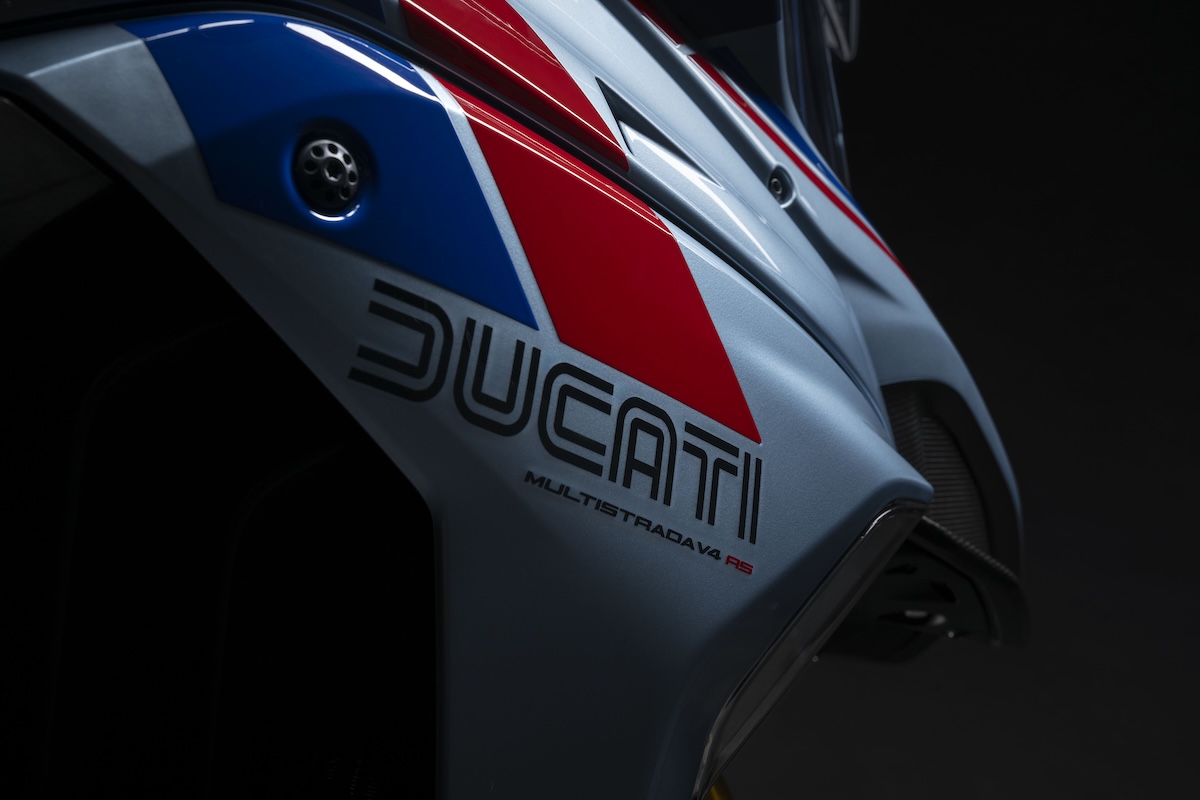
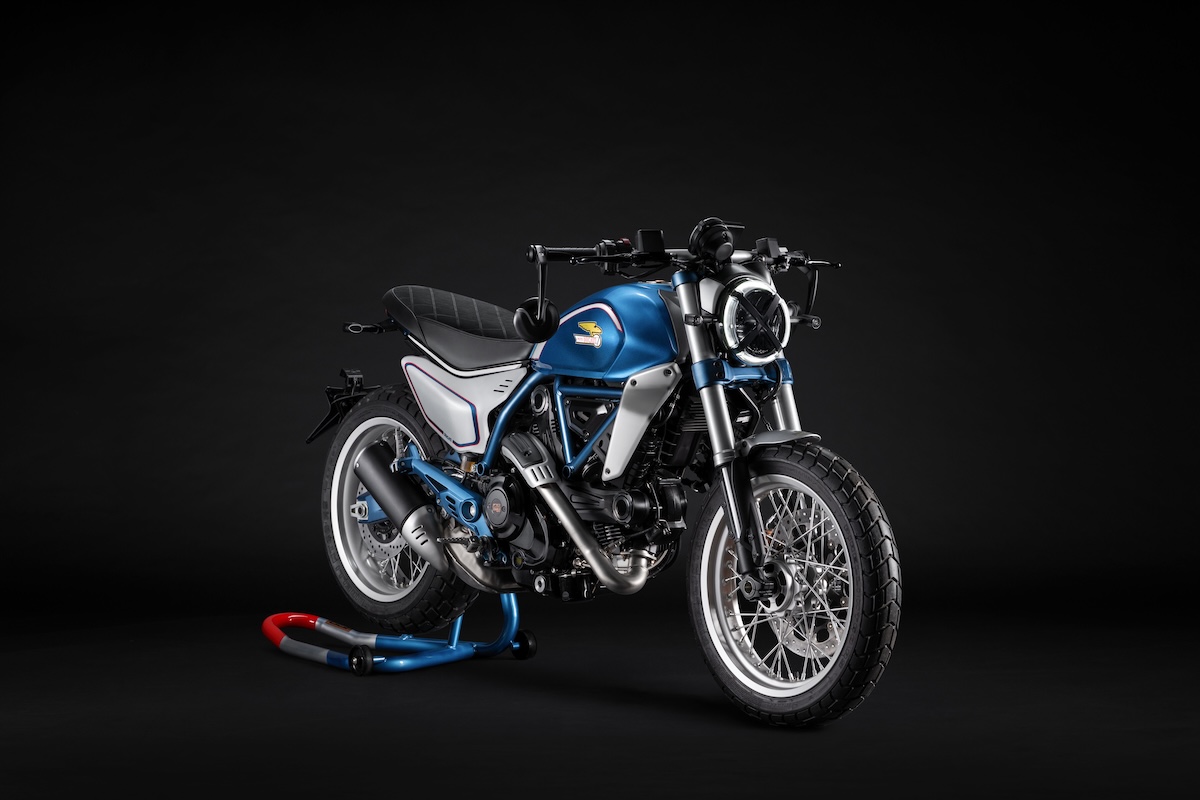
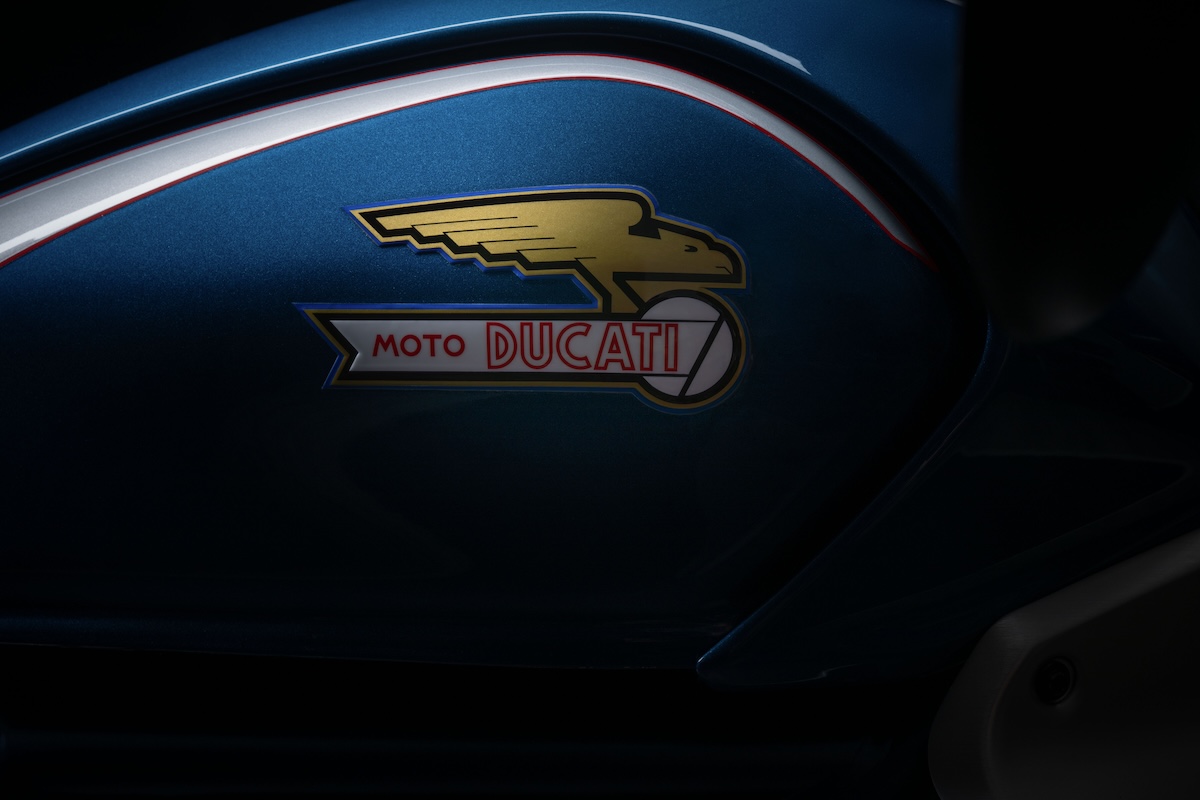
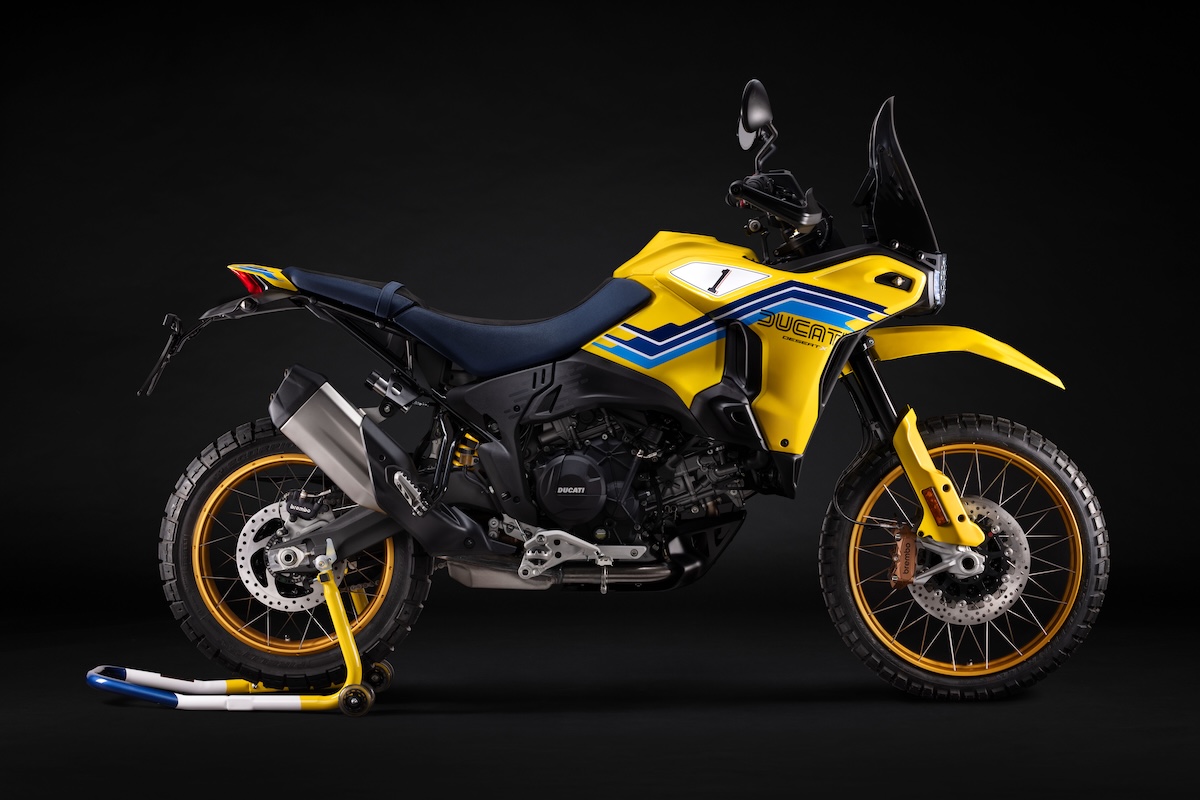
The Multistrada V4 RS 100 references the 500 SL Pantah from 1979 — the first Ducati with a trellis frame and the first to replace the bevel gear drive with the Pantah engine architecture. The Pantah’s logo was designed by Giorgetto Giugiaro. Because the Multistrada V4 RS uses the Desmosedici Stradale engine, the Desmo logo appears on the tail fairing as a secondary acknowledgment. The Scrambler 100 takes the simplest and most American origin story in the collection: the 1962 250 Scrambler, the first Ducati Scrambler, built at the explicit request of US importer Joe Berliner for the American dirt track market. It is based on the Scrambler Nightshift.
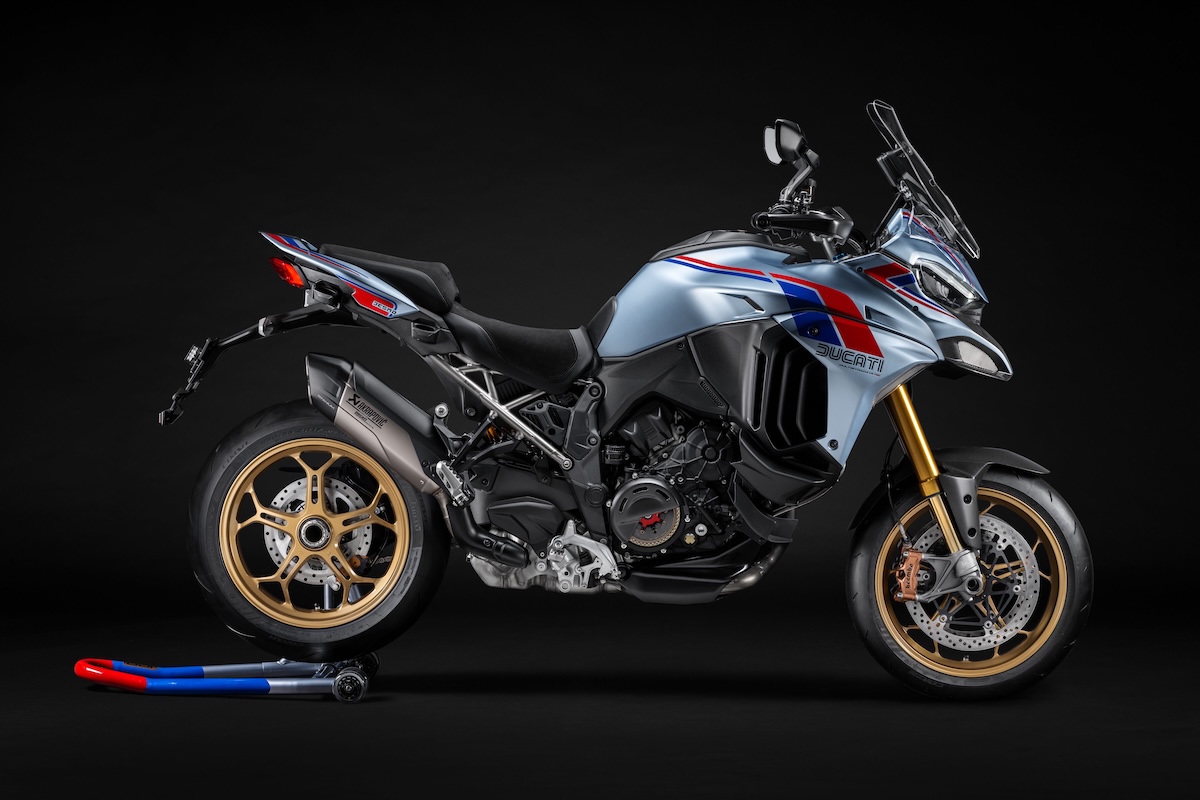
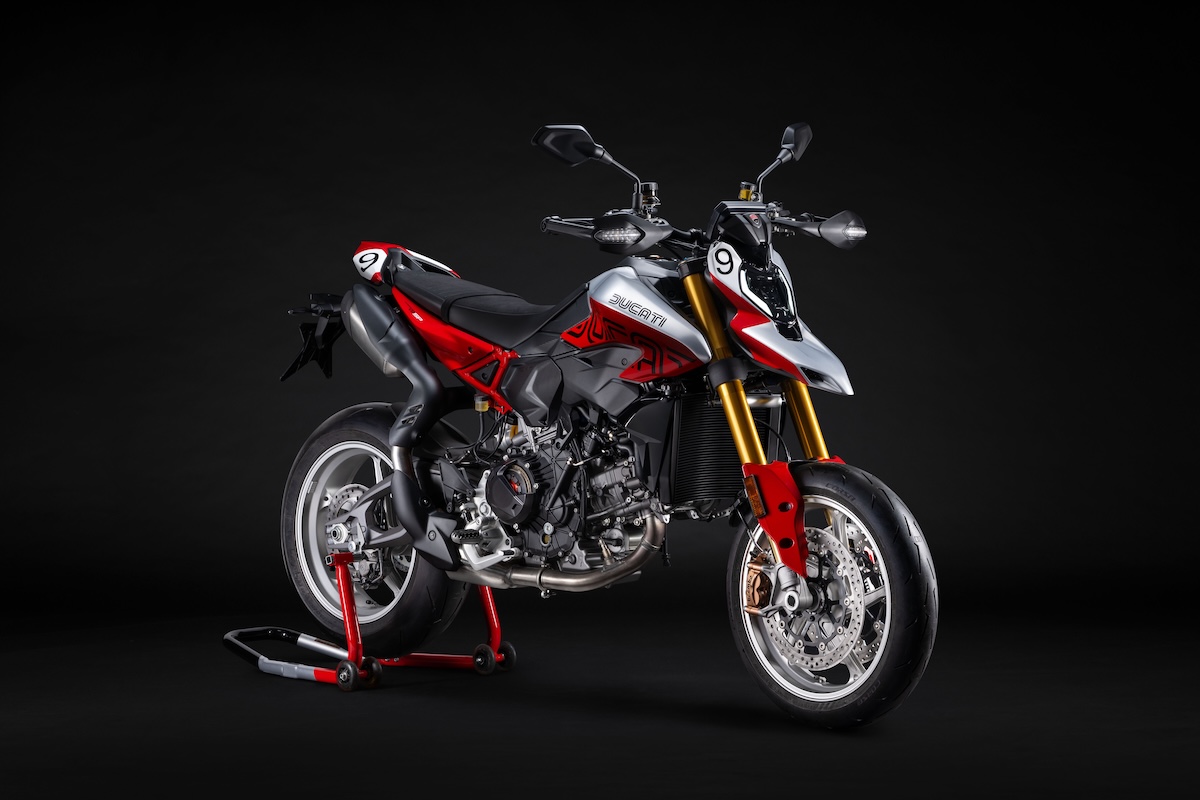
The Hypermotard V2 SP 100 recalls the 860 “24 Horas de Montjuïc” — the bike with which Salvador Canellas and Benjamin “Min” Grau won the Catalan endurance race in 1975 for the NCR team, in the bright orange and yellow livery that made the NCR Ducatis unmistakable at endurance events.
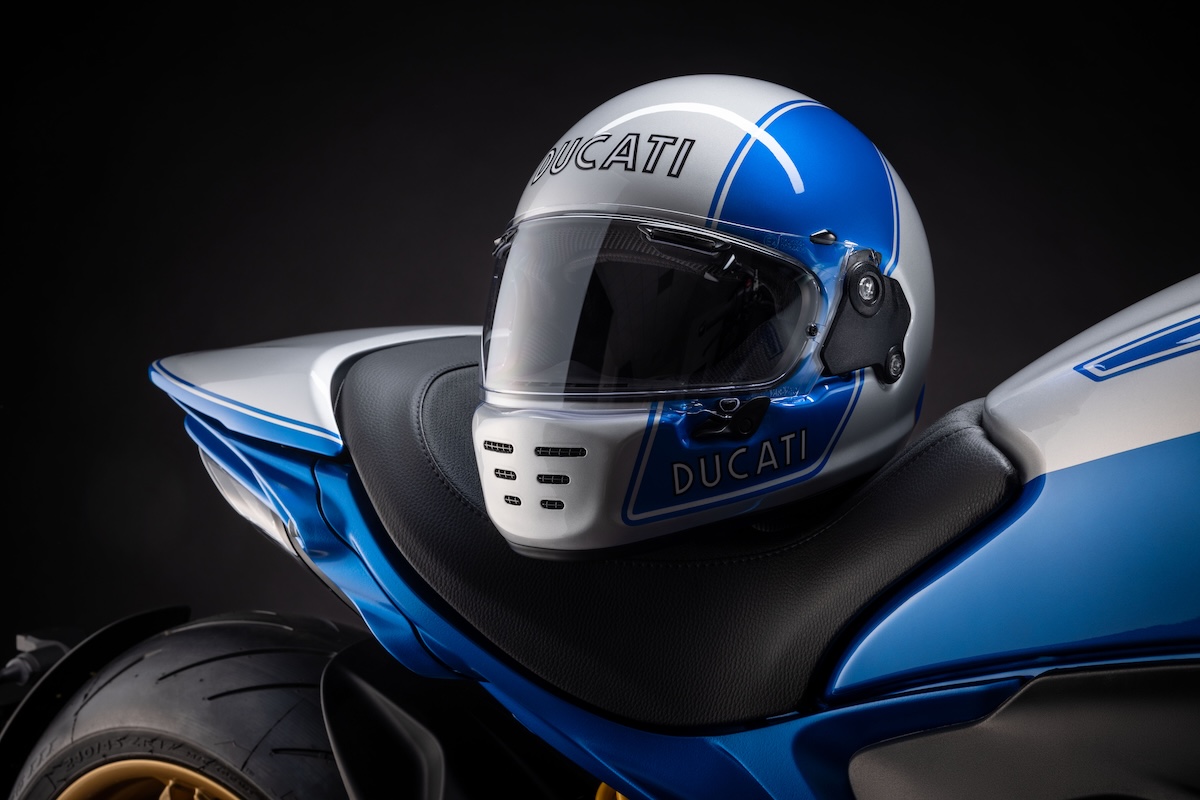
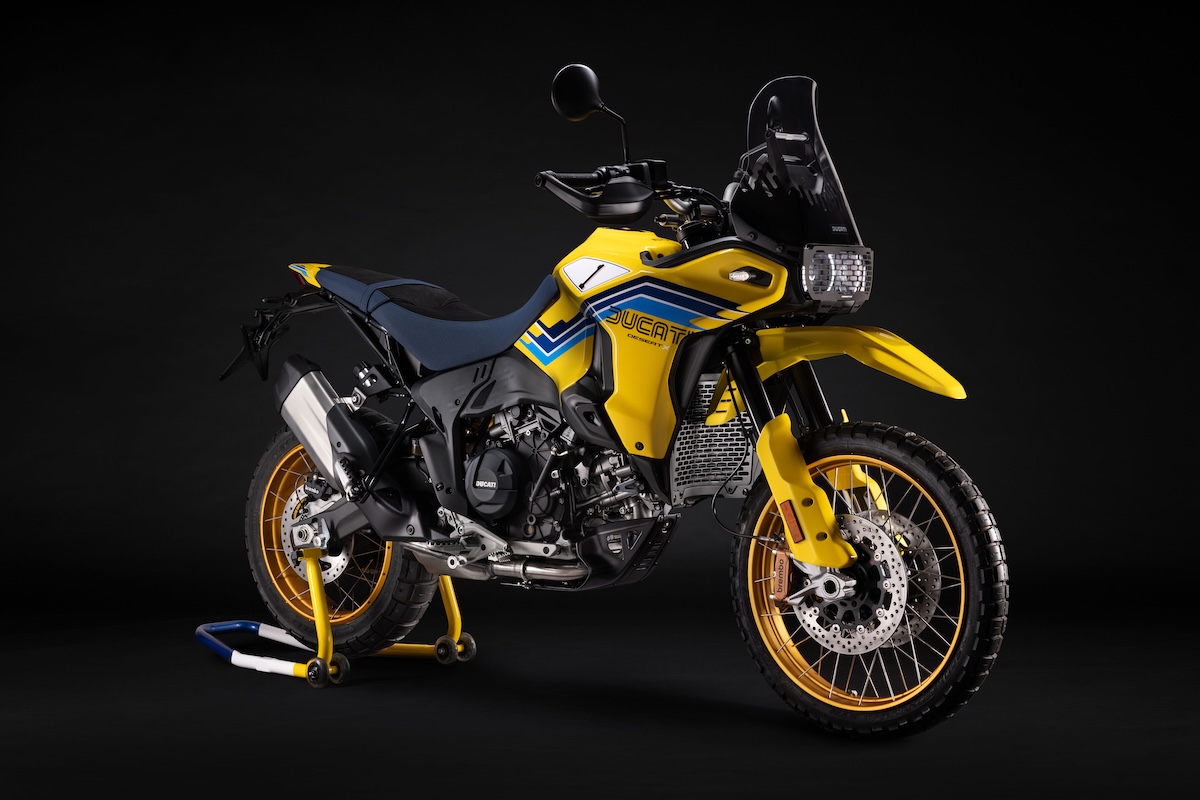
The Hypermotard V2 SP spec means Öhlins suspension and forged wheels. And finally, the DesertX 100 carries what may be the most obscure reference in the collection: the Pantah “Ice,” a modified Pantah 500 with studded tyres and no brakes, built to perform on Alpine ice tracks during interval shows at EFIM-organized Alfasud ice racing championships in the early 1980s. EFIM was the state holding company that controlled both Ducati and Alfa Romeo at the time. The yellow and blue livery chosen for the DesertX was pulled from a model that until recently was part of the Ducati Museum collection.
The Ducati Collezione 100 at Mugello — A Vernissage on the Start Straight
Ducati staged what it described as a vernissage — a gallery opening — on the legendary Mugello straight during the Italian MotoGP weekend. Nespolo’s art works lined the route as guests walked toward the reveal of the ten motorcycles. Marquez and Bagnaia then unveiled their race bikes, which carried a single combined livery drawing from all ten Collezione 100 designs simultaneously. The centenary dates 1926–2026 appeared with glitter — the deliberate Imola Desmo reference — while the front fairing contrasted modern graphics against an oval number plate and vintage-style font.
The Ducati Collezione 100 will next be visible publicly at World Ducati Week on July 3–5, in a dedicated space for Ducatisti. The ten bikes will then appear at the Goodwood Festival of Speed before returning to Bologna for display at museums across the region.
The Dry Clutch Detail and What It Means for the Ducati Collezione 100
The dry clutch is worth pausing on. For the V4-family bikes in this collection — Panigale V4 S, Streetfighter V4 S, Diavel V4 RS, XDiavel V4, Multistrada V4 RS — the dry clutch is an expected part of the character package. For the V2 family, it is not. The Panigale V2 S 100 and Hypermotard V2 SP 100 both run a dry clutch developed specifically for this collection, making the Panigale V2 S 100 the first V2-family Ducati to carry this specification.
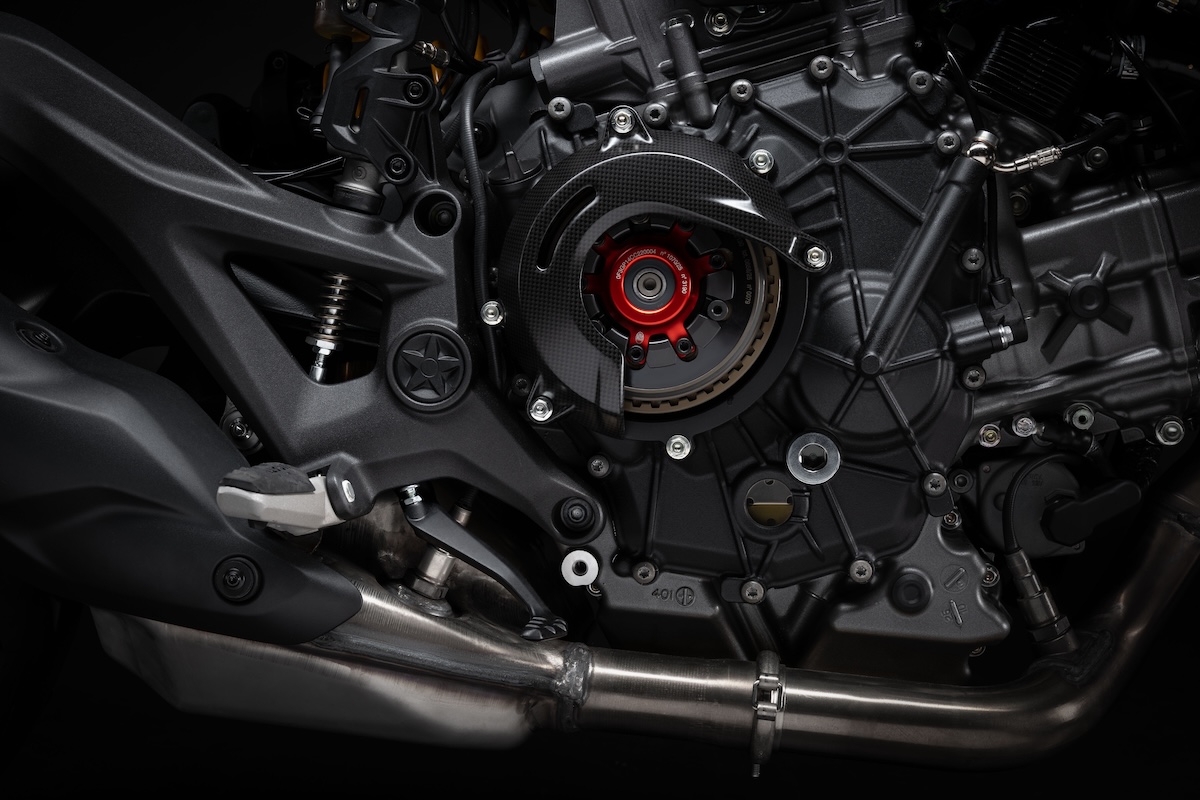
The dry clutch changes the auditory and tactile signature of the bike at idle and low speed in ways that matter to the rider who chose a V2 Ducati for exactly those reasons. It is a detail that required dedicated engineering work, not a carryover component, and it is appropriate that Ducati included it in a centenary collection built around authenticity.
How to See and Order the Ducati Collezione 100
Each of the ten Ducati Collezione 100 models is limited to 100 numbered units globally, with no planned second run. Ordering details and the full model lineup are available through Ducati’s official Collezione 100 channel. The collection will be on public display at World Ducati Week (July 3–5, 2026), at Goodwood Festival of Speed, and subsequently in museums in Bologna.
The Ducati Collezione 100 is exactly the kind of release that rewards the rider who already knows the history. Understanding what separates the Ducati Collezione 100 from a standard limited edition is understanding the difference between a livery applied to a bike and a livery that earns its place on one.
The Imola glitter, the NCR orange, the 900 Replica’s “almost Italian” tricolor, the California Hot Rod’s Daytona context — none of it requires explanation for the Ducatisti who will be placing orders. But the Ducati Collezione 100 also functions as a complete brief on how the brand arrived at the place it occupies in 2026: ten bikes, ten chapters, one unbroken line from Borgo Panigale to Mugello. One hundred units of each. When they’re gone, they’re gone.

About The Author