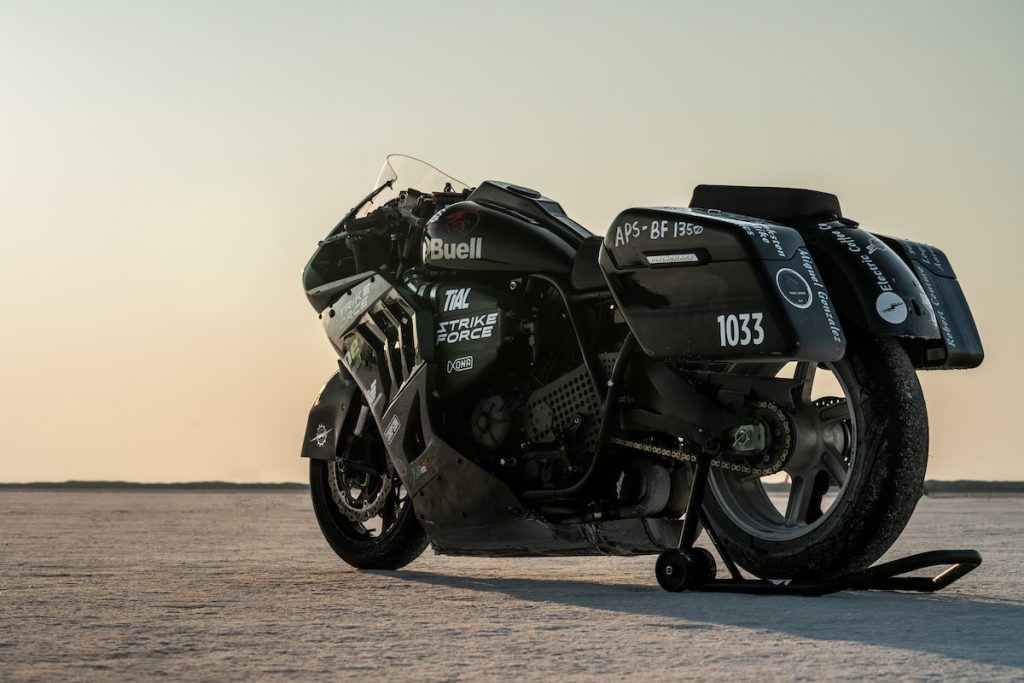
Project Leviathan Bonneville Speed Week is over, and Buell Motorcycle Co. walked away with more than salt in the intake. Jacob Stark and the Leviathan team turned a rookie E-license into an SCTA Category B competition license on their first-ever run at the Bonneville Salt Flats, verifying a 178.531 MPH pass that puts the turbocharged build on track for a Category A record attempt in 2027.
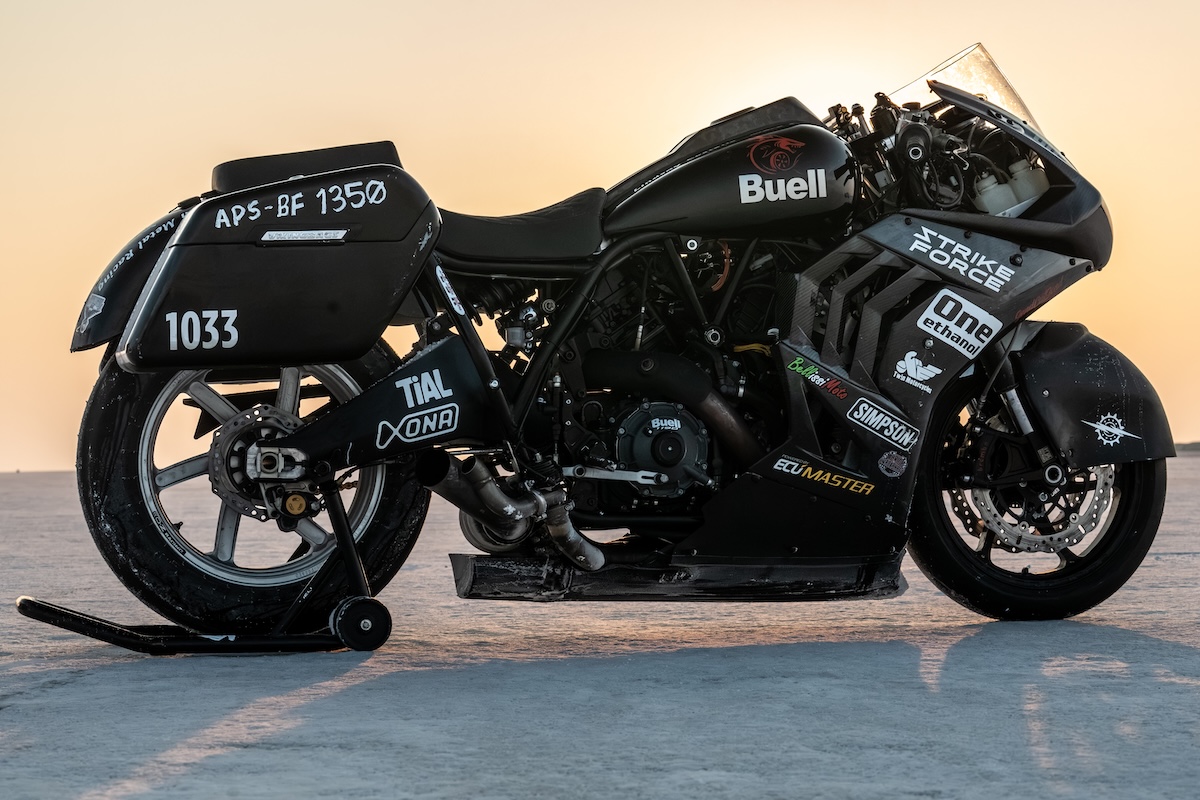
The platform underneath Leviathan is Buell’s production-based 1190cc ET-V2 engine, turbocharged for roughly 400 horsepower on the salt. Stark built the machine alongside Jessie Brown of JB Tech Racing, the team’s co-builder credited across the week’s runs. Buell’s return to American manufacturing has been a story worth watching on its own, and this Bonneville debut is the clearest sign yet the comeback has teeth.
For riders who haven’t chased a Bonneville license, the classes step up in speed range rather than skill badges. E is the rookie tier, mostly proving the bike is safe at low speed. Category B raises that ceiling substantially. Category A is where actual record attempts happen, run against the specific record for a given engine class and body style.
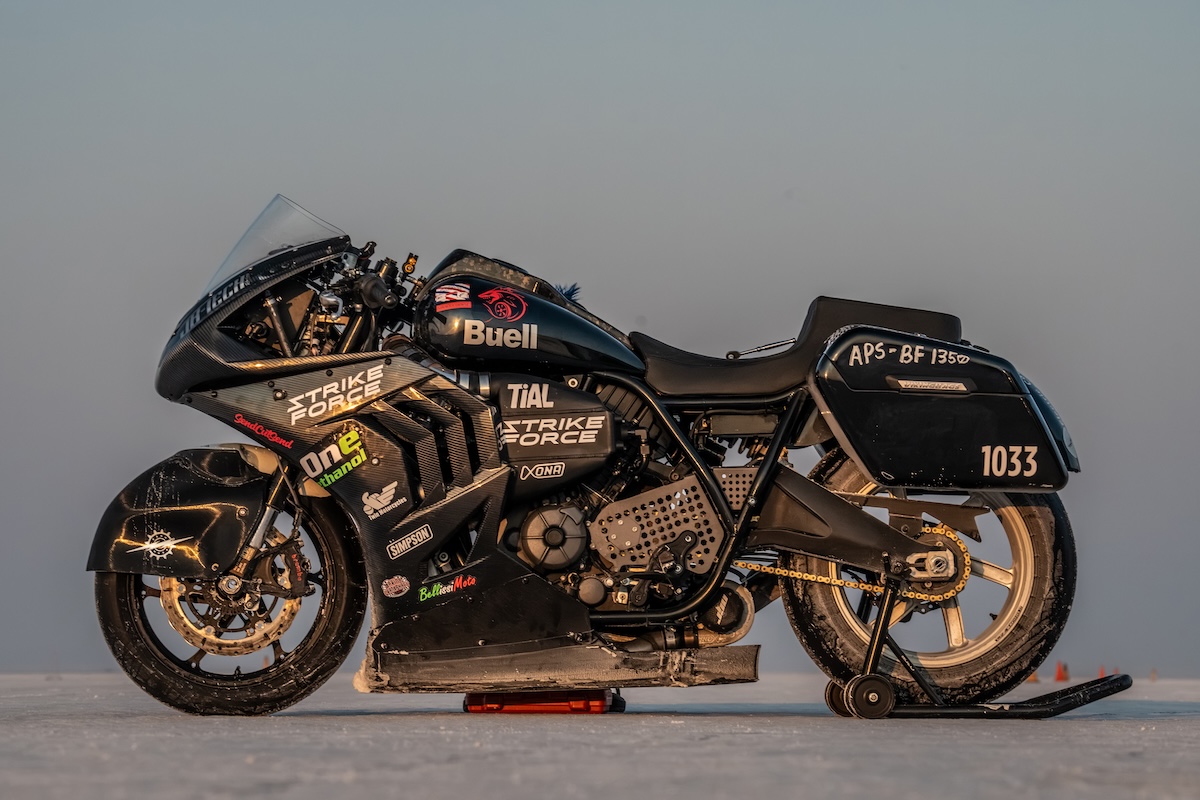
How Project Leviathan Bonneville Speed Week Earned Its Category B License
SCTA’s Category B rules for Speed Week left no room for error: a bike had to clear 175 MPH and stay under 200, full stop. Anything logged at 200 or above voided the run entirely, license or no license. That ceiling turned Leviathan’s qualifying pass into as much a test of restraint as raw speed.
Stark watched the dash climb to 188 MPH during the licensing run and made the call to stay in fourth gear. Grabbing fifth on a 400-horsepower turbo bike would likely have pushed Leviathan past 200 and scratched the entire attempt. The restraint paid off: the pass verified at 178.531 MPH, locking in Category B and opening access to Bonneville’s five-mile Long Course.
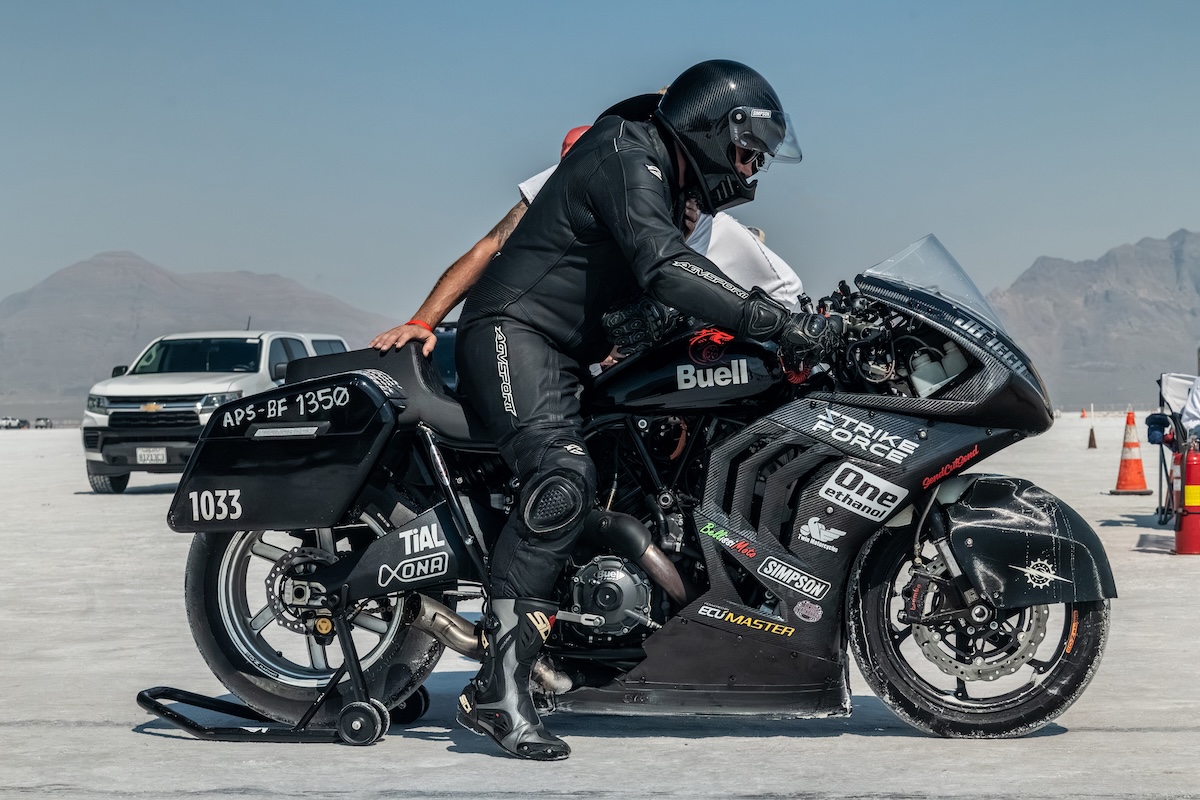
Trackside Trouble During Project Leviathan Bonneville Speed Week
Getting to that pass wasn’t clean. After clearing tech inspection and banking an initial D-license checkout run, the team ran into an ECM shift lockout mid-week, then found the turbo inlet mesh choked with chain grease flung loose on the salt. Both got sorted — the ECM reprogrammed, the intake cleared — before Stark lined back up for the Category B attempt.
“We learned to ride the salt, learned the bike,” Stark said, calling the week a proving ground for the build rather than a record chase.
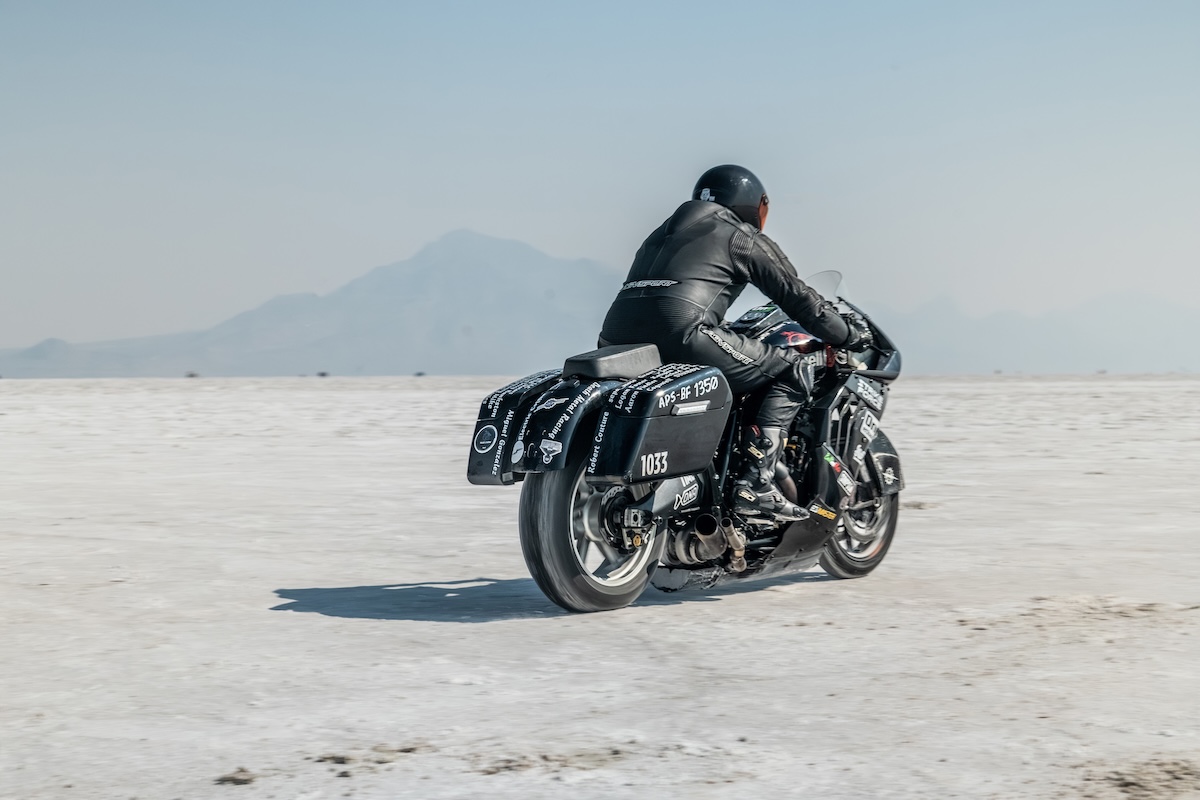
What’s Next After Project Leviathan Bonneville Speed Week
Category B unlocks the Long Course, and the team is already talking about Category A next year — a real shot at an official record instead of a qualifying pass. Stark expects the technique and prep to change significantly heading into 2027, now that the crew has a full week of salt data and trackside fixes behind them.
Buell built Project Leviathan around production-based components rather than a one-off exotic, which lines up with the same domestic-sourcing approach behind Buell’s current production lineup — engineered for both track use and the riders already sitting on reservation deposits.
Project Leviathan leaned on a wide roster of technical partners to get to the salt, from co-builder JB Tech Racing down to a long list of platinum-level backers. For a first Bonneville outing, that support turned into a license upgrade and a clear runway toward 2027.
About The Author