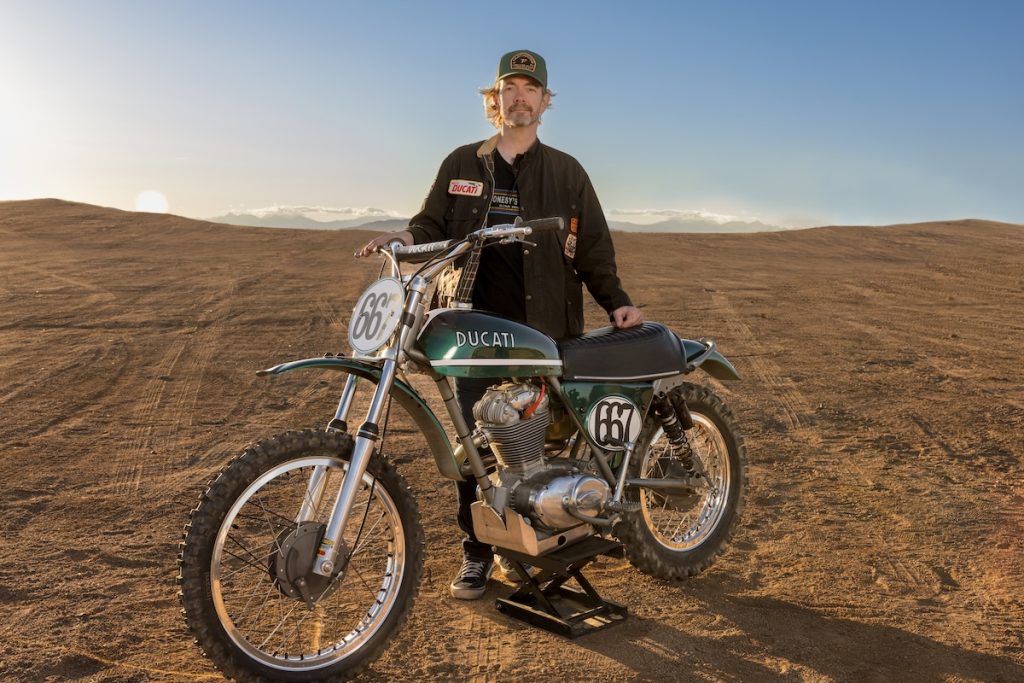

Ducati North America CEO Jason Chinnock showed up to the Biltwell 100 on a 1971 Ducati 450 R/T Desmo that he personally restored — and then he raced it. In Ducati’s centennial year, with the brand entering the off-road category in the U.S. through motocross, supercross, and grassroots racing, the head of the North American operation chose to make the statement himself rather than delegate it to a press release.
The Ducati 450 R/T Desmo is one of Ducati’s earliest purpose-built off-road motorcycles, originally developed at the request of U.S. importer Berliner Motors after Ducati’s 1969 win in the Baja 500 on a Scrambler 350. Chinnock’s decision to restore and race the machine at the Biltwell 100 connects the brand’s heritage to its present-day off-road ambitions in the most direct way possible.
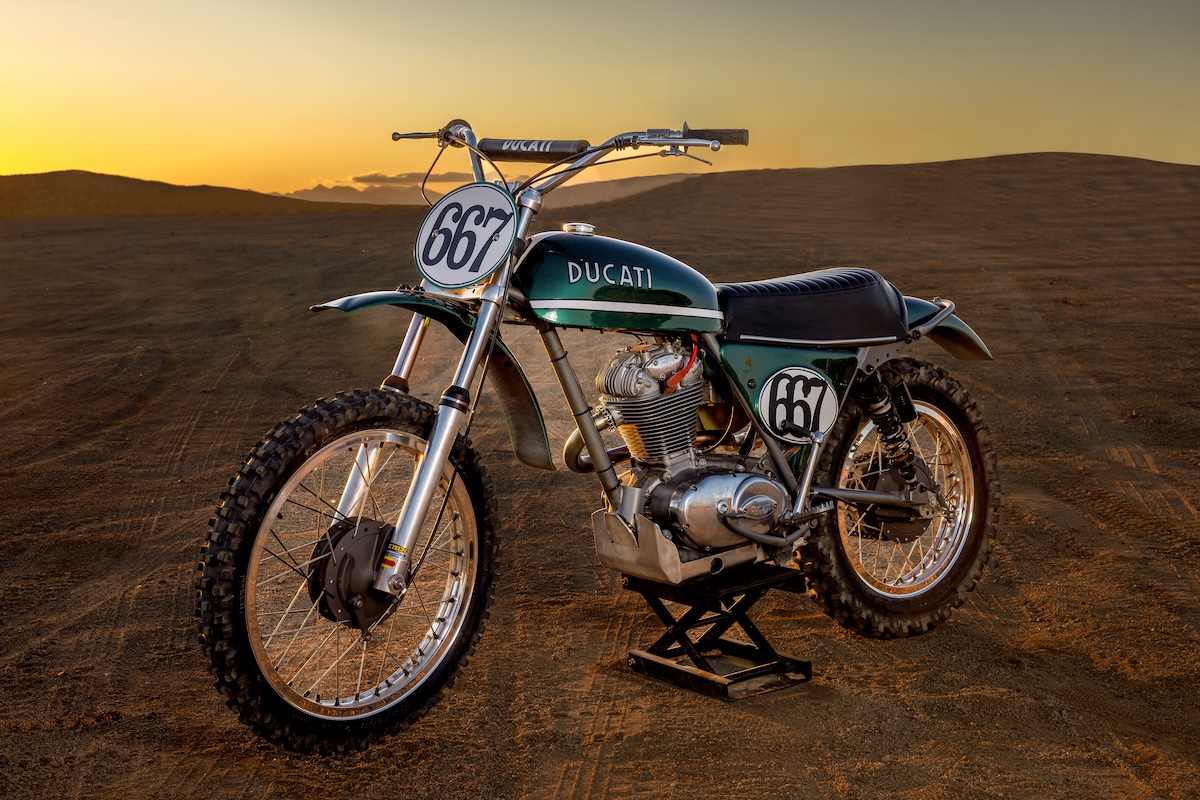
The Ducati 450 R/T Desmo Build
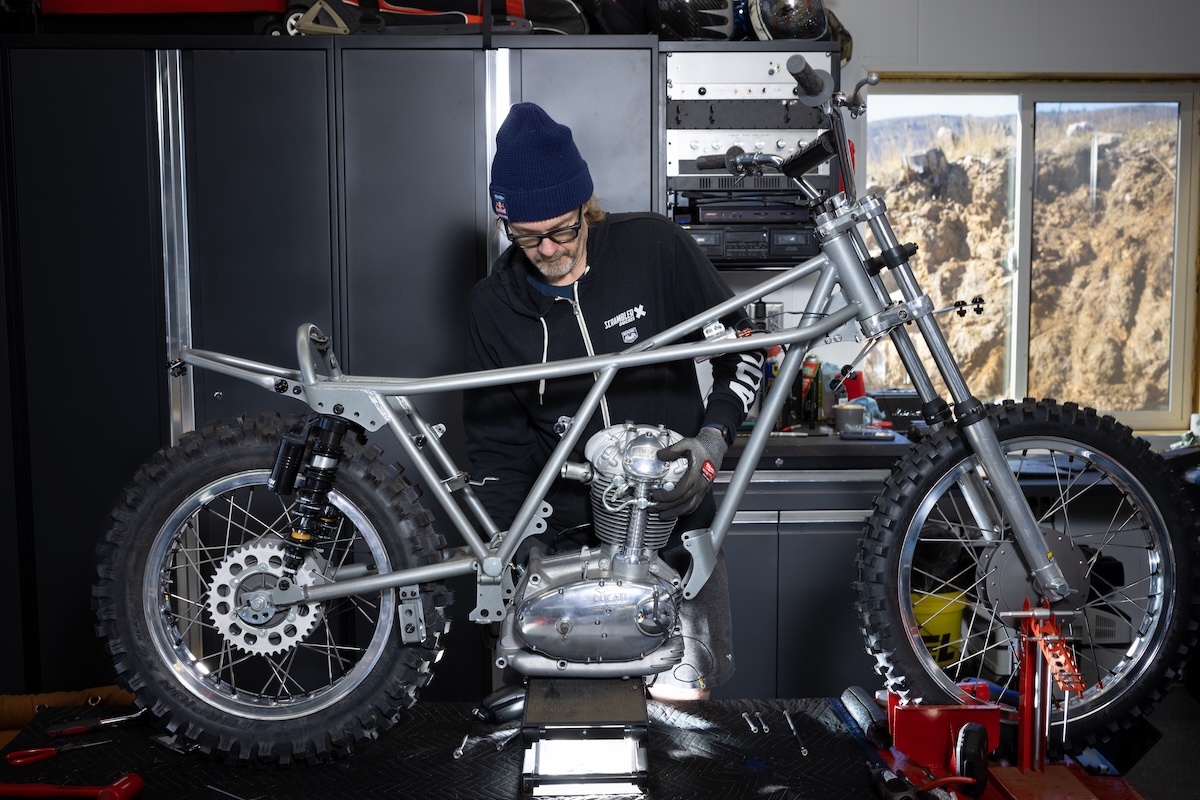
Chinnock began the Ducati 450 R/T Desmo restoration in late January and transformed the 54-year-old platform into a competitive modern retromod that blends classic styling with genuine performance upgrades. The engine was completely rebuilt to factory blueprint specifications by Rich Lambrechts of DesmoPro, a trusted expert on vintage Ducati bevel-drive engines, with improvements drawn from racing experience.
Dubya USA supplied shouldered Excel rims with Bulldog nipples and spokes plus Cerakoted hubs. Race Tech handled the front fork rework with gold valves and provided G3-S Custom Shocks. FMF Racing fabricated a custom one-off performance titanium exhaust with spark arrestor. Pirelli Scorpion Mid-Hard XC tires handle the dirt. Pro-Bolt titanium hardware reduces weight throughout, and a custom-fabricated aluminum skid plate protects the engine. Bespoke finishes inspired by the original Ducati 450 R/T Desmo prototype livery complete the build.
Racing the Ducati 450 R/T Desmo at the Biltwell 100
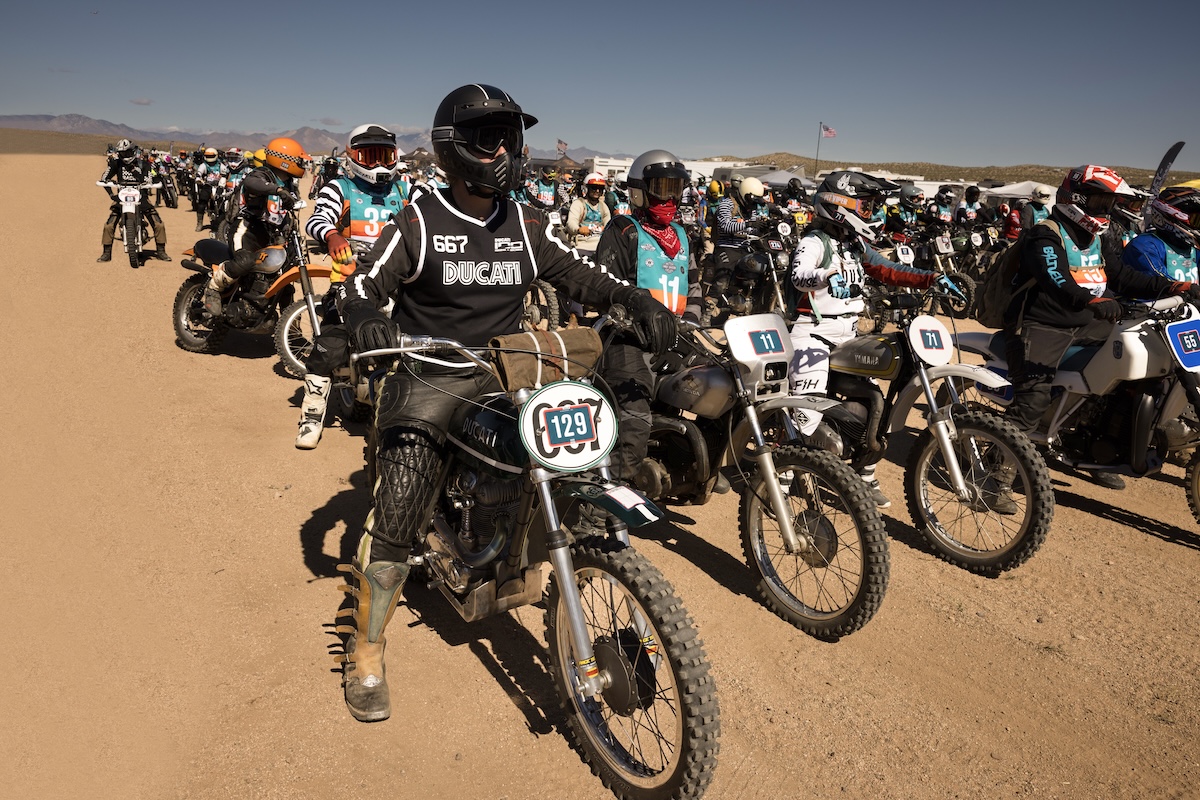
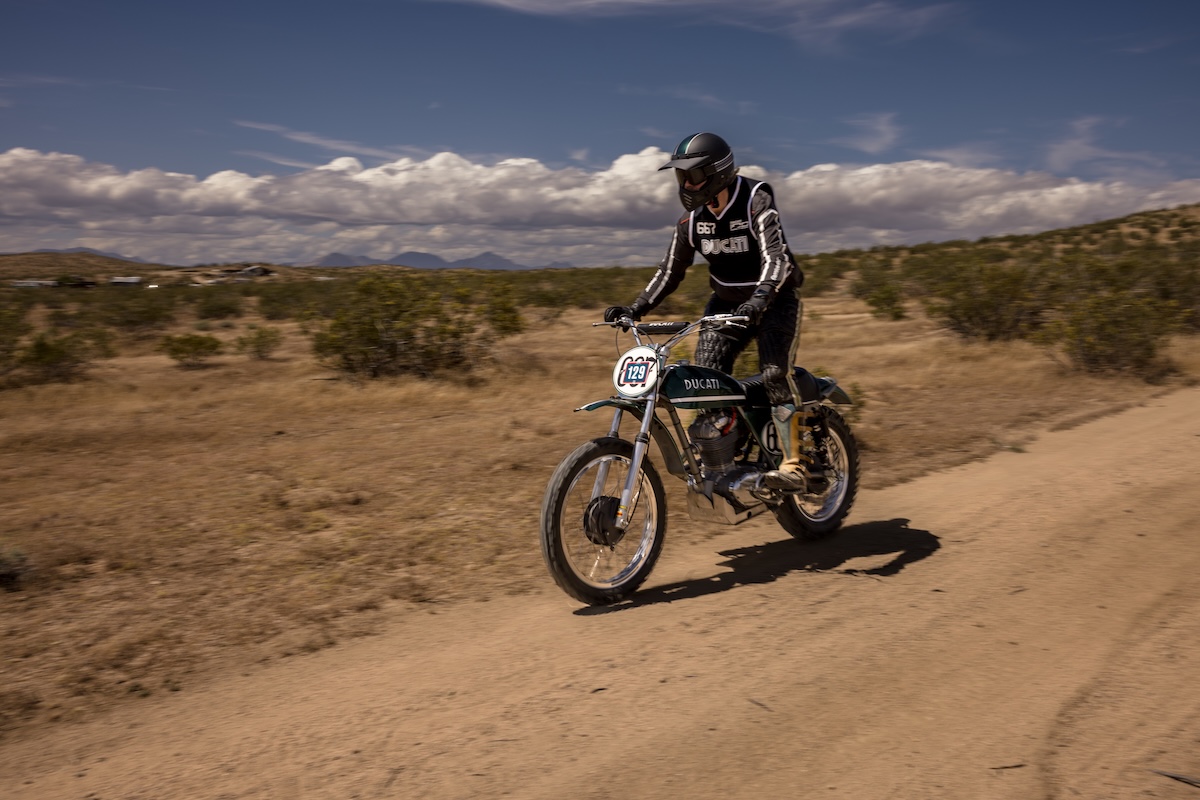
Chinnock entered the Ducati 450 R/T Desmo in the Biltwell 100 Dual Shock class covering bikes from 1971 to 1990, and the goal was straightforward — finish. The race did not make it easy. He fouled a plug on the first lap and changed it on the trail. On lap three, he ran into a rain ditch and twisted the forks in the triple clamps.
He rode the final 17 miles with crooked bars to complete the race. The next day, he returned aboard the Desmo450 EDX to compete in the Modern Class, bridging Ducati’s early off-road heritage with its current production evolution. He improved from 9th to 6th in lap two and planned to close the gap on lap three, but a crash forced him to retire.
Meanwhile, Ducati rider Jordan Graham delivered a dominant performance aboard the Fasthouse Ducati Desmo450 EDX, taking first place overall — proving that the brand’s off-road program is producing results on the ground, not just in the marketing department.
Chinnock said it directly: it will take more than winning races for Ducati to be taken seriously in the off-road category in the U.S. His interest in motorcycles started with the fascination of Evel Knievel, and it was desert racing in Nevada that made dirt riding a permanent part of his life. Racing the Ducati 450 R/T Desmo at the Biltwell 100 was not a corporate photo opportunity — it was a CEO putting himself on a starting line alongside the community he is asking to accept his brand, aboard a machine that proves Ducati’s off-road roots go back more than half a century.
In a year where Ducati is celebrating its 100th anniversary with machines like the Superleggera V4 Centenario, Chinnock’s choice to race a hand-restored 1971 Ducati 450 R/T Desmo says something specific about how Ducati North America intends to build credibility in the off-road space — not through sponsorship banners and influencer partnerships, but by showing up, getting dirty, riding the final 17 miles with bent bars, and coming back the next day to do it again.

About The Author