
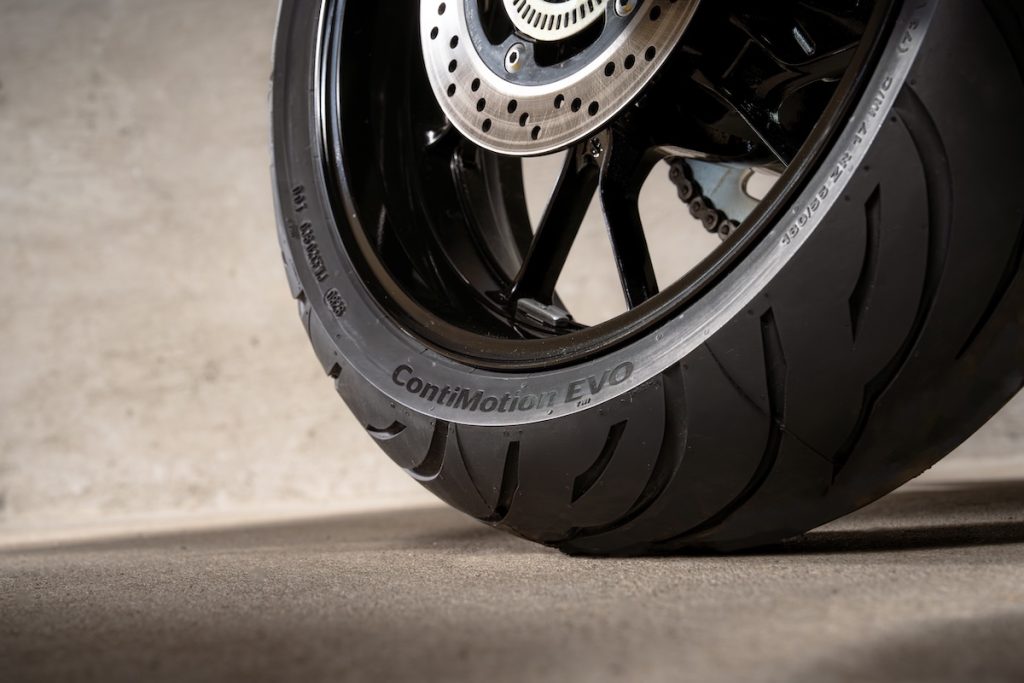

Continental launched the ContiMotion EVO on September 10 as the successor to its ContiMotion sport touring tire. It is built for riders who want one tire to cover wet roads, long distances and weekend sport riding. That is a crowded segment, and the EVO enters it on the back of a well-liked predecessor.
What Makes the ContiMotion EVO Different
New carcass materials are the biggest structural change, adding stability and consistency that sharpen the handling. They work with Continental’s EasyHandling technology and an optimized construction to give predictable steering response, so the tire turns in with confidence and without nervous quickness.

The tread uses an updated hybrid silica compound for wet and dry grip. The same compound and a dedicated pattern are built for high mileage, because this tire is meant for everyday use. Mileage and wet grip usually pull against each other, and a compound that handles both is the hardest part of the brief.
ZeroDegree steel-belt construction rounds out the changes and targets high-speed stability. Combined with the new carcass, it aims the ContiMotion EVO at fast highway miles as much as back roads. Christoph Ettenhuber, Head of Business Field Motorcycle Tires at Continental, said riders get “a tire that is noticeably more agile.”
ContiMotion EVO Fitment and Sizing
The ContiMotion EVO is built for sporty weekend riders and touring riders alike, across naked bikes, roadsters and modern classics. That range suits a versatile tire. It has to work on the bikes riders actually own.

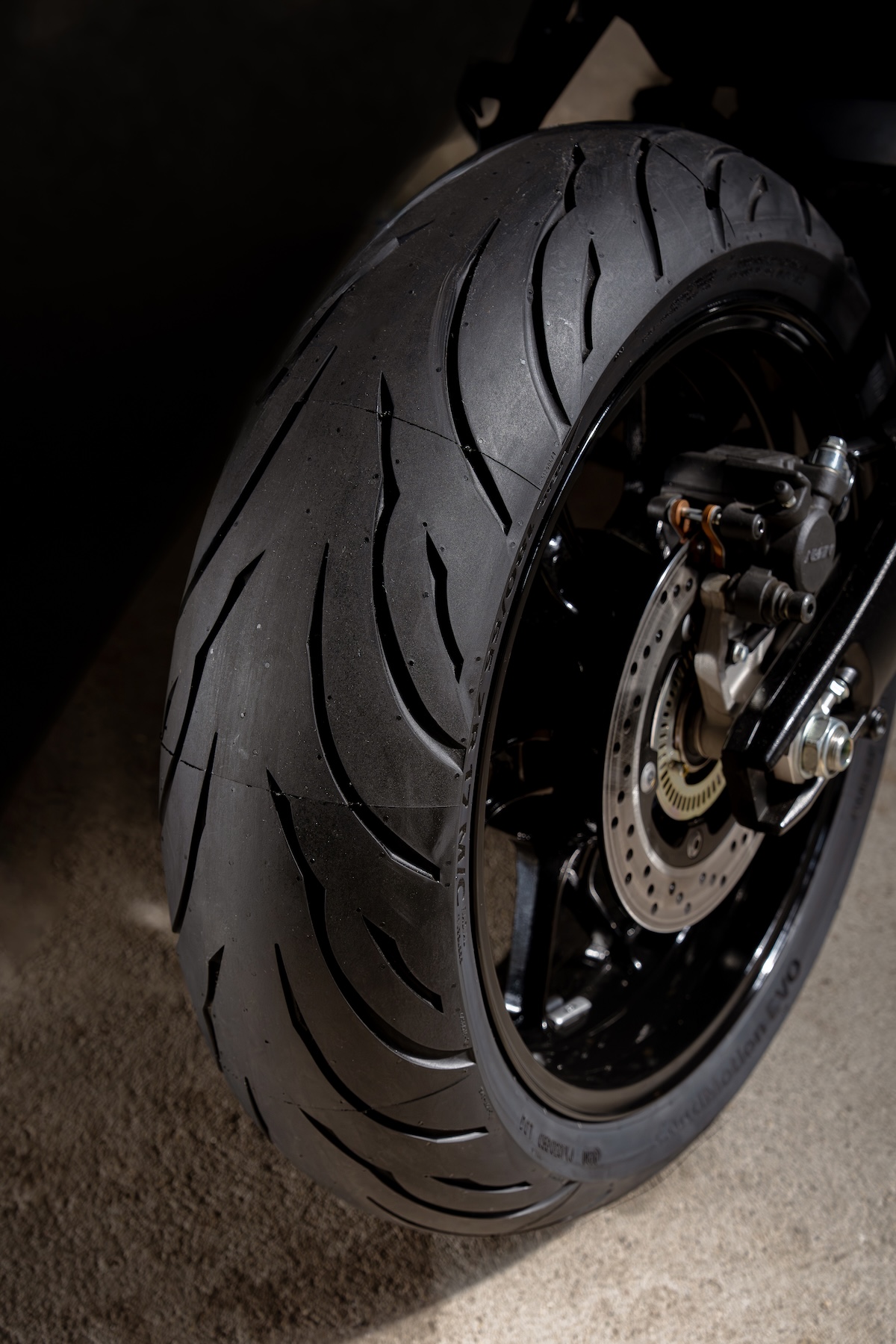
Named fitments include the BMW R12 nineT, the Triumph Daytona 660, the Ducati Supersport 950, the Honda CB650R, the Suzuki GSX-8TT and the Yamaha MT-09.
The list reads like a map of the middleweight market: a modern-classic roadster in the nineT, a sportbike in the Daytona 660, a Supersport 950, a CB650R roadster, a GSX-8TT and an MT-09 naked. A single tire fitting all of them means it has to be neutral enough to suit very different riding positions and power outputs.
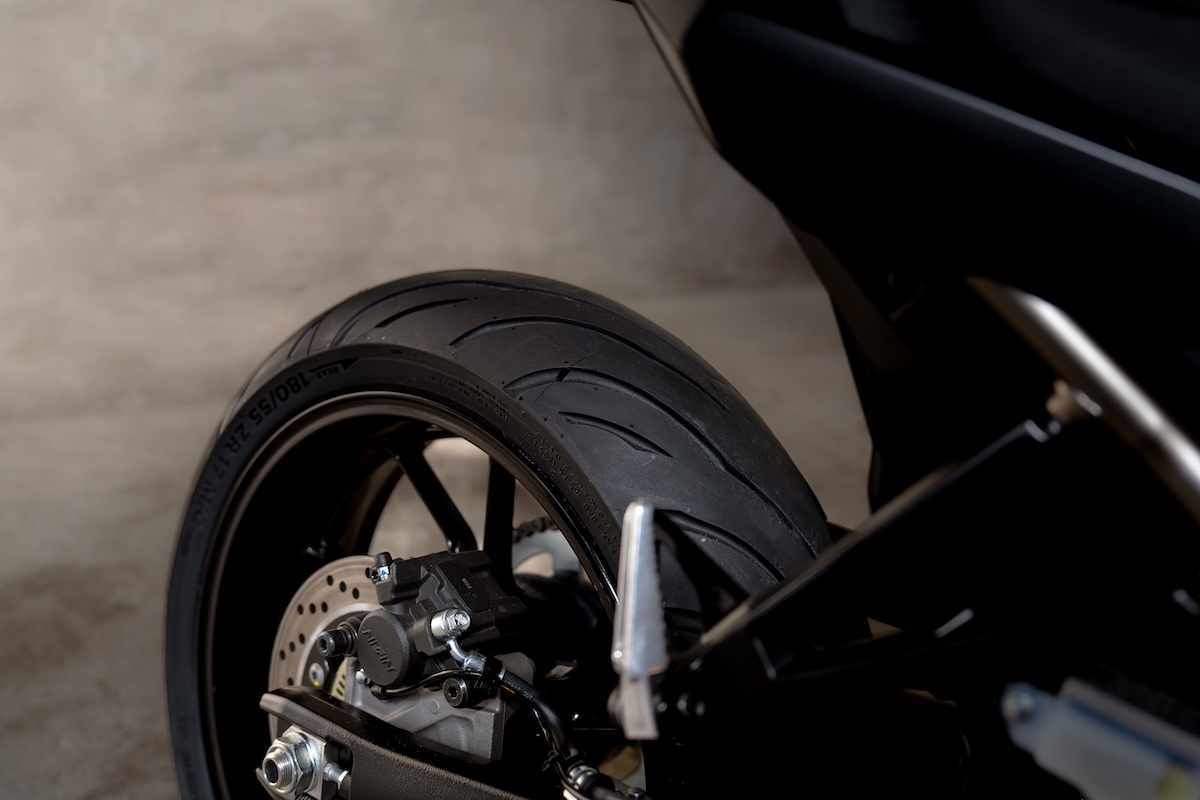
The 120/70 front and the 160/60 and 180/55 rears, all ZR 17, are available now. A 190/50 ZR 17 rear follows in November. The ContiMotion EVO and the outgoing ContiMotion can be mixed front and rear, which helps a rider who needs to replace just one worn tire.
All four sizes are tubeless and W-rated, with load and speed ratings of 58W on the front and 69W or 73W on the rears. The EVO is a sport touring tire, so the W rating is a reminder that it is built to be ridden briskly as well as commuted on, and the 190/50 rear in November will suit the heavier, more powerful bikes in that group.
That mixing detail is the most practical line in the release. Most riders replace tires one at a time, and a successor that works with the old set lets a ContiMotion owner try the EVO on one wheel before committing to a pair.
A sport touring tire has to cover a lot of ground, and the people who buy one care most about wear and wet grip. The recipe here is straightforward: a more consistent carcass, a hybrid silica compound and a steel belt built for speed. It reads like a sound plan for a rider who puts real miles on a set.
Three tests will tell riders how good the ContiMotion EVO is: wet grip on a cold morning, how the front tracks mid-corner on a worn set, and whether the high-mileage compound stays consistent across its life. None of those are visible on a spec sheet, and none of them can be judged in the first 500 miles.
Updating a tire people already like means keeping what they trusted and fixing the rest. Every bike meets the road through two small patches of rubber, and the ContiMotion EVO is built to make both of them more predictable.

About The Author