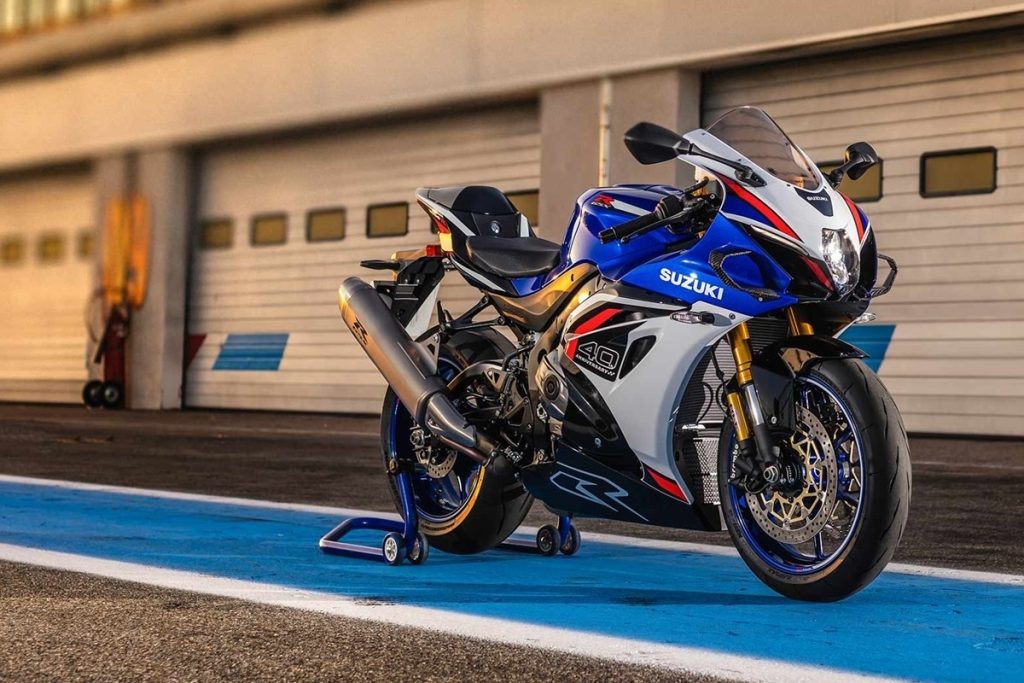

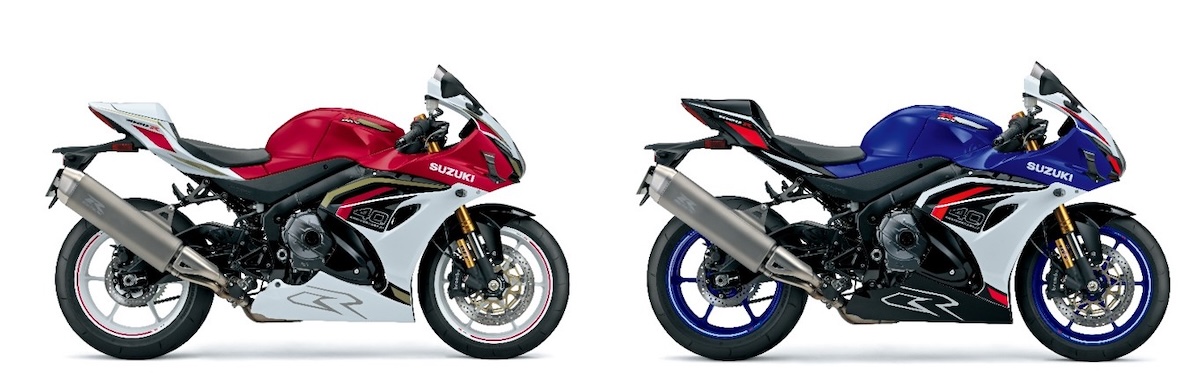
The 2027 Suzuki GSX-R1000 40th Anniversary lineup is on deck. The reservation window is now open and runs July 8–31. Suzuki has flagged reservation quantities as limited. Official pricing is now confirmed across all three trims: GSX-R1000 at $16,399, GSX-R1000R at $17,939, and GSX-R1000RS at $18,639 — a clean, evenly spaced three-tier ladder marking 40 years of the GSX-R nameplate.
A Genuinely Updated Engine Across All Three 2027 Suzuki GSX-R1000 Trims
The 2027 Suzuki GSX-R1000 isn’t an anniversary paint job on an unchanged bike. The 999.8cc inline-four gets new crankcases and crankshaft with larger-diameter journals, a new cylinder head with modified ports, compression raised to 13.8:1 from 13.2:1, a new all-4-2-1 exhaust, and S-TFI injectors updated from a 10-hole to an 8-hole design for higher peak power and more precise fueling. The new titanium muffler drops from 8.3L to 5.5L at the same output. Suzuki calls the result the quickest-accelerating GSX-R model to date. The twin-spar aluminum frame is 10% lighter, with the spars set 20mm closer together for improved aerodynamics.
Electronics get a real update too: a new, lighter Bosch IMU delivers six-direction, three-axis motion and position data to the ECM for instantaneous adjustment. Applied for the first time on a 2027 Suzuki GSX-R1000 model, Smart TLR Control automatically sets the response of Roll Torque Control and the Lift Limiter to match the rider’s selected traction control setting — rather than tuning each system separately. Motion Track cornering ABS uses the new IMU data to support braking across a wider range of riding situations. A new Li-ion battery is lighter, holds voltage more stably, and carries an expected 10-year lifespan.
2027 Suzuki GSX-R1000R and RS: Race-Derived Suspension and Aero
The GSX-R1000R’s twin-spar frame adds adjustable swingarm pivots — Suzuki’s own language ties this directly to helping racers tune the chassis, with the standard position recommended for street use. The gold-anodized Showa BFF fork and BFRC-lite shock control damping outside the spring and shock body, delivering more consistent performance regardless of stroke — genuine race-derived technology, not a marketing label. ABS-equipped Brembo four-piston radial-mount front calipers are fed by stainless steel brake lines.
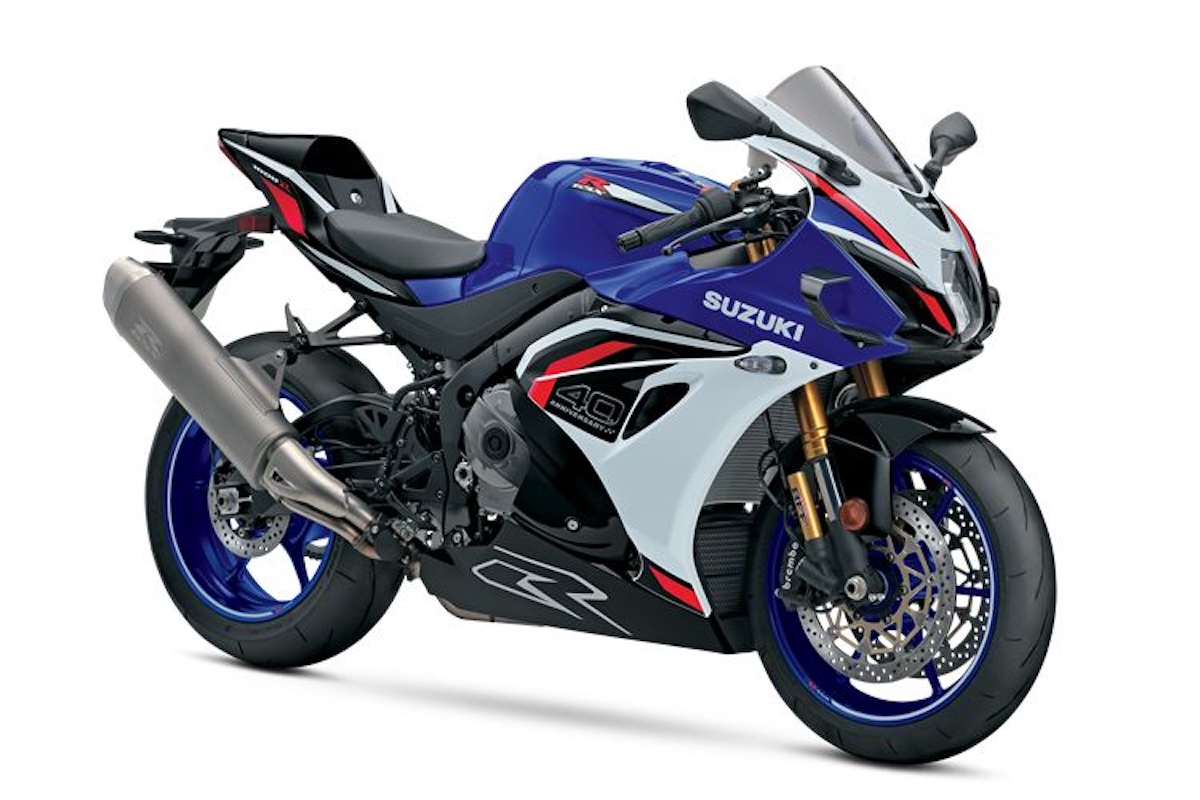
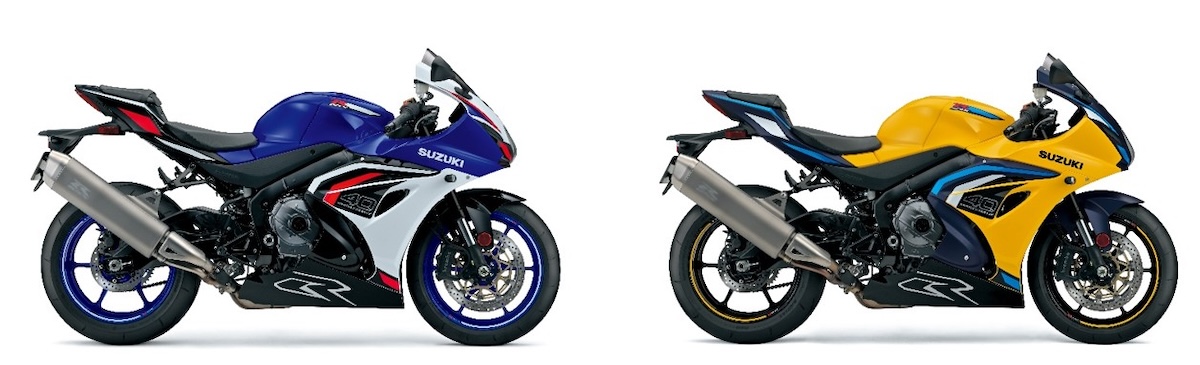
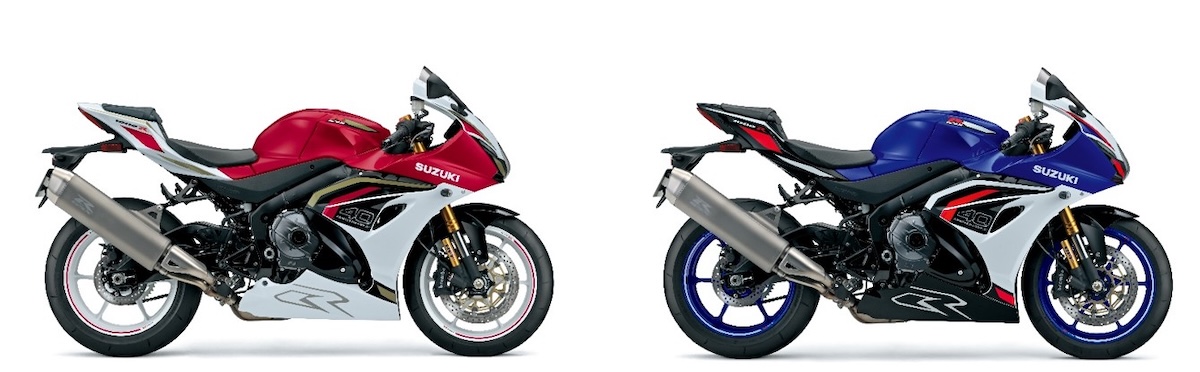
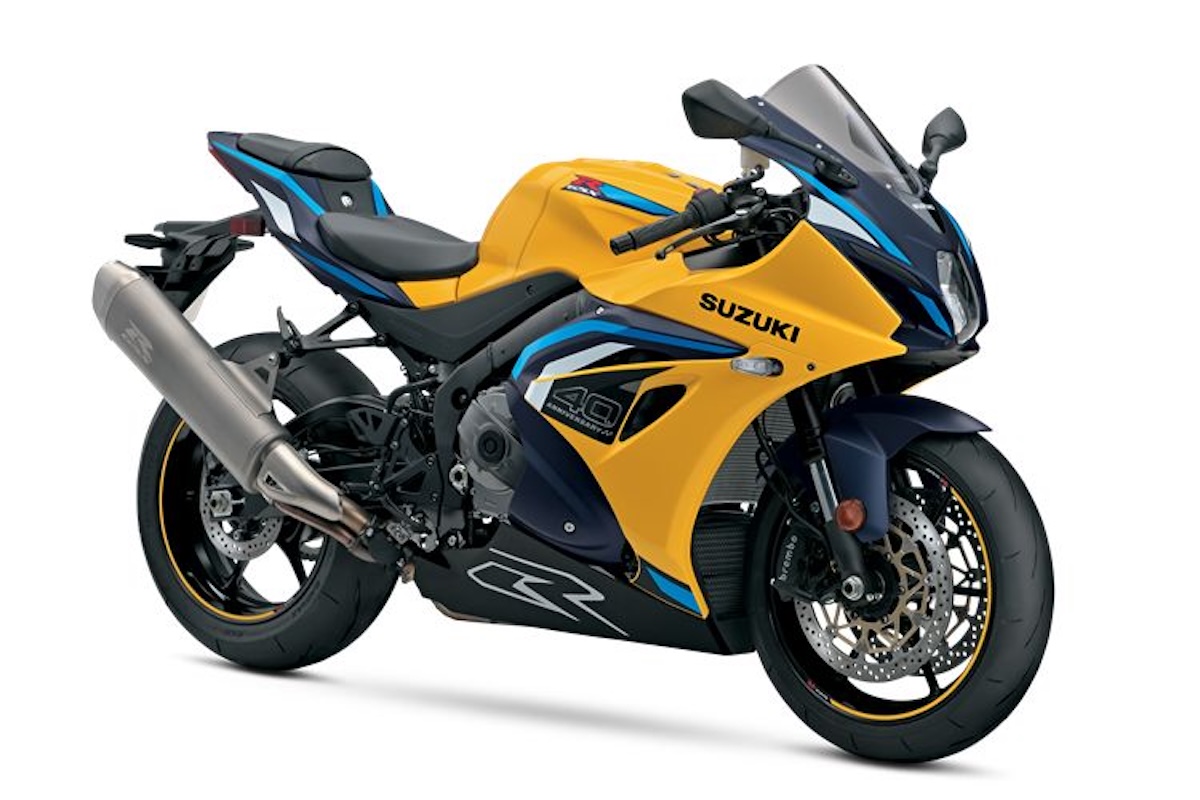
The 2027 Suzuki GSX-R1000RS tops the range with everything from the R plus new carbon-fiber winglets mounted to the front cowling sides — design cues pulled directly from the GSX-R1000R-based CN Challenge machine that races the Suzuka 8-Hour endurance event. To match the new exhaust, the RS’s left and right under-cowl panels were redesigned; the left panel is now smooth, with the hole present on the prior-generation GSX-R1000 removed. Colors run Pearl Vigor Blue/Pearl Tech White across all three trims, with the base and R also offered in Pearl Ignite Yellow/Metallic Mat Stellar Blue and Candy Daring Red/Pearl Tech White respectively.
Forty years ago, the GSX-R nameplate arrived with a simple, radical idea: build a race bike you could register for the street. Every update in this lineup — the tighter compression, the Bosch IMU learning to read the bike’s own lean angle, suspension that separates damping from spring — is still chasing that same idea, just with better tools than 1985 had to offer. The reservation window closes July 31st, but the real story is longer than that: Suzuki isn’t just celebrating where the GSX-R has been. It’s using the anniversary as a cover to quietly rebuild the platform for whatever comes next.
About The Author

Discover more from SportBikes Inc Magazine
Subscribe to get the latest posts sent to your email.