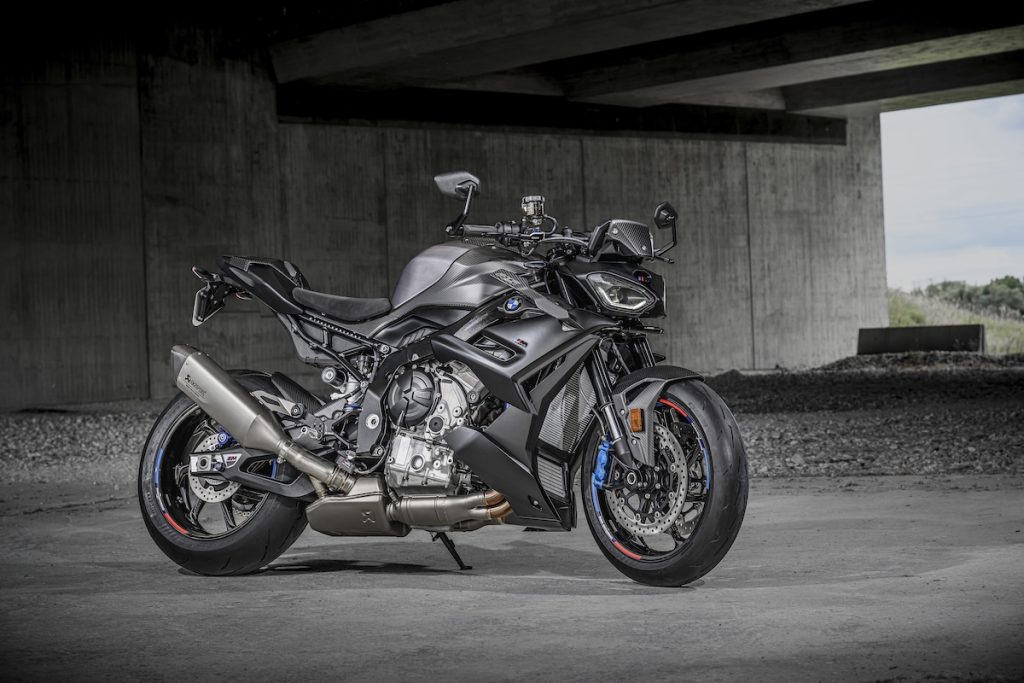

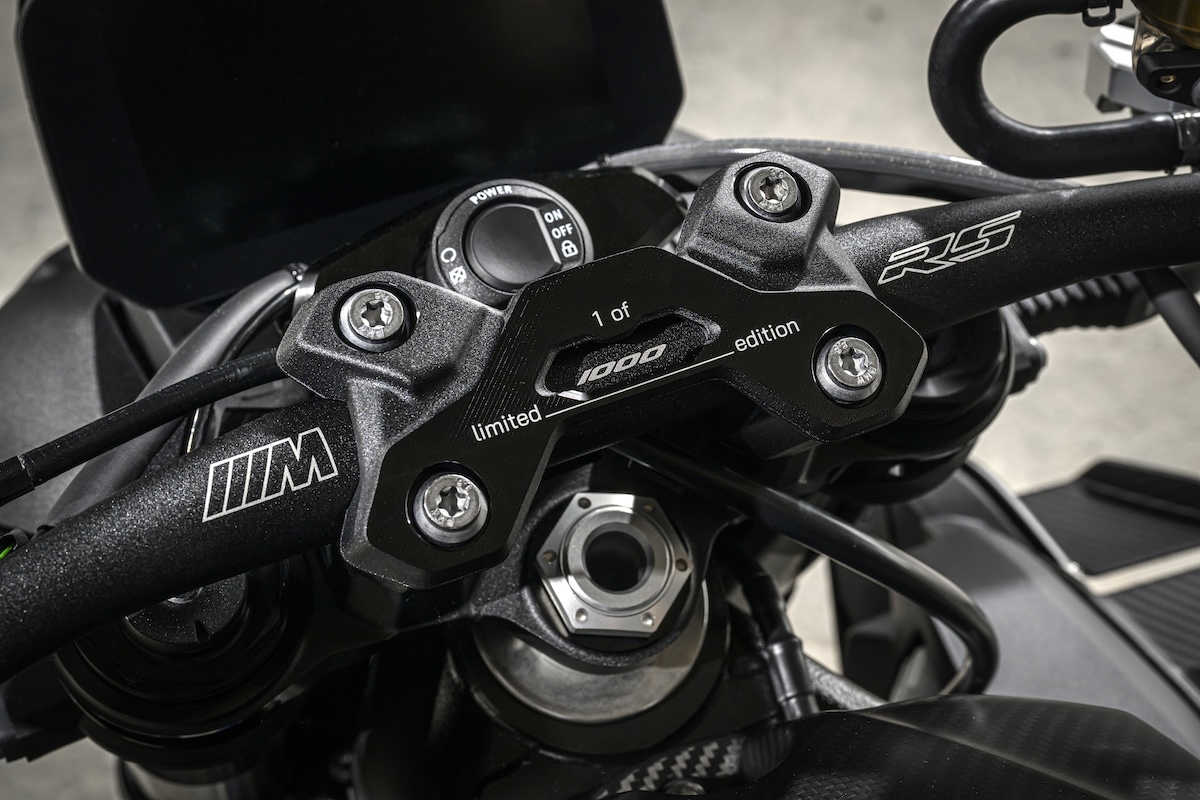
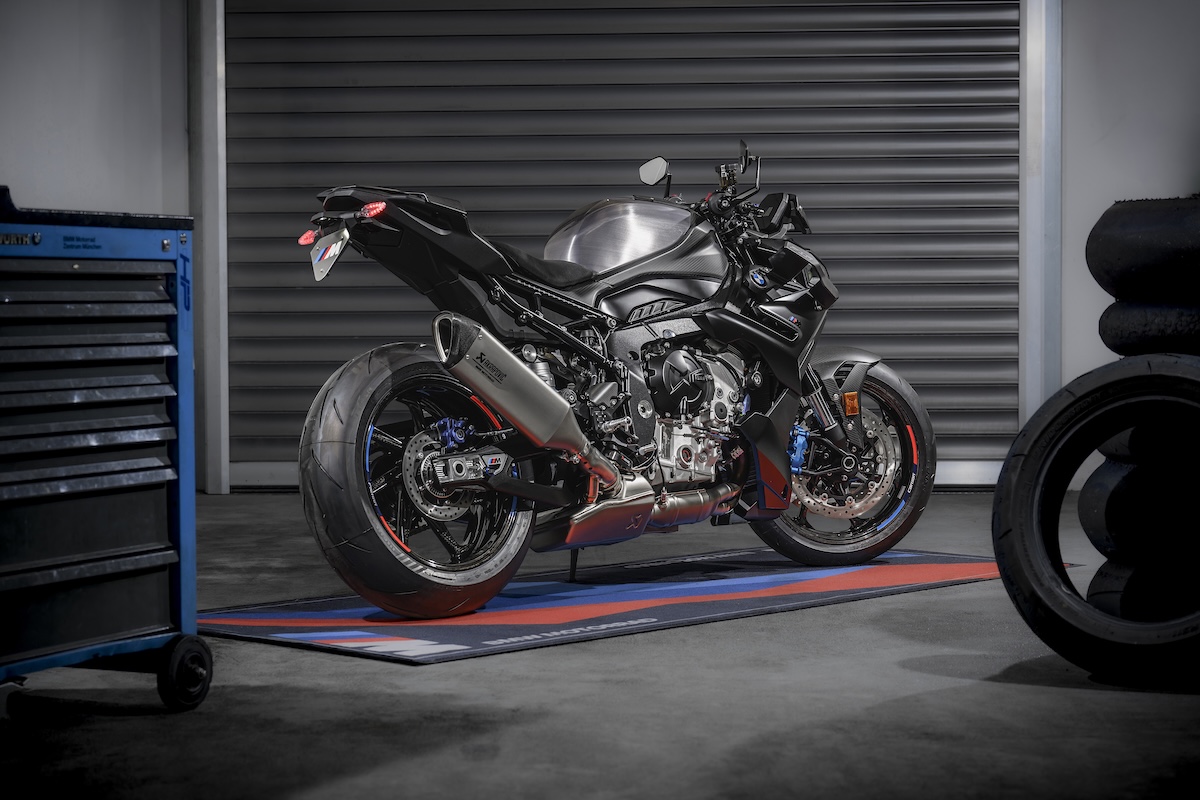
The BMW M 1000 RS puts the full 218 hp superbike engine from the M 1000 RR into a naked bike that weighs 196 kg (432 lb), road-ready and fully fuelled. BMW builds exactly 1,000 of them, calls it the world’s most powerful hyper naked, and has dealers stocking it from March 2027.
BMW M 1000 RS Engine and Performance
The 999cc water-cooled inline-four makes 160 kW (218 hp) at 14,500 rpm and 113 Nm at 11,000 rpm. Bore and stroke are 80 x 49.7mm, compression is 14.5:1, and the BMW ShiftCam system varies intake timing. Each cylinder has four valves, fed through 52mm throttle bodies. A six-speed gearbox sits behind a wet anti-hopping clutch.
Acceleration from 0 to 100 km/h takes 3.2 seconds and the top speed is 283 km/h. The BMW M 1000 RS is built on the M 1000 R with the M Competition Package, and the weight is where it earns the name. A DIN weight of 196 kg with fuel aboard is superbike territory, and the power-to-weight ratio is the point of the whole bike.
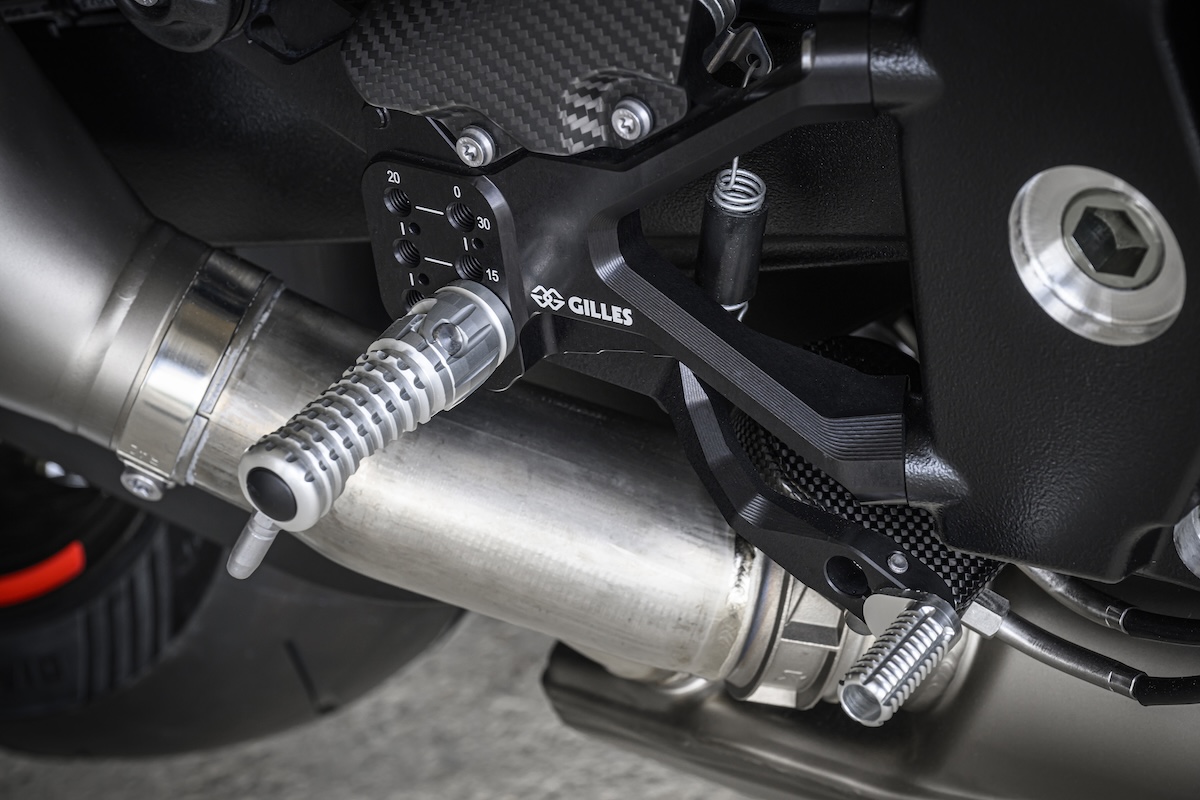
The rider triangle changes, though. The M footrest system comes from the M 1000 RR, and the seat rises 20mm to 850mm (33.5 in), which puts more weight over the front wheel. The M short-stroke throttle, Riding Modes Pro, Gearshift Assistant Pro, cruise control and heated grips are all standard.
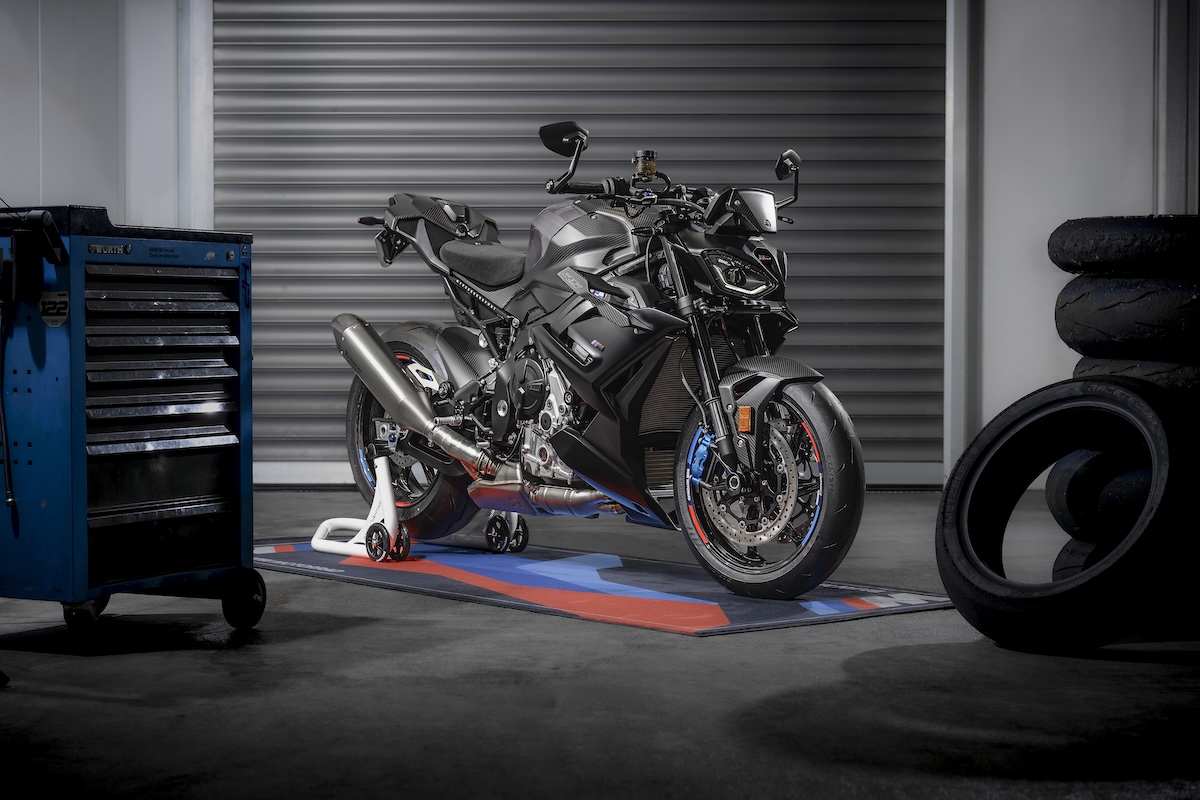
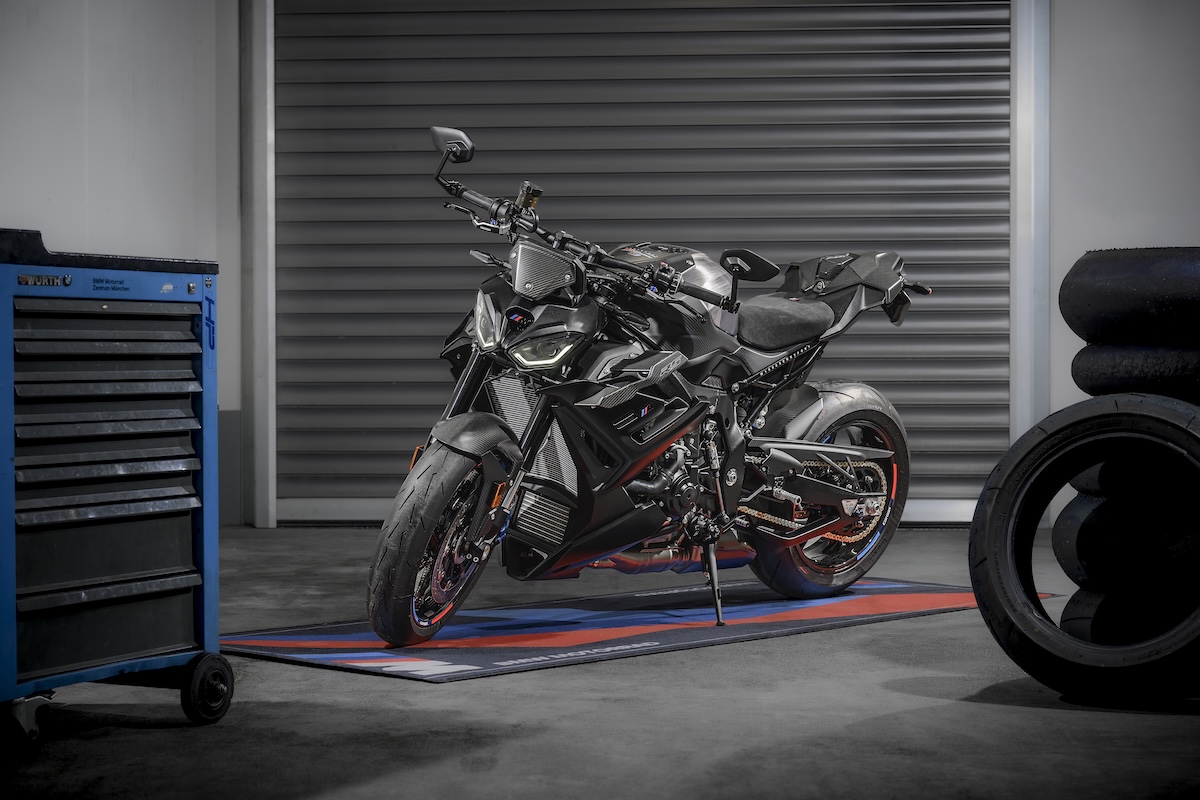
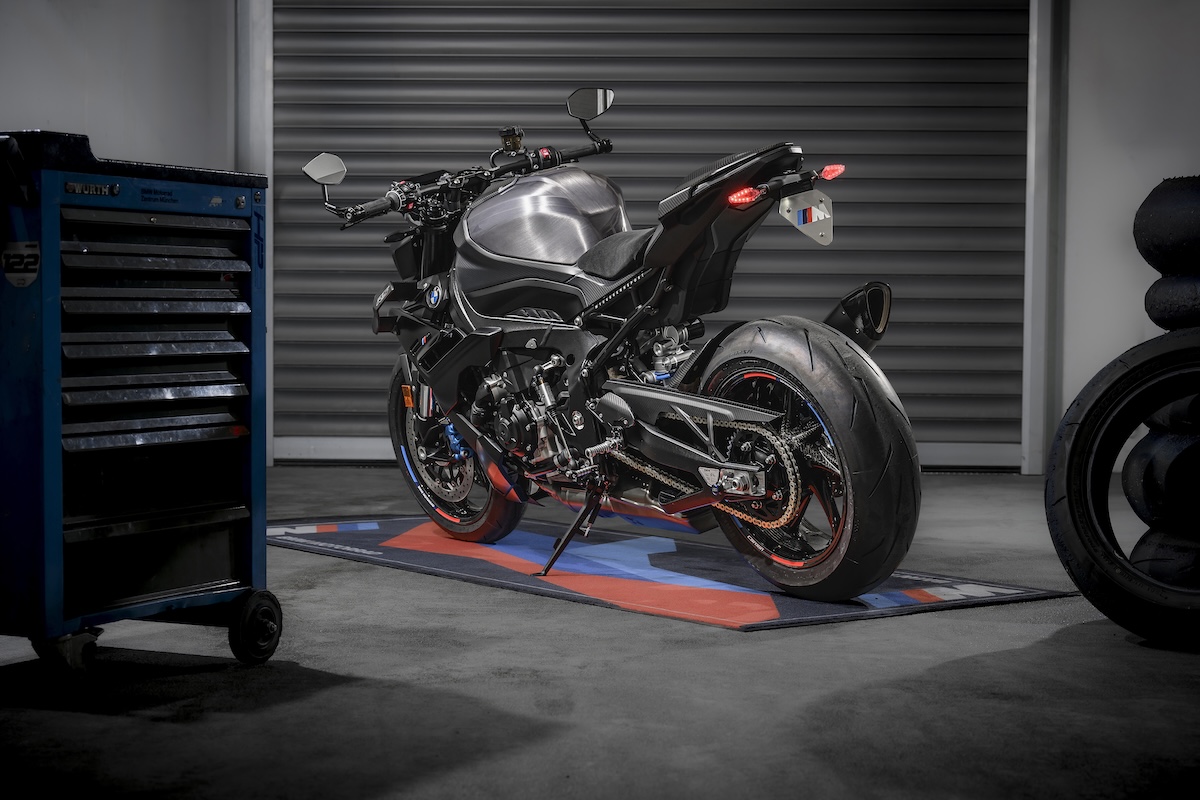
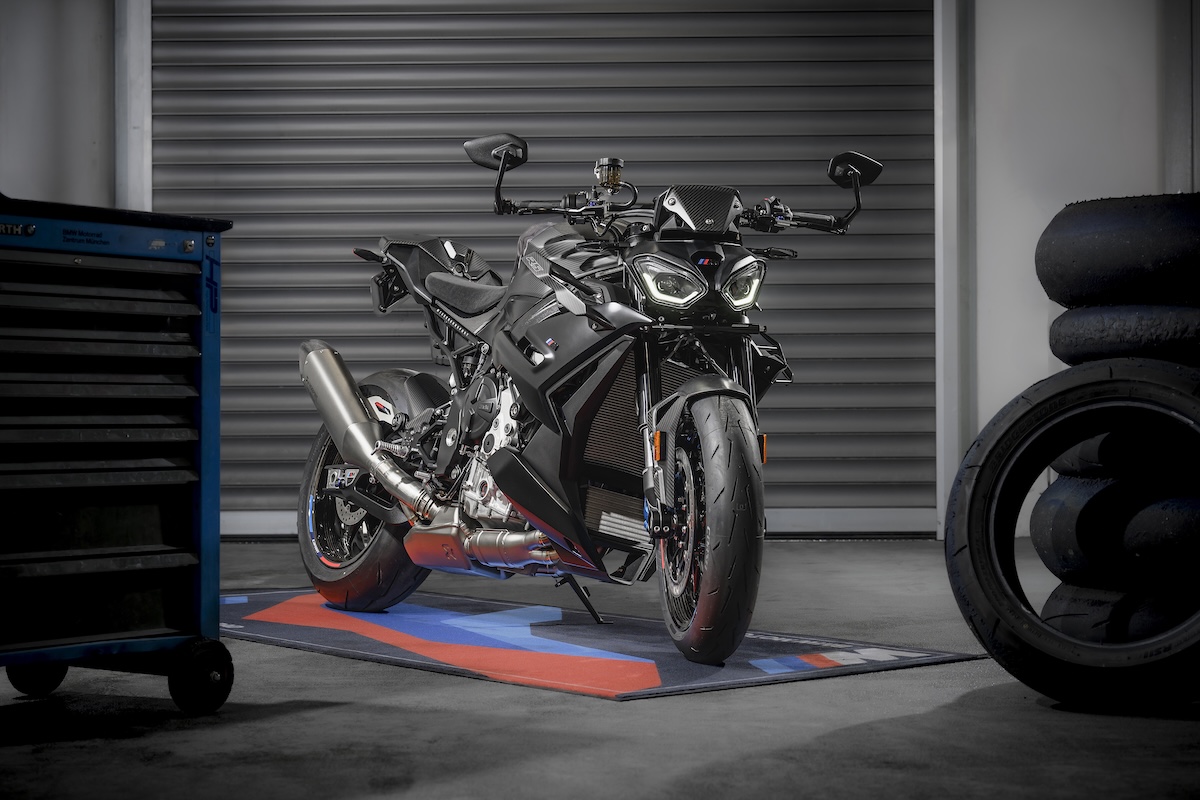
BMW M 1000 RS Chassis, Carbon and Titanium
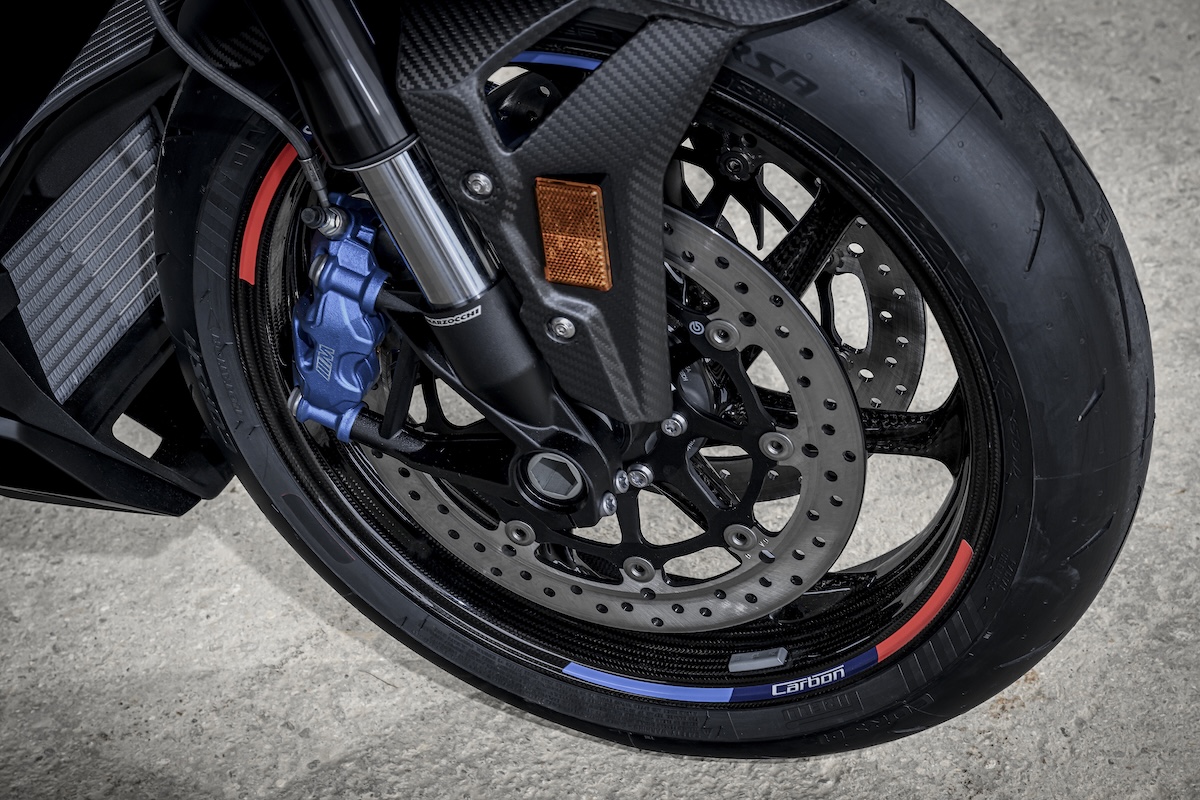
The aluminum composite bridge frame carries Dynamic Damping Control on both ends, with a 45mm upside-down fork and an underslung swingarm. Brakes are M twin 320mm floating discs with radial four-piston calipers, backed by ABS Pro. The wheels are M Carbon, 3.50 x 17 in front and 6.00 x 17 at the rear. Wheelbase is 1,467mm, and the tank holds 16.5 liters.
Geometry is sharp, with a 65.8 degree steering head angle, 97.6mm of trail and 120mm of travel up front against 117mm at the rear. Tires are 120/70 ZR17 and 200/55 ZR17. The BMW M 1000 RS measures 2,095mm long and 996mm wide with its bar-end mirrors, and the traction control is BMW Motorrad DTC.
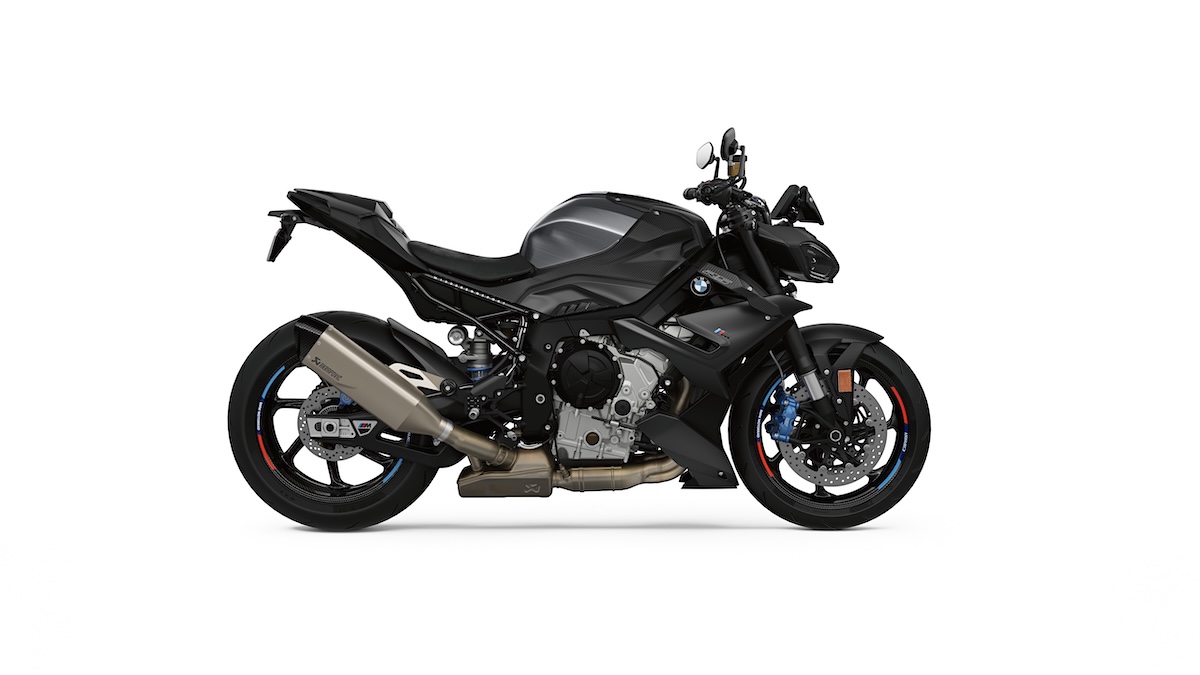
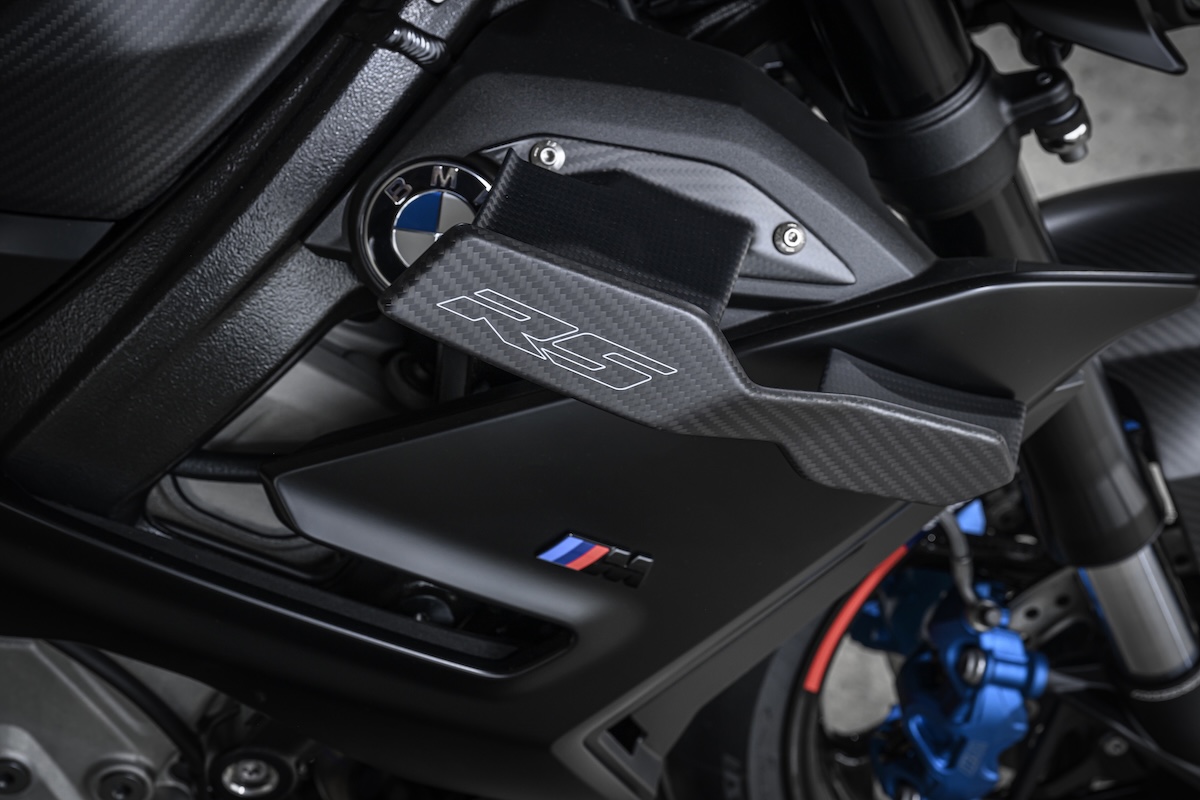
An M full titanium exhaust and matt carbon M winglets with RS lettering do the visible work. The brushed aluminum fuel tank, new graphics and an M seat in an Alcantara look with RS embroidery give the bike its dark, deliberate finish. The rear end comes from the M 1000 RR, so the tail is pure superbike while the front is bare of fairing.
The M Track Package, tire pressure monitoring, Keyless Ride and an M battery are also standard on the BMW M 1000 RS. Accessories include a data logger with a GPS lap trigger, an M cover kit, paddock stand adapters and a 22-liter rear bag for the days the bike goes somewhere other than a circuit.
What RS Means on the BMW M 1000 RS
RS stands for Rennsport, the German word for racing, and BMW reaches back to the RS 255 Kompressor of 1935 to 1939 and the later RS 54 for the name. “RS stands for Rennsport,” said BMW Motorrad CEO Markus Flasch, and the bike makes the connection plain.
The hyper naked class has been climbing for a few seasons. KTM’s 1390 Super Duke RR arrived at 193 PS and 350 units. BMW has answered with the whole RR engine, nothing detuned. The same company just took its first FIM EWC title, and the BMW M 1000 RS is the clearest sign yet that BMW sees its superbike engine as a platform and not a single model.
With the full RR engine now in a naked frame, the next fight in the class is how much superbike a rider will accept without a fairing.
About The Author