
Triumph 660cc Power Boost: More Triple, More Tech
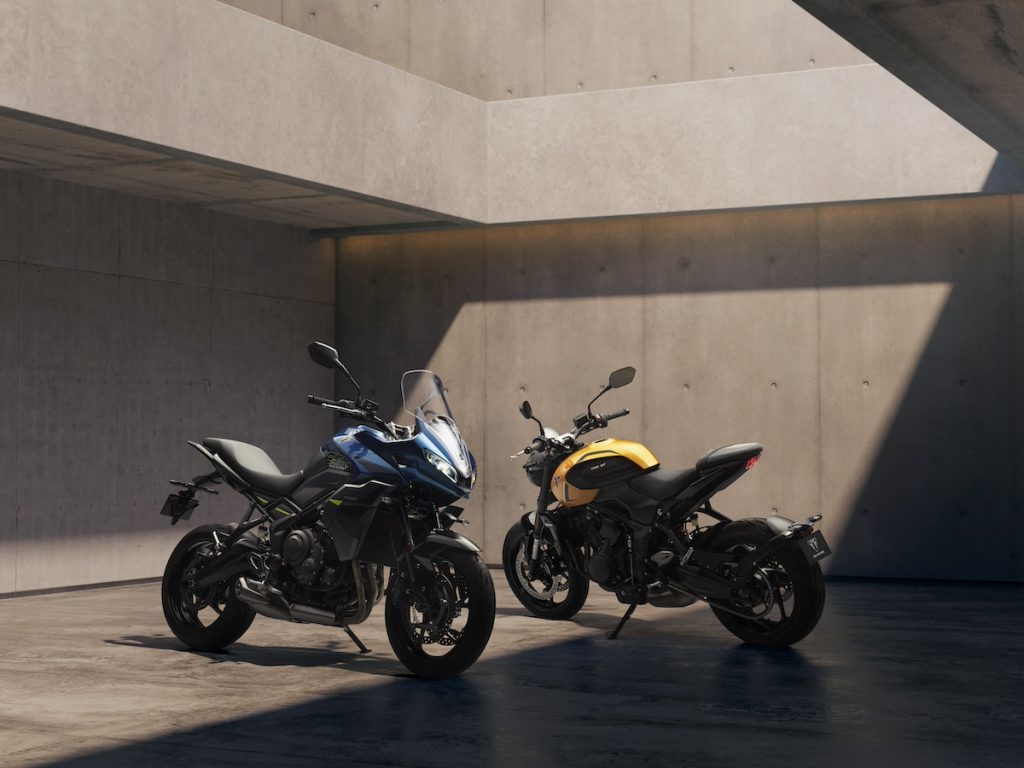
Triumph turned the dial up in a way you can actually feel in the numbers and in the intent for their 2026 middleweights. The Triumph 660cc road-focused range gets major updates for the new model year, and both the Trident 660 and Tiger Sport 660 benefit from the same higher-performance triple.
For 2026, this updated Triumph 660cc inline three-cylinder (12-valve DOHC with a 240° firing order) now makes 94 HP at 11,250 rpm and 50.2 ft-lb of torque (68 Nm) at 8,250 rpm, with a stronger, more flexible spread—Triumph says 80% of peak torque is available from 3,000 rpm through to almost 12,000 rpm. That’s the kind of delivery that makes a middleweight feel like it’s always “on the cam,” without demanding that you ride it like a supersport to access the fun.
What’s significant here—especially for riders who’ve been living with the earlier setup—is how Triumph got there. The big mechanical story is the move from a single throttle body to three individual 1.73 in. (44mm) throttle bodies, one per cylinder, paired with a larger front-mounted airbox to improve airflow and add a more engaging induction sound. Triumph also reworked the cylinder head with larger exhaust valves and a higher-lift cam profile, then backed the whole thing up with an upgraded cooling system featuring a larger, repositioned radiator and fan to keep temps in check when the pace goes up or the day gets hot.
The redline is raised by 20% to 12,650 rpm, which gives the updated Triumph 660cc package a livelier top end, while the new engine tune is calibrated for smoother low-RPM throttle openings and improved overall response—exactly where daily riders notice refinement first.
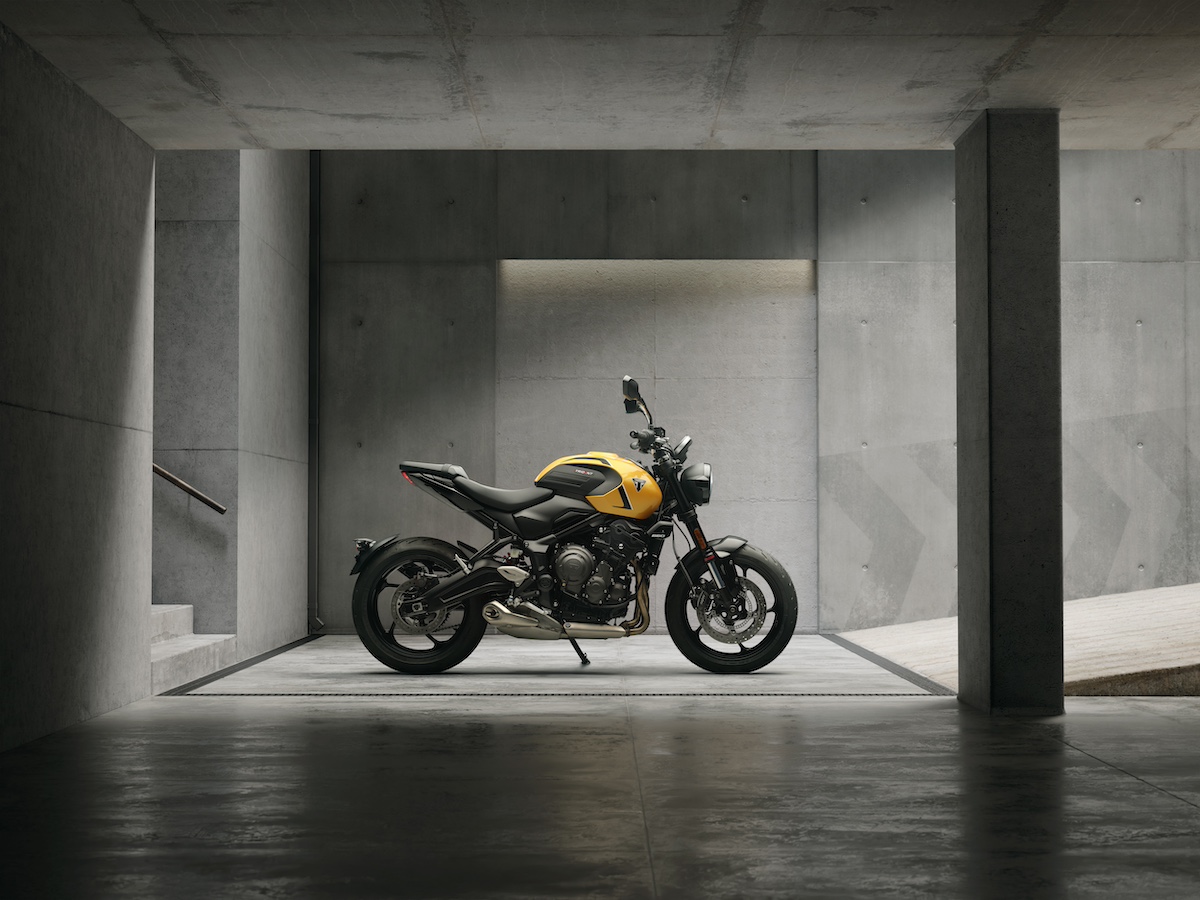
The exhaust is also part of the personality shift. Both bikes run a 3-into-1 header with a revised catalyst and an underslung silencer, keeping efficiency and compliance in mind while preserving that Triple character. Triumph didn’t stop at the motor, either: the six-speed gearbox has updated input and output shafts, revised gear ratios and final drive, and recalibrated Triumph Shift Assist for cleaner, more precise changes. A new slip and assist clutch reduces lever effort and adds control—an underrated upgrade when you’re commuting during the week and chasing empty back roads on the weekend. All of it points to the same idea: a sharper, more responsive Triumph 660cc platform that still stays approachable.
Triumph Trident 660: Sharper Roadster, More Capability
The Trident has always been the clean, modern roadster in Triumph’s lineup, and for 2026, it leans harder into the “sportier choice” brief. Along with the upgraded Triumph 660cc engine, the Trident 660 gets chassis refinements aimed at improved ride quality and presence. The biggest ride-quality change is at the rear: a new Showa rear suspension unit with preload and rebound adjustment, paired with Showa’s 41mm SFF-BP upside-down forks up front (120mm travel front, 130mm rear). Triumph also notes a revised frame, and the result is a setup that reads more focused without abandoning what made the Trident such an easy bike to live with.
The 2026 Trident’s spec sheet still hits that sweet spot for real-world riding. It runs 17-inch cast aluminum wheels (3.5 in front, 5.5 in rear) with 120/70 R17 and 180/55 R17 rubber, and braking is handled by twin 310mm front discs with two-piston sliding calipers and OCABS, plus a 255mm rear disc with CABS. Wet weight is listed at 429.9 lb (195 kg), and the fuel tank stays at 3.7 gallons (14 liters)—very roadster, very “ride it hard, stop when you want,” rather than “stretch the next tank.”
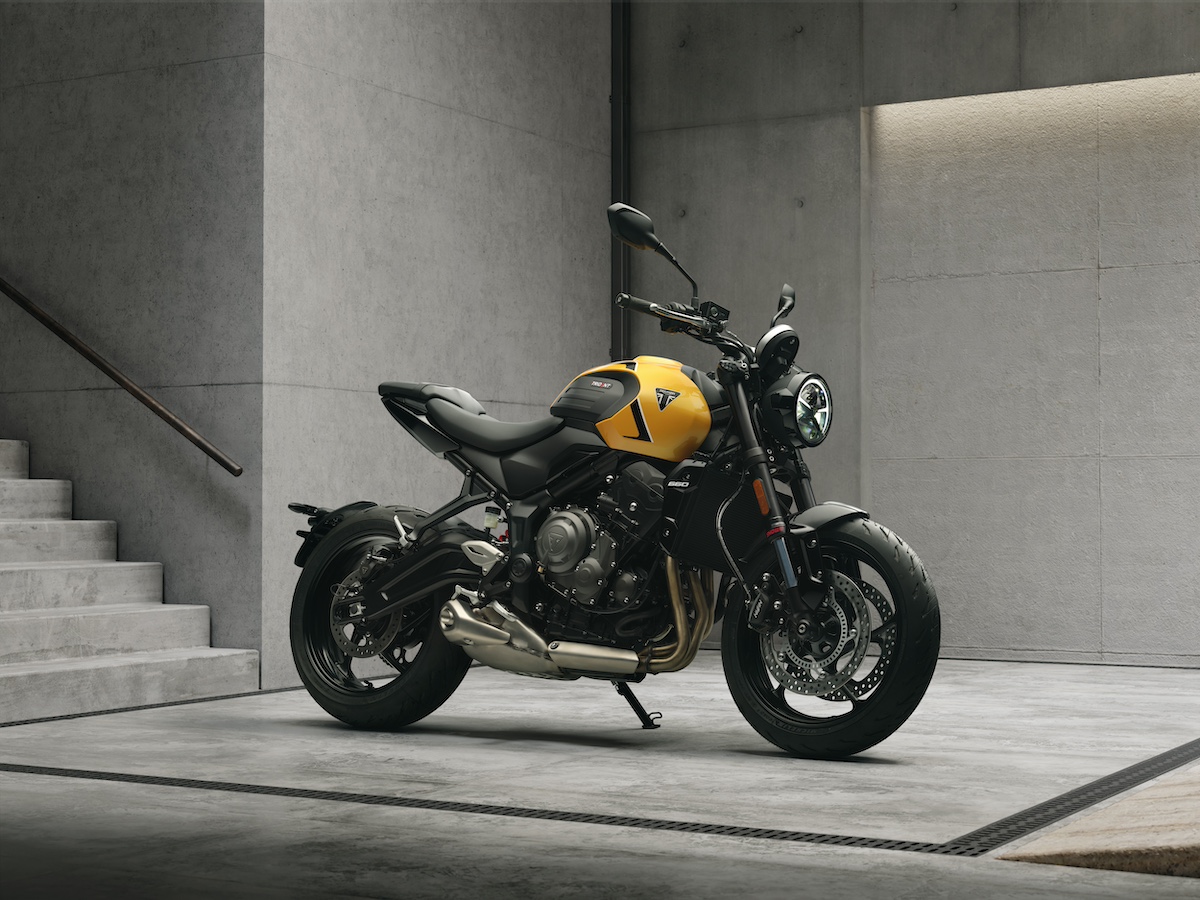
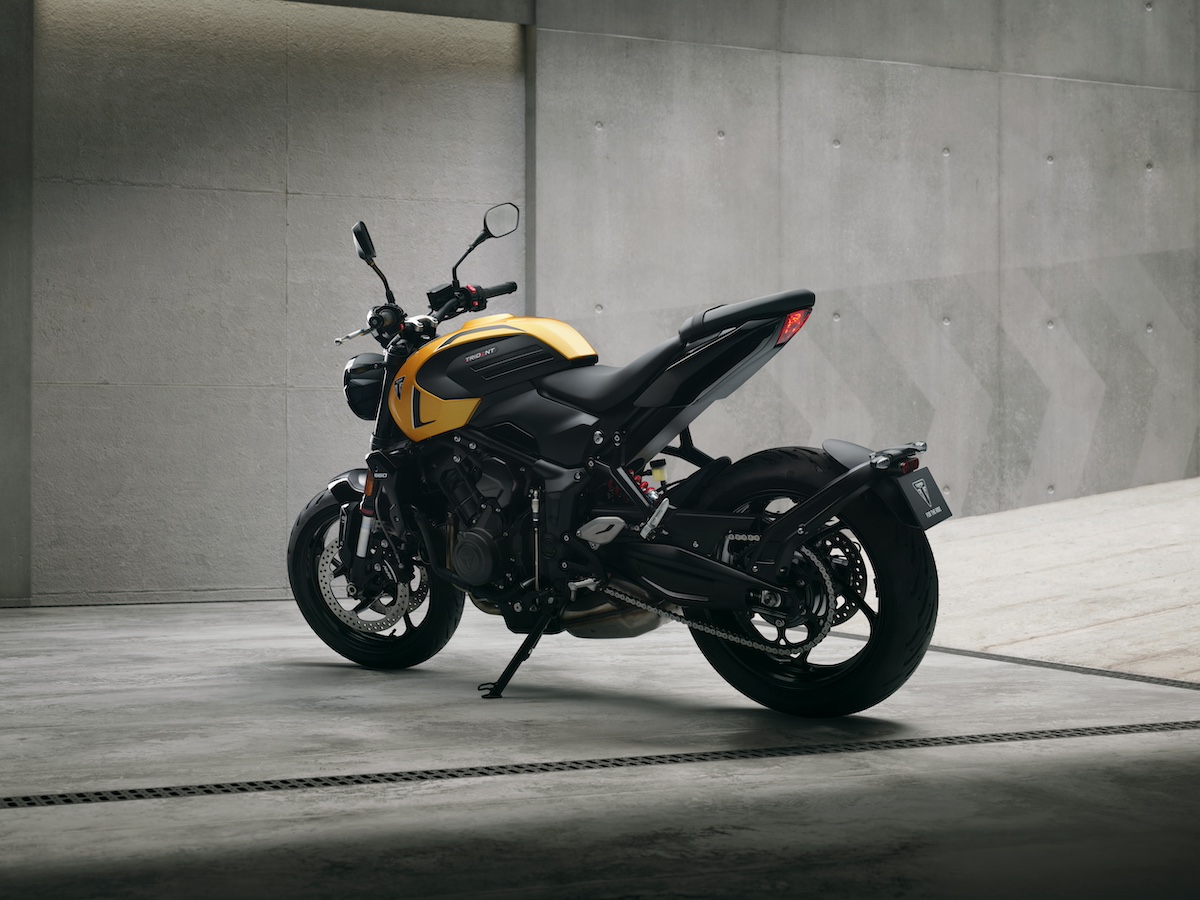
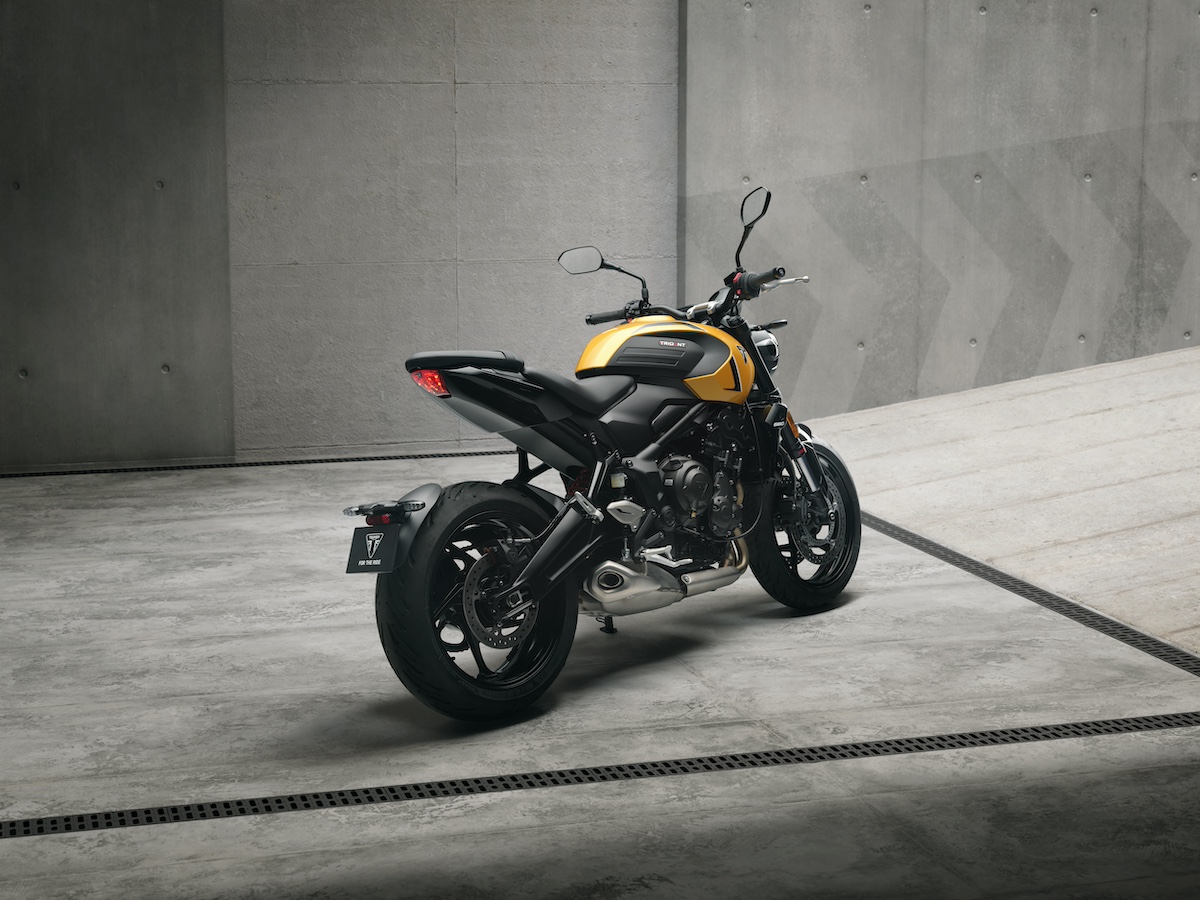
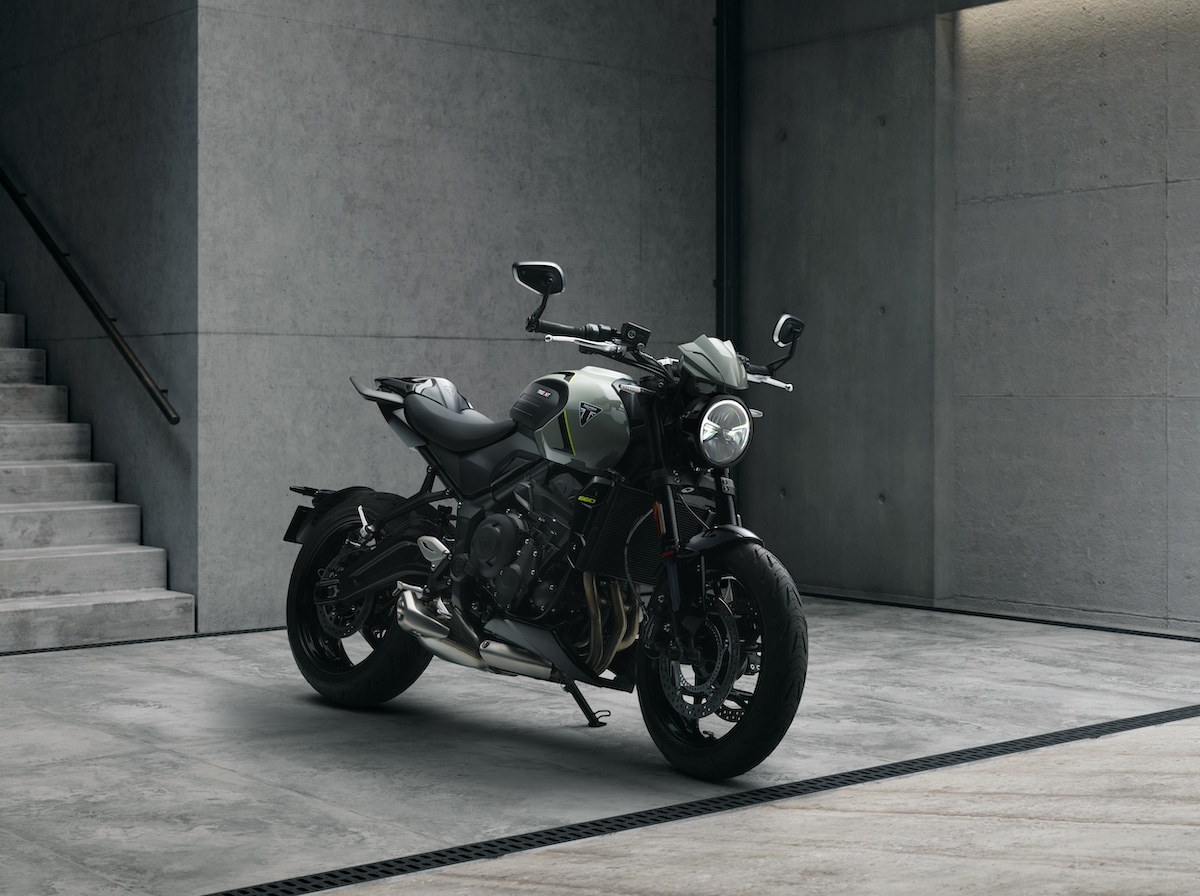
Where the Trident really changes its vibe is the styling and ergonomics. Triumph says the Trident 660 gains a more muscular stance with new bodywork, including a redesigned, wider fuel tank with chiseled knee cut-outs and a new split rider/passenger seat, plus a new headlight and updated headlight mount to sharpen the bike’s face. For 2026, Triumph adds wider handlebars, which sounds small until you’re flicking through a tight set of transitions and realize leverage equals confidence.
The tech package is also a step forward for this class: ride-by-wire with three rider modes (Rain, Road, Sport) is standard, and a six-axis IMU enables Optimized Cornering ABS and switchable Optimized Cornering Traction Control. Triumph Shift Assist and cruise control are fitted as standard, and the dash combines an LCD with an integrated color TFT. MyTriumph Connectivity comes standard for navigation, music, and call control, and the lighting is full LED.
For the riders who care about curb appeal as much as spec sheets, the color options are loud in the right way. The Trident 660 gets Cosmic Yellow and Stone Grey as premium paint choices, both paired with fresh graphics meant to reinforce the Trident’s modern roadster identity. The overall effect is a Trident that feels more athletic in stance and more serious in capability—without losing that easygoing “this could be your only bike” energy that made the platform popular in the first place.
Triumph Tiger Sport 660: More Range, Better Touring Intent
If the Trident is the sharpened street fighter, the Tiger Sport 660 is the “do everything” middleweight that just got even better at the parts riders actually use. The upgraded Triumph 660cc triple brings the same 94 HP and 50.2 ft-lb torque story, plus the raised redline and the hardware changes that improve response and character across the rev range. Triumph positions it clearly: more performance for commuting, weekend fun, and longer touring—often two-up and fully loaded—and that’s exactly the use case where stronger midrange and better top-end breathing translate into less effort and more enjoyment.
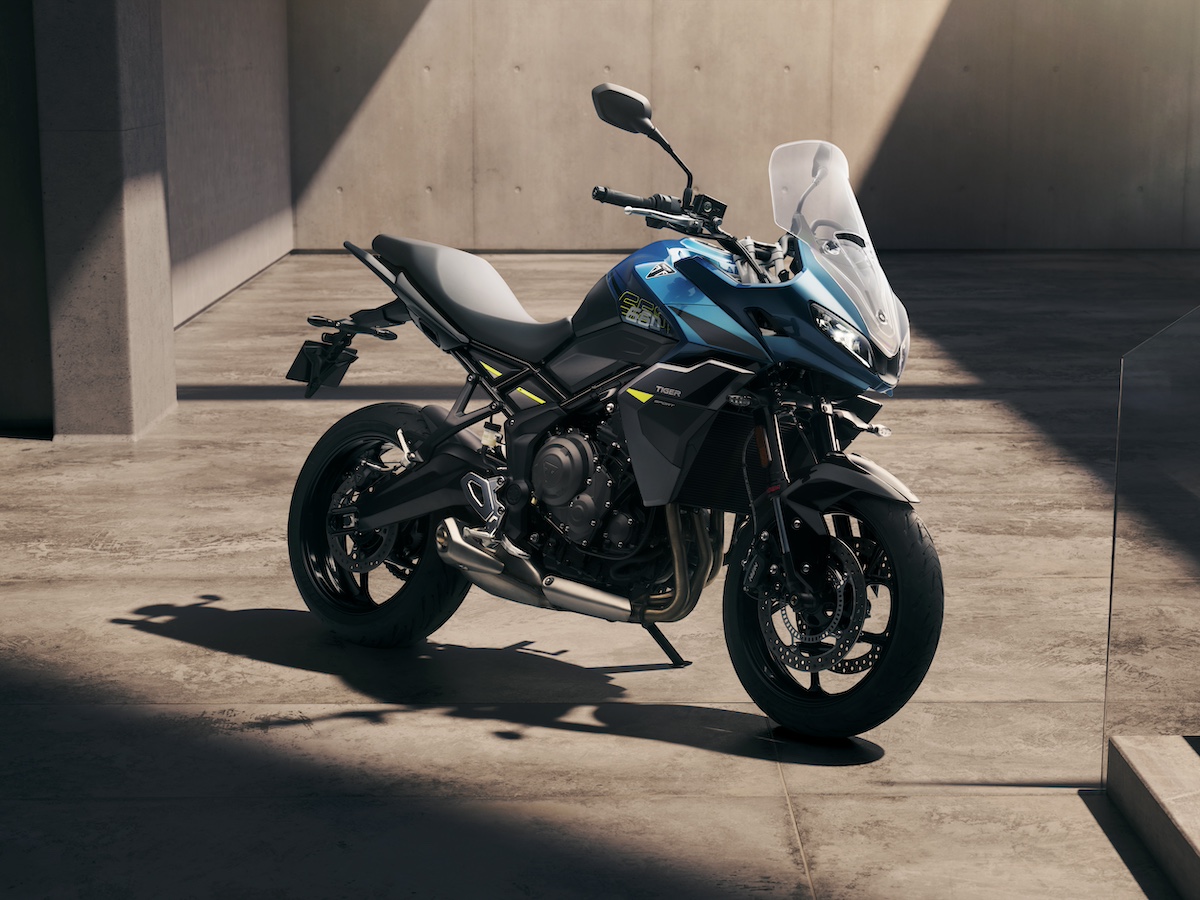
The most practical touring upgrade is the fuel tank. The 2026 Tiger Sport 660 gets a larger 4.91-gallon (18.6-liter) tank, which is a real range play—and it arrives alongside new bodywork, including updated radiator cowls and a refined front-end design to improve weather protection and comfort. The adjustable windscreen is designed to be easy to use with one hand, with the bike’s height listed at 51.65 in. (1312mm) in the low screen position and 54.92 in. (1395mm) in the high position.
The Tiger Sport’s chassis updates include a revised frame to accommodate the updated engine and triple throttle bodies, and the suspension package remains Showa, but tailored to the Tiger’s mission: 150mm travel front and rear, with a rear monoshock featuring remote hydraulic preload adjustment—the kind of feature you appreciate the moment you add a passenger or load luggage.
And Triumph is clearly thinking about luggage. A full accessory range includes color-coded panniers with a combined 15.06 gallons (57 liters) of capacity and a top box offering 12.94 gallons (49 liters)—enough for two helmets—which puts the Tiger Sport 660 squarely into legitimate sport-touring utility.
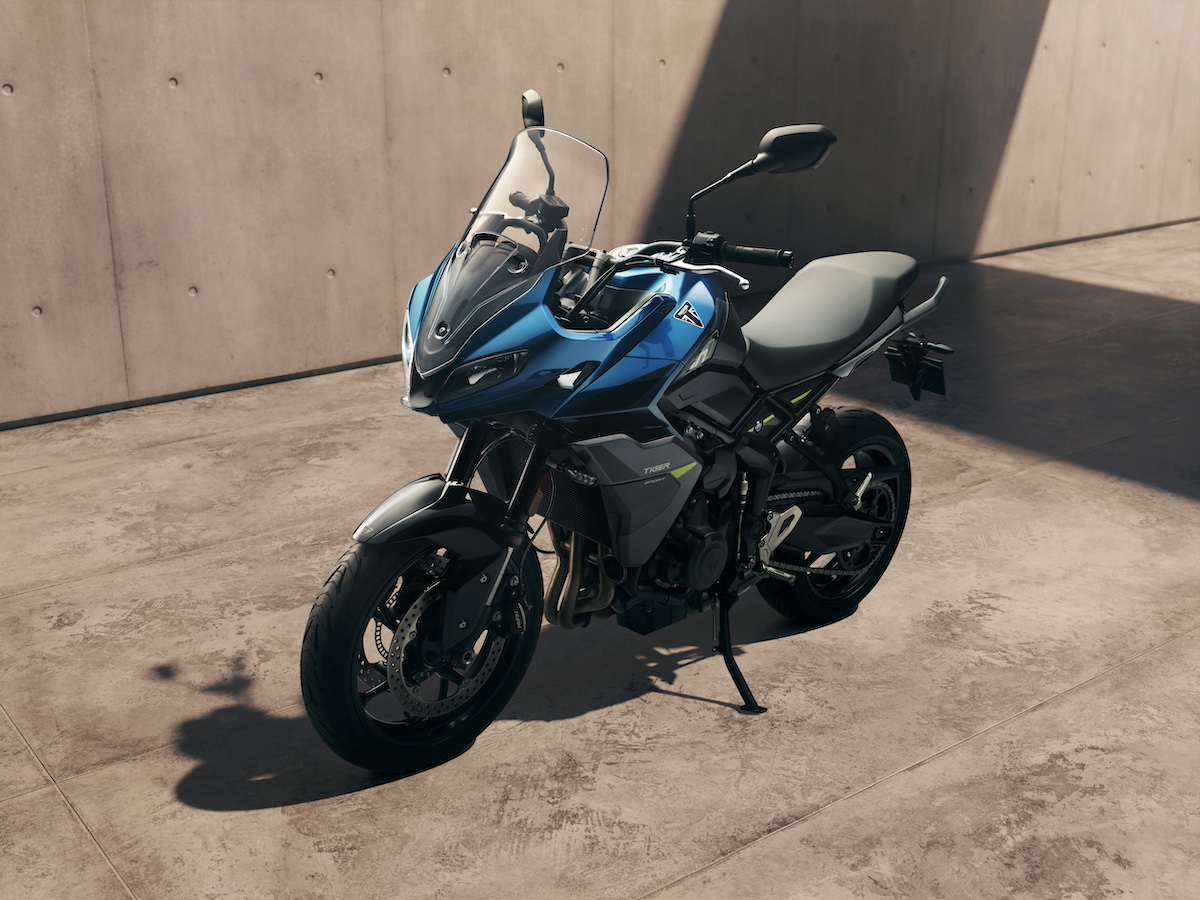

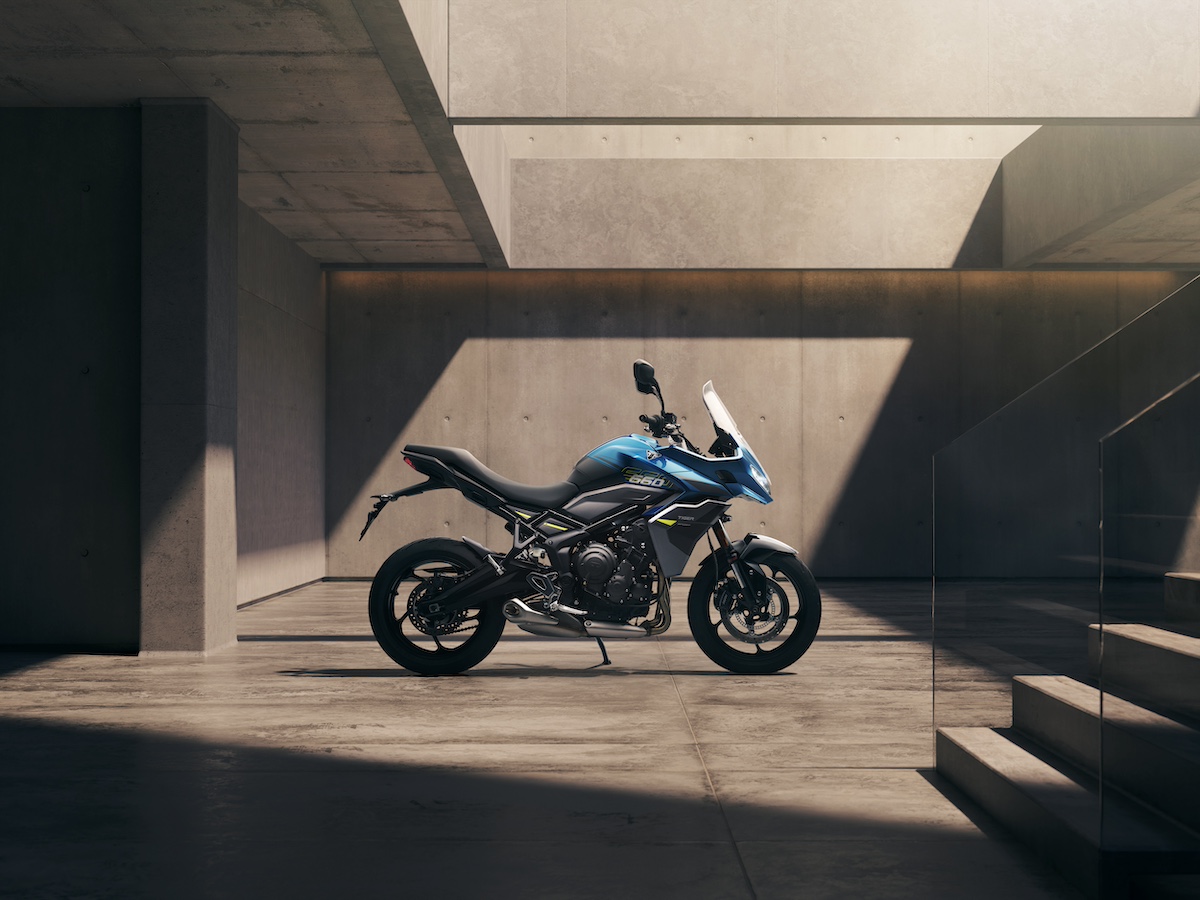
Ergonomics stay accessible, too, with an upright riding position and a 32.87 in. (835mm) seat height, plus the option of a dual low seat that drops it to 31.89 in. (810mm). Wet weight is listed at 465.2 lb (211 kg), and braking mirrors the Trident with twin 310mm front discs and a 255mm rear disc, braided lines, and a span-adjustable lever. It rolls on cast 17s with Michelin Road 5 tires, which fit the “all-conditions confidence” theme Triumph keeps returning to.
Tech is similarly comprehensive. The Tiger Sport 660 runs ride-by-wire with three modes (Rain, Road, Sport), a six-axis IMU for Optimized Cornering ABS and switchable Optimized Cornering Traction Control, Triumph Shift Assist, and standard one-touch cruise control to reduce fatigue on longer rides. The instrument cluster is the same LCD/TFT combo, MyTriumph Connectivity is standard, and full LED lighting includes a new headlight design to match the refreshed bodywork.
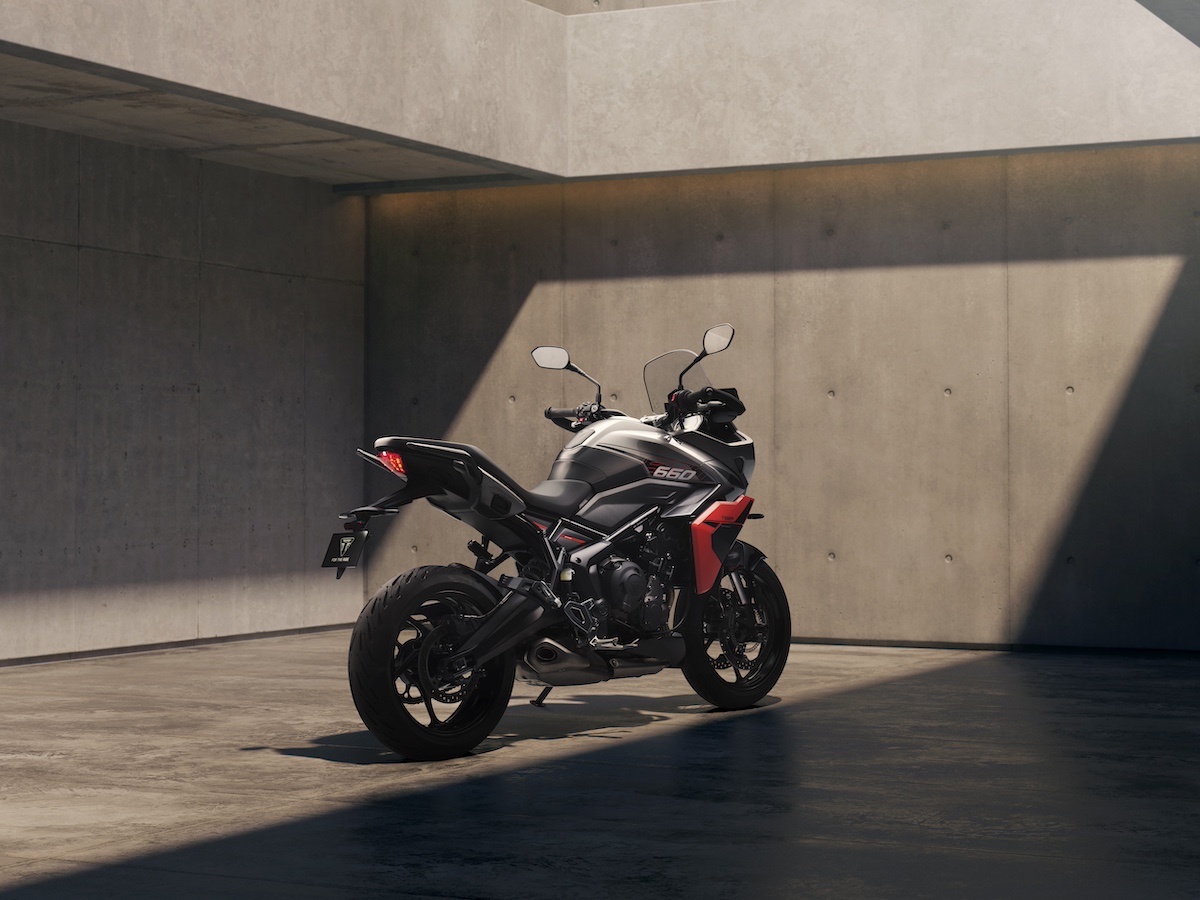
The styling update is about presence as much as polish. Triumph describes a more substantial front end and a more angular side profile, creating cleaner lines and a sportier look, and the color schemes are properly bold: Interstellar Blue with Mineral Grey or Silver Ice with Intense Orange. It’s a smart move—give the Tiger Sport a stronger visual identity while also making the actual touring experience better with a bigger tank, improved weather protection, and luggage capability that’s ready for real miles.
The new Trident 660 starts at $9,145 USD (or $11,145 CAD), while the Tiger Sport 660 starts at $10,445 USD (or $12,345 CAD), and both models in the Triumph 660cc range for 2026 Model Year hit dealers beginning March 2026. Service intervals remain class-friendly at 10,000 miles / 12 months, and every bike includes a two-year unlimited mileage warranty, covering the motorcycle and any genuine Triumph accessories purchased with it.
About The Author
Discover more from SportBikes Inc Magazine
Subscribe to get the latest posts sent to your email.