
Triumph 400cc Range: Two New Directions, One Sharper Engine
Triumph is making a confident play in the lightweight Modern Classic space for 2026, expanding its award-winning lineup with two fresh machines that feel tailor-made for riders who want character without the intimidation factor. The Triumph 400cc range grows with the all-new Tracker 400 and the admiringly anticipated Thruxton 400, and both arrive with a more potent iteration of the 398cc TR-Series single that delivers proper top-end performance.
The Triumph 400cc range calls out a five percent increase in peak power, and the numbers back that up: both bikes produce 41.4 bhp (42 PS / 30.89 kW) at 9,000 rpm and 27.7 ft-lbs (37.5 Nm) at 7,500 rpm, with a higher rev limit and a stronger pull up top to make the riding experience feel more exciting and more willing the harder you run it.
From the saddle, that matters. A small-displacement single can be fun all day when it’s tuned to reward commitment, and Triumph’s approach here is clearly to make these bikes rev harder and feel livelier, without losing the easy torque-rich manners that make a lightweight appealing in the first place. The enhanced TR-Series engine gets there through new mechanical parts, including a revised camshaft profile and a new engine tune.
Triumph also emphasizes that 80 percent of peak torque is available from 3,000 rpm, which is exactly the kind of real-world spread that keeps a lightweight from feeling flat when you’re short-shifting through traffic or rolling on mid-corner on a twisty two-lane. Both models use Bosch electronic fuel injection with electronic throttle control, run a six-speed gearbox, and use a wet, multi-plate slip & assist clutch, so the mechanical spec is modern, friendly, and built to support that “ride it every day” mission.
Where these two bikes separate themselves is attitude. The Tracker 400 is Triumph’s first flat track-inspired model, built to channel that elbows-out swagger into something street-legal and unmistakably Triumph. The Thruxton 400 revives one of the most iconic names in Triumph history, reimagining the classic café racer silhouette for a new generation with a sportier posture, a sharper chassis feel, and styling details that look like they belong outside a coffee shop just as much as they do on a back road.
Triumph Tracker 400: Flat Track Style for the Road
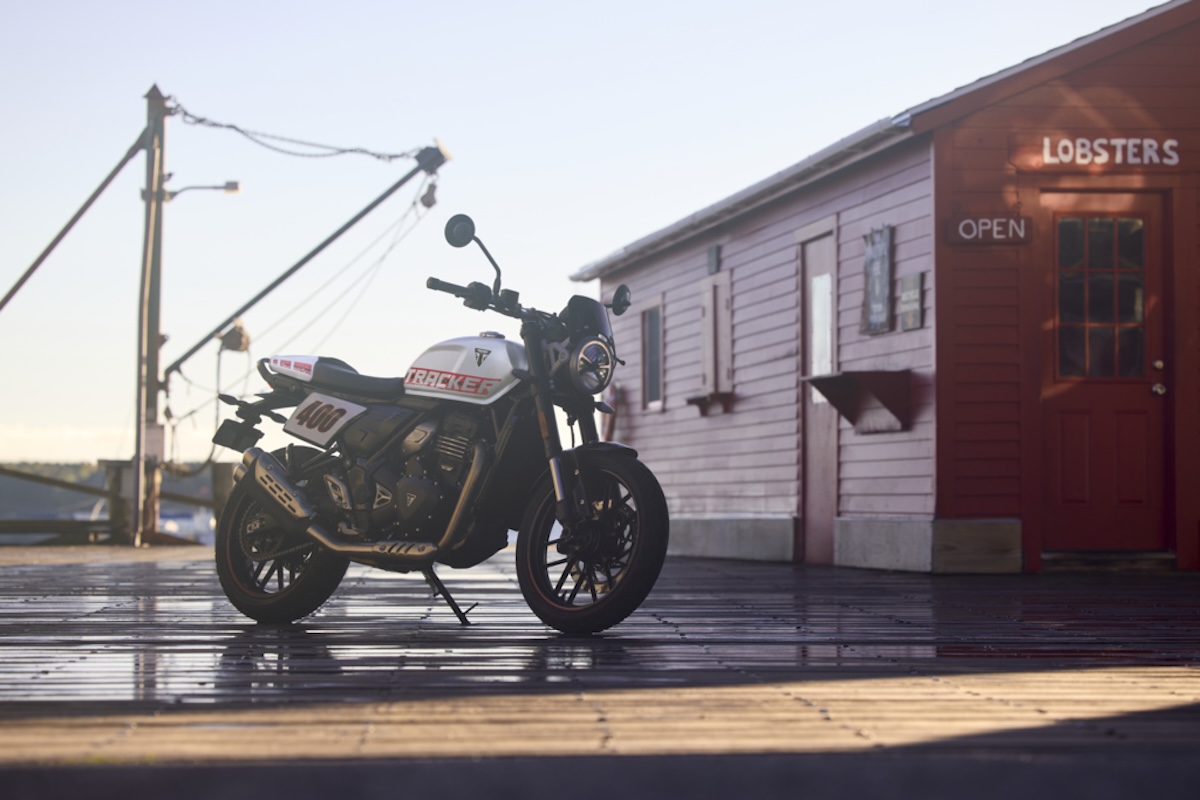
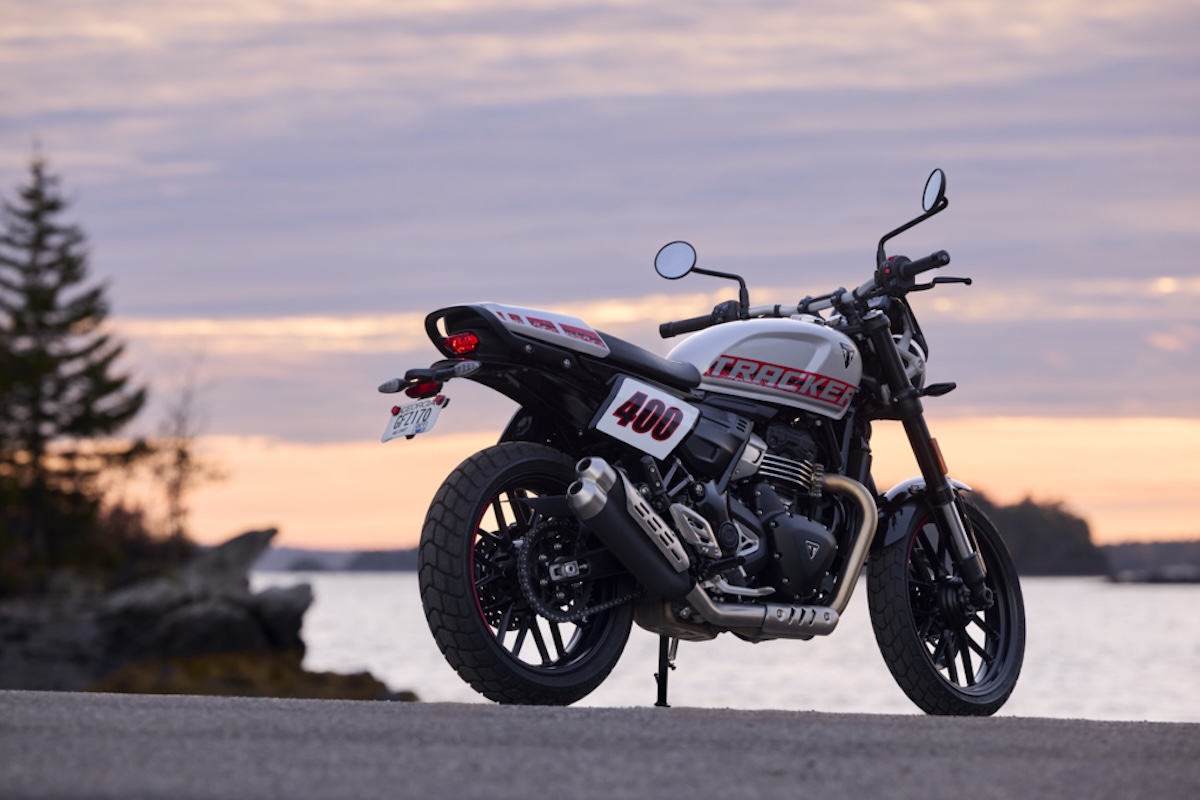
The Tracker 400 is the The Triumph 400cc range leaning into the raw, stripped-back aesthetic of flat track racing—boxy, purposeful, and built to look fast standing still. The design language is loaded with track cues: a seat cowl, number board, boxy fuel tank, fly screen, and newly styled wheels, all paired with Pirelli MT60 RS tires for that blocky dual-purpose look that’s become a signature for street-friendly trackers. Triumph didn’t just style it like a tracker, either; the ergonomics are reworked to make it ride the part.
The Tracker 400 features flat and wide bars and repositioned pegs for a commanding stance, and Triumph gets specific: the handlebars are 0.9 in. (23mm) broader and 5.3 in. (134mm) lower than those on the Speed 400, while the footpegs move 3.4 in. (86mm) further back and 1.0 in. (27mm) higher. That’s a meaningful change that rotates you into a more aggressive, ready-to-pounce position without turning the bike into an uncomfortable novelty.
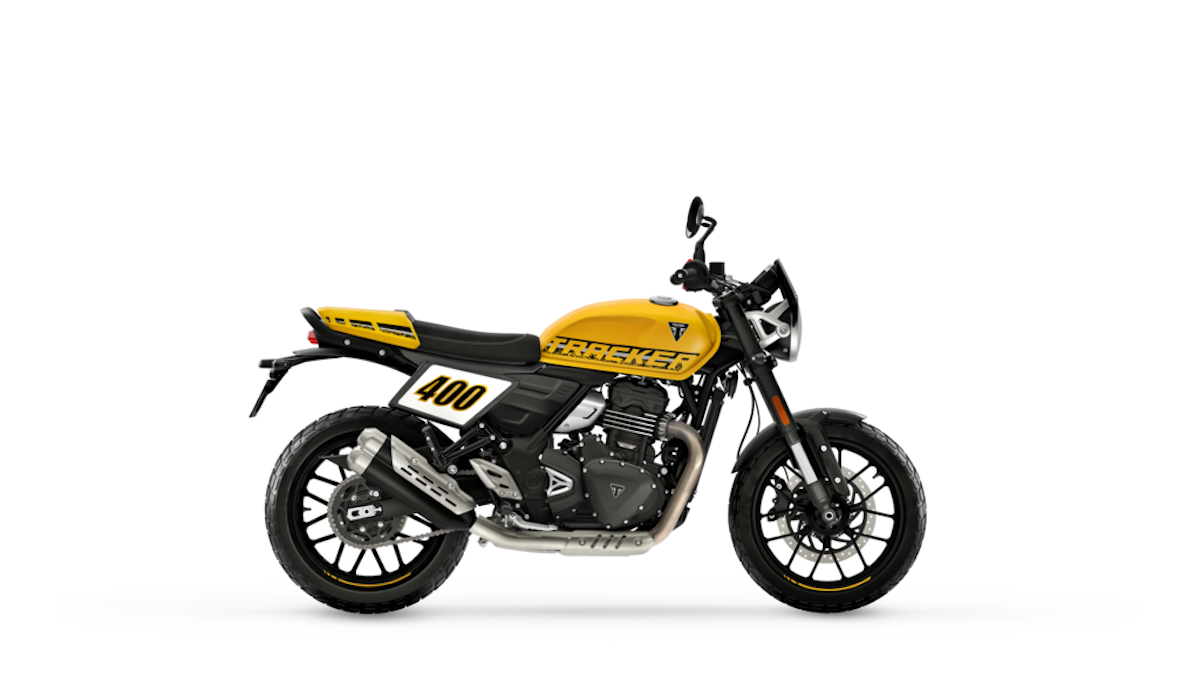
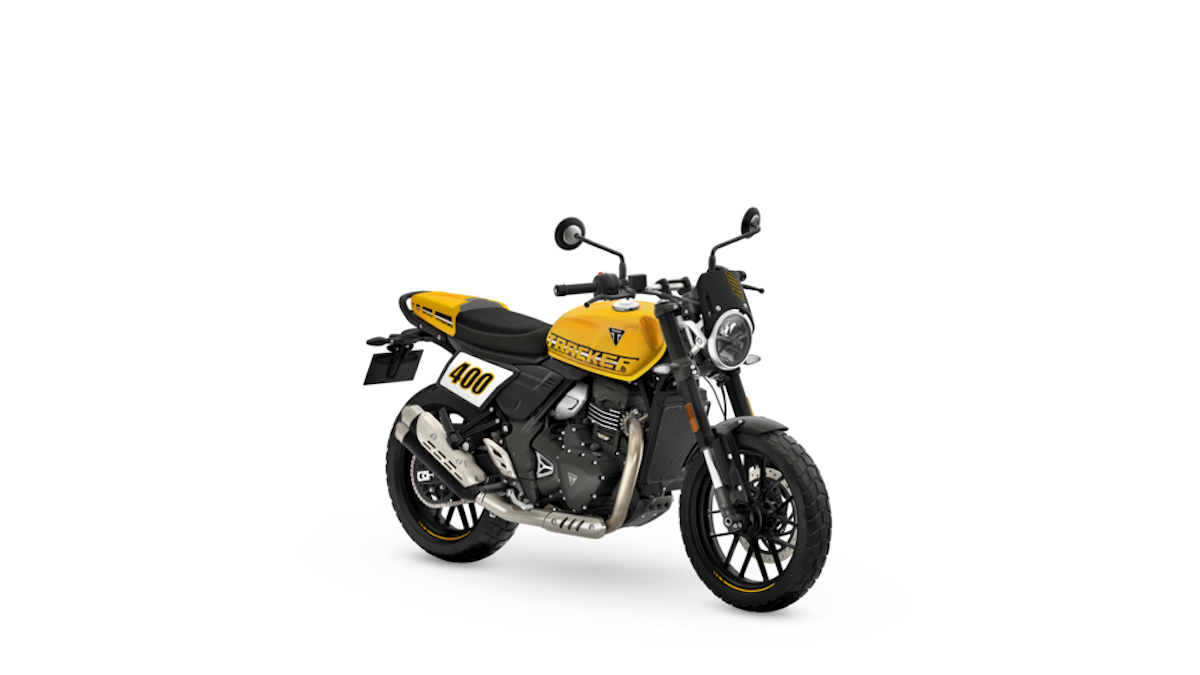
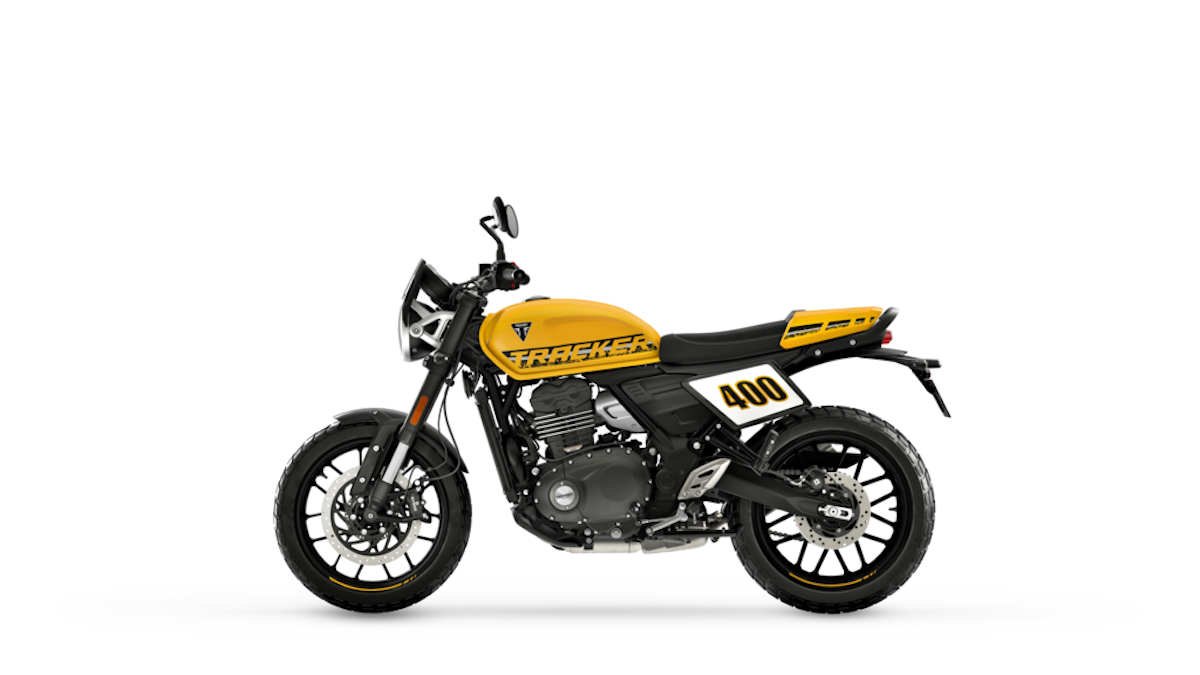
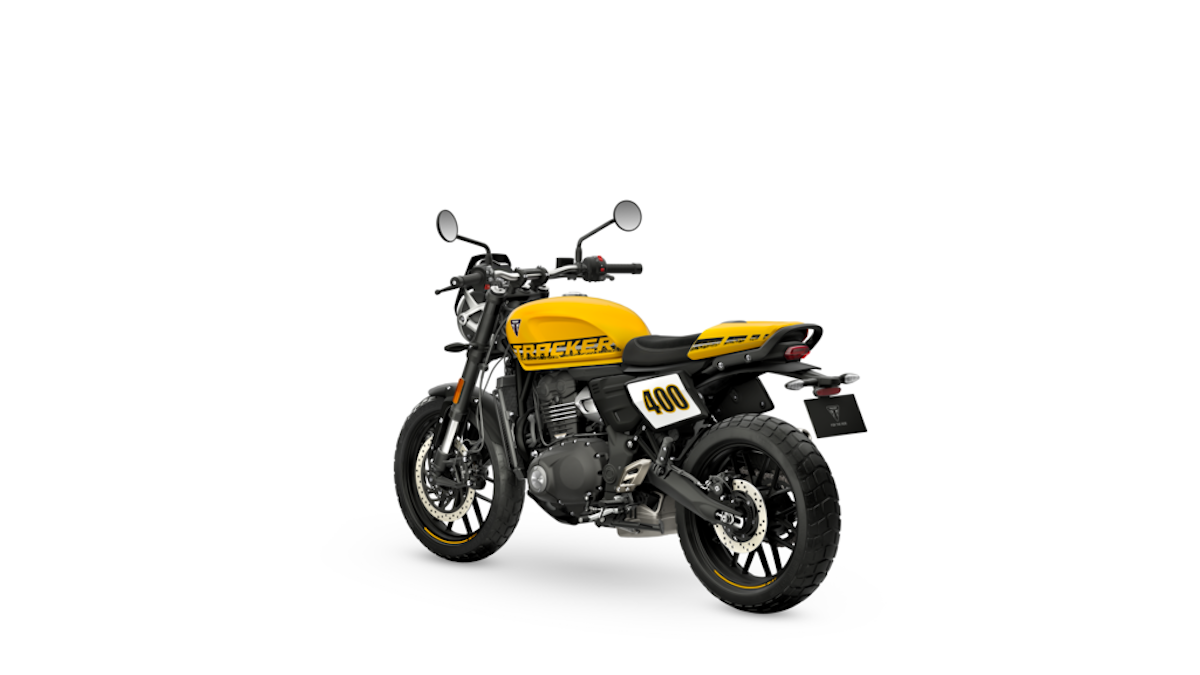
The chassis is dedicated, too, and the spec sheet reads like Triumph didn’t cut corners on the hardware that matters. The Tracker 400 uses a hybrid spine/perimeter tubular steel frame with a bolt-on rear subframe, with a twin-sided cast aluminum alloy swingarm—a premium touch in this class. Suspension is equally serious: 43mm upside-down Big Piston forks with 140mm of travel up front, and a gas monoshock RSU with an external reservoir and preload adjustment with 130mm of travel at the rear.
Braking is anchored by a 300mm front disc with a four-piston radial caliper and ABS, backed by a 230mm rear disc with ABS. Put all that together with a 381.4 lb (173 kg) wet weight, a low-ish 31.7 in. (805 mm) seat height, and a 3.43-gallon (13-liter) tank, and you’ve got a lightweight that should feel nimble, stable, and genuinely eager when you start pushing it.
Triumph also integrates rider tech without spoiling the classic vibe. You get a torque-assist clutch, switchable traction control, and ABS, along with a clean, retro-appropriate instrument setup: an analogue speedometer with an integrated multi-function LCD. Triumph’s obsession with finishing shows up here as well—powder-coated engine covers, bright-machined cylinder head fins, and a tidy build with no visual clutter. The aesthetic details—round LED headlight, flowing twin upswept silencers at the rear—help the Tracker feel like a true Triumph Modern Classic rather than a generic tracker silhouette.
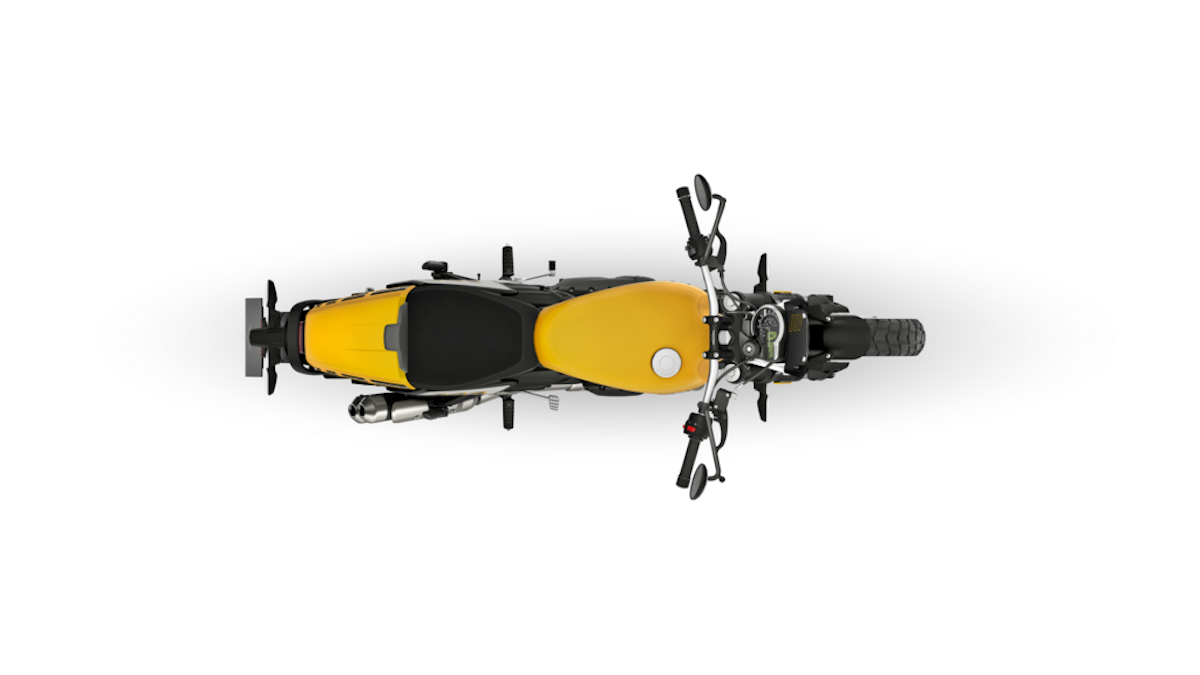
Color is part of the personality. The Tracker 400 comes in Racing Yellow, Phantom Black, and Aluminum Silver Gloss, each with bold Tracker lettering, racing stripes, and mud-splatter detailing that flows onto the seat cowl. The number board prominently displays “400” as a nod to flat track heritage, and each scheme has its own character: Aluminum Silver Gloss is accented with Racing Red graphics across the tank, cowl, number board, and wheels; Racing Yellow brings bold yellow panels contrasted by Phantom Black elements with Racing Yellow highlights; and Phantom Black adds Dark Silver, Vanilla White, and Pearl Metallic White accents for a darker, more aggressive look.
The Tracker 400 arrives in dealers beginning April 2026, with prices starting at $5,995 USD ($6,995 CAD). For riders who want that flat track vibe but need a bike that can commute, carve, and still feel special when it’s parked, the Tracker looks like Triumph’s most attitude-forward lightweight yet—and a strong statement for where the Triumph 400cc range is going.
Triumph Thruxton 400: The Café Racer Returns, Rewritten
The return of the Thruxton name is the kind of move that gets long-time Triumph fans leaning in, and the new Thruxton 400 doesn’t treat the badge as a nostalgia prop. Triumph positions it as a modern interpretation of an icon, built around authentic café racer posture and racing heritage, but engineered for the realities of modern riding.
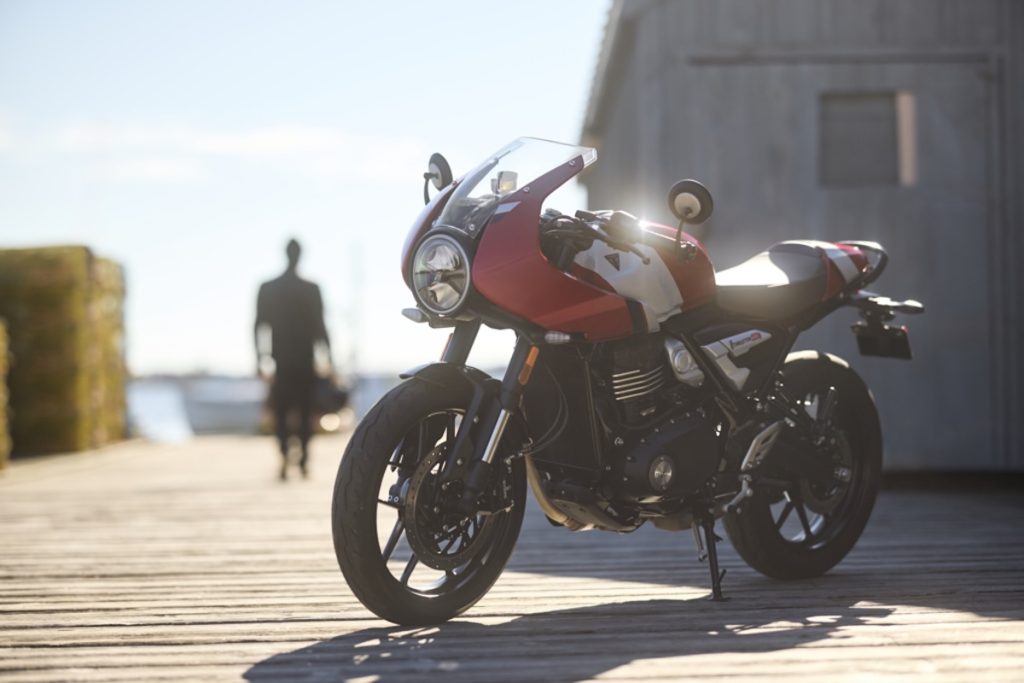
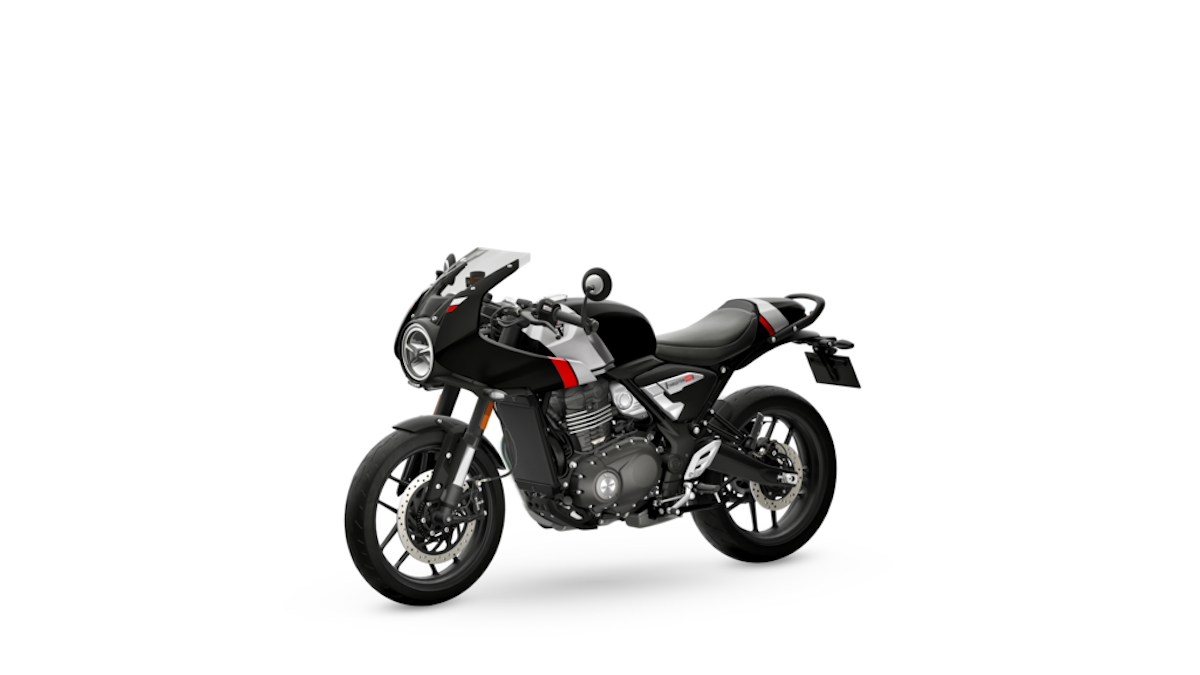
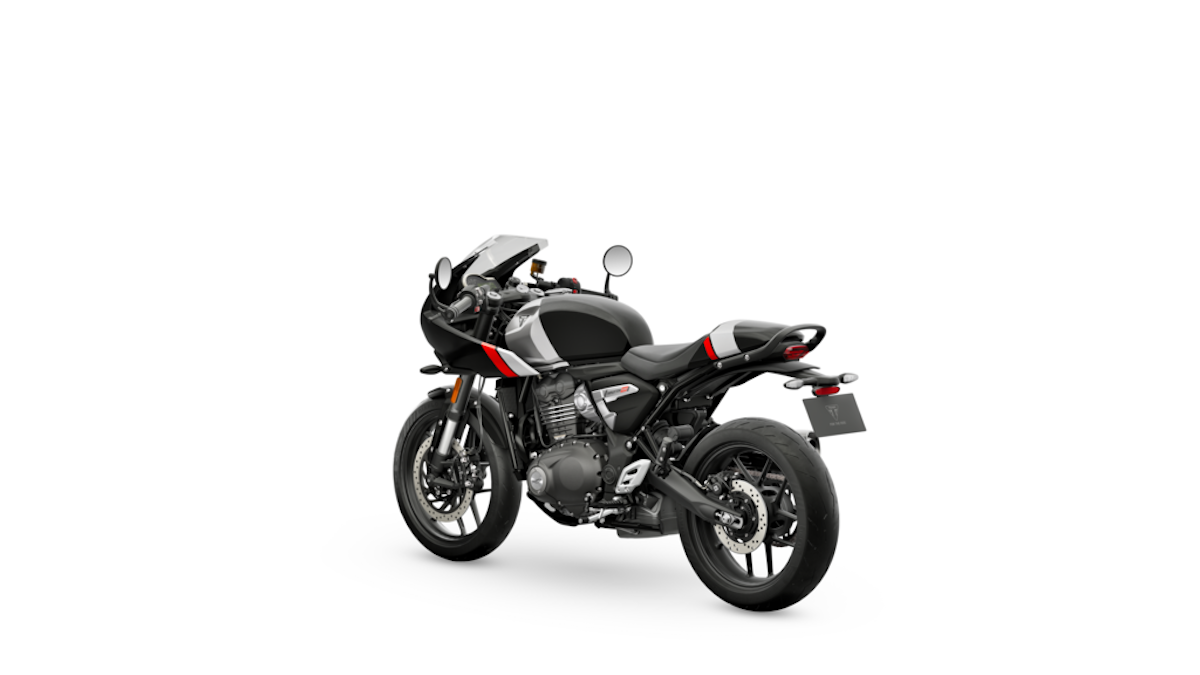
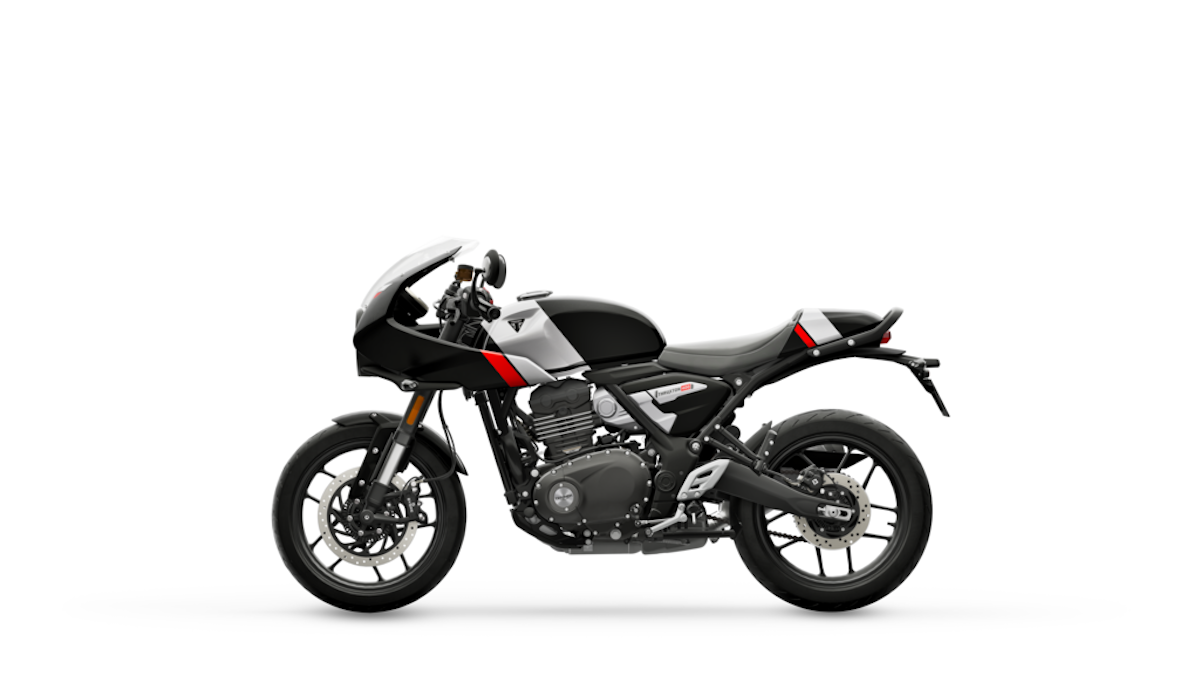
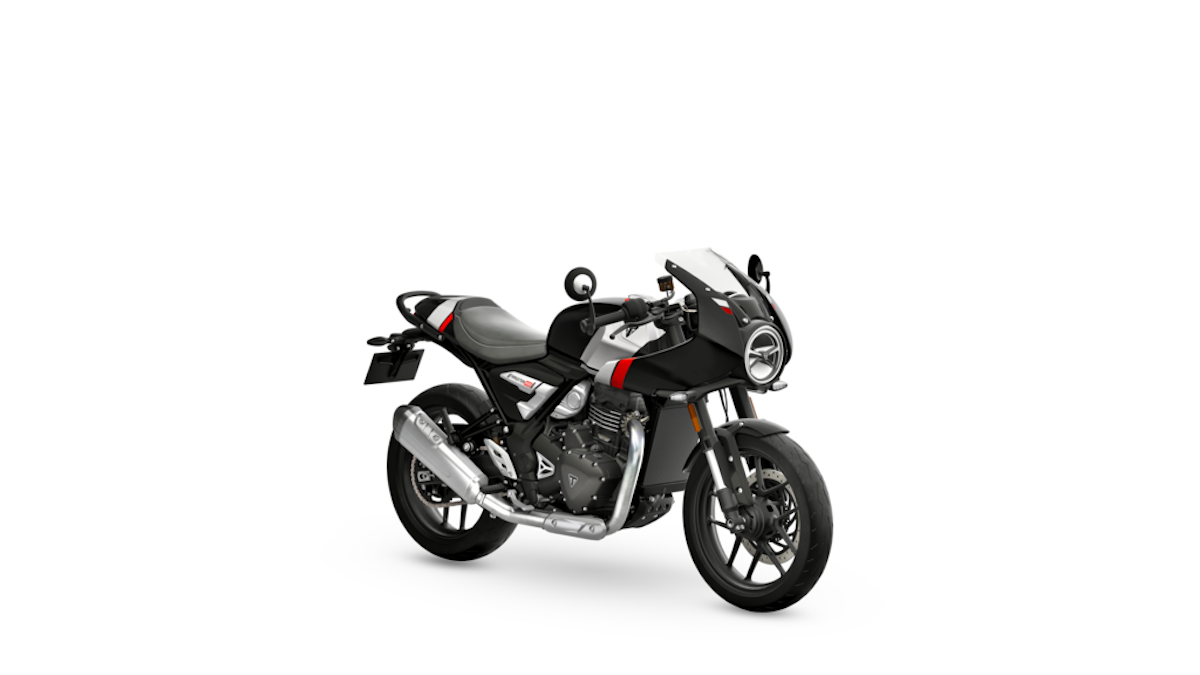
Visually, it hits the key notes: a sculpted tank with the Triumph triangle badge, a new fairing housing a classic round LED headlight, bar-end mirrors, a color-coded bullet seat cowl, shortened rear mudguard and number plate hanger, and a compact LED tail light. The upswept sports silencer completes a clean, flowing exhaust line, giving the whole bike that purposeful “built to ride” stance that café racers should have.
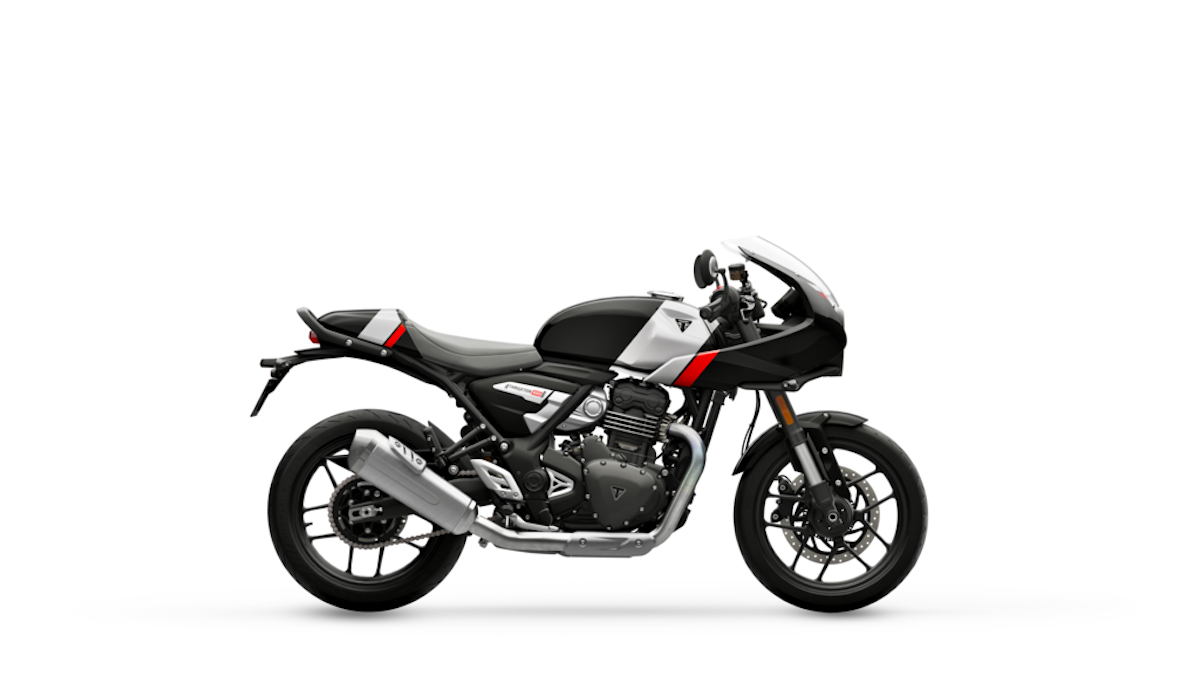
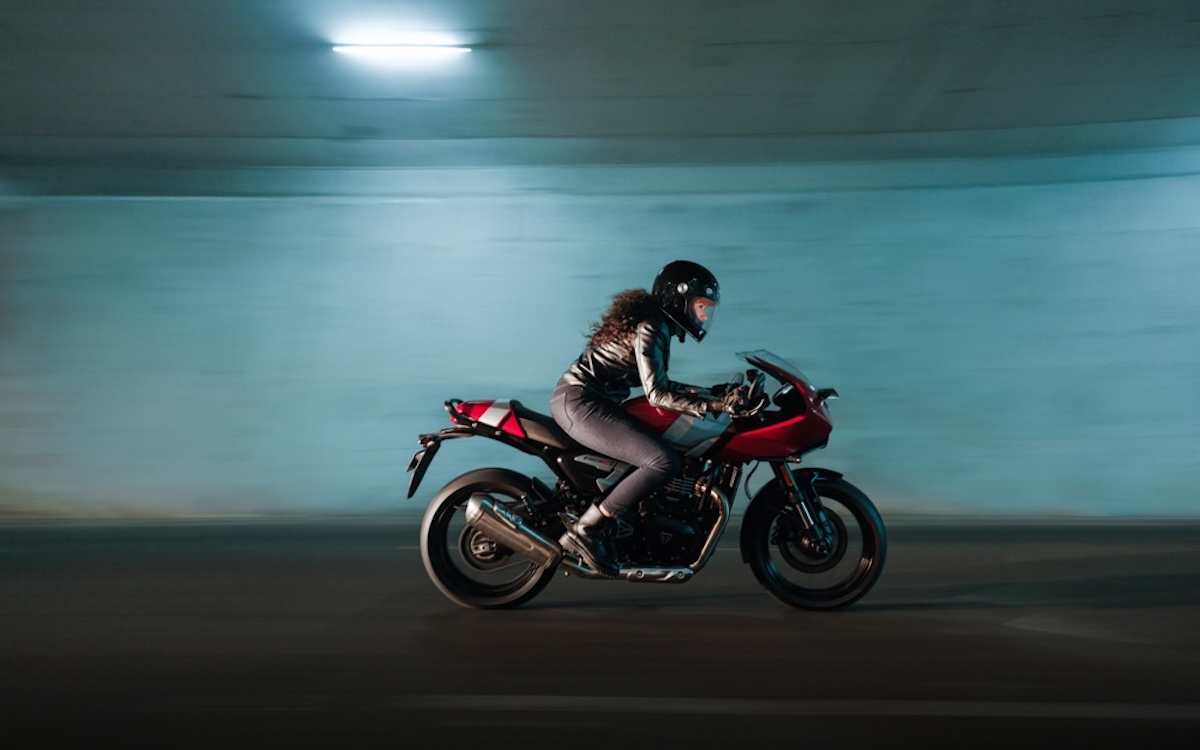
The biggest difference between the Tracker and Thruxton is how Triumph sets you up on the bike. The Thruxton 400 gets clip-on handlebars and rear-set pegs to create a proper café racer riding posture, and again, Triumph is specific: the clip-ons are 1.6 in. (40mm) narrower and 9.7 in. (246mm) lower than those on the Speed 400, and the footpegs move 3.4 in. (86mm) further back and 1.1 in. (27mm) higher. That rotates the rider forward, loads the front, and should make the bike feel sharper and more connected when you’re cornering with intent.
Suspension is tuned to match that mission. Up front, the Thruxton 400 runs black anodized 43mm upside-down Big Piston forks with 135mm of travel—slightly less than the Tracker’s 140mm for a more sporty poise—while the rear keeps the preload-adjustable gas monoshock RSU with 130mm travel. Tires also reflect the café racer focus: the Thruxton 400 wears Pirelli Diablo Rosso IV rubber for a sportier, grippier feel compared to the Tracker’s MT60 RS.
The wheel and brake specs remain premium for the class: 17-inch cast aluminum wheels (3.0 in front, 4.0 in rear), a 300mm front disc with a four-piston radial caliper and ABS, and a 230mm rear disc with ABS. Wet weight comes in at 388.0 lb (176 kg), seat height is 31.3 in. (795mm), and the tank is 3.43 gallons (13 L)—so it’s still approachable, just more committed in how it positions the rider.
The Thruxton shares the same enhanced TR-Series engine upgrades as the Tracker, delivering that 41.4 bhp at 9,000 rpm peak, the same 27.7 ft-lbs torque figure, and the same emphasis on a higher rev limit and stronger top-end performance. Triumph also calls out the rich, distinctive soundtrack that defines the experience, which is exactly what a café racer needs—because half the appeal is how it feels and sounds while you’re doing something as simple as rolling on in third gear.
Triumph also leans into craftsmanship and detail on the Thruxton, highlighting elements like a polished Monza-style fuel cap, meticulous paintwork, machined cooling fins, and the way premium components blend form and function. Tech is integrated cleanly: an analogue speedometer and LCD tachometer display with a USB-C charging port, plus ride-by-wire throttle, switchable traction control, torque assist clutch, and ABS. And if you’re the type who wants to personalize the bike, Triumph offers Genuine Accessories like engine protection bars and tank pads, along with styling upgrades such as bar-end mirrors and a premium quilted seat for the Thruxton 400.
Color options are presented as four schemes with sporty contrast accents and sleek graphics across the tank, fairing, and seat cowl, plus a Matte Phantom Black side panel with an aluminum finish Thruxton badge. Triumph details three specific schemes: Phantom Black and Aluminum with wide diagonal stripes and Racing Red accents; Pearl Metallic White and Storm Grey with flashes of Caribbean Blue; and Metallic Racing Yellow with Aluminum Silver featuring a Metallic Racing Yellow fairing with Phantom Black accents and aluminum stripes that continue across the tank and cowl. The result is a Thruxton that reads classic at a glance but modern in the details—exactly how a 2026 café racer should land.
Pricing and timing make the Thruxton 400 feel like a serious value play for a premium-looking lightweight: it begins at $6,295 USD ($7,395 CAD) and arrives in dealers from March 2026. Like the rest of the Triumph 400cc range, it carries class-leading service intervals—10,000 miles / 12 months—and a global two-year unlimited mileage warranty that also covers Genuine Triumph accessories.
Taken together, these updates make it clear that Triumph isn’t treating the lightweight category as a footnote. The enhanced TR-Series engine adds genuine excitement, and the two bikes offer distinct identities: the Tracker 400 for riders chasing flat track attitude and everyday usability, and the Thruxton 400 for those who want café racer posture, sharper handling intent, and that timeless silhouette reimagined with modern polish. Either way, the Triumph 400cc story for 2026 is no longer just “entry-level”—it’s legitimately aspirational.
About The Author
Discover more from SportBikes Inc Magazine
Subscribe to get the latest posts sent to your email.