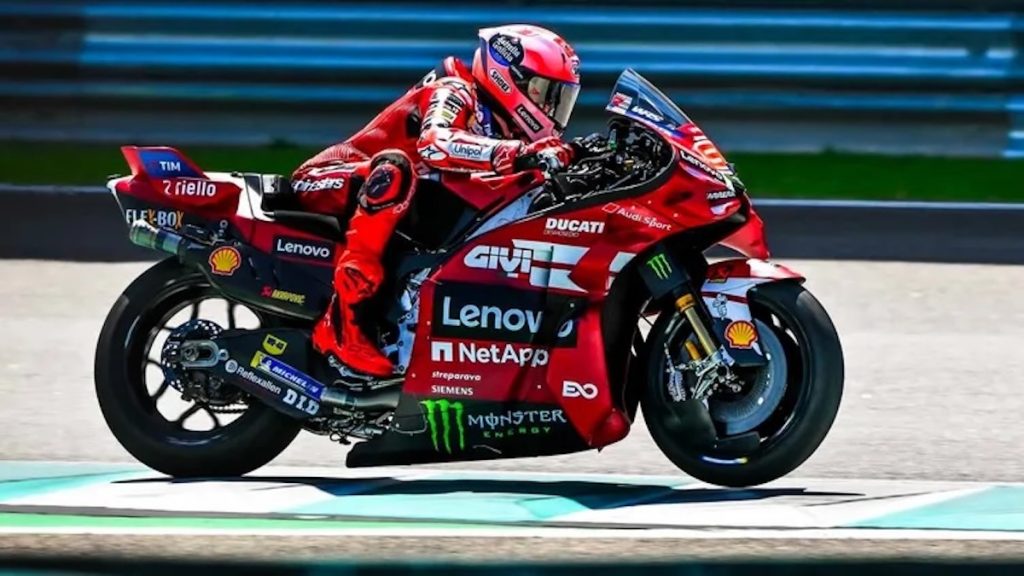

The Grand Prix Commission has issued three regulatory decisions today — the most immediately consequential being the MotoGP holeshot device ban, removing front ride height devices from all MotoGP machines effective at the Dutch Grand Prix this weekend. Round 10, Assen, June 26. Four days from now, in the middle of one of the tightest championship fights the class has produced in years.
MotoGP Holeshot Device Ban: What Changes at Assen
Per MotoGP.com, a front ride height device is a mechanical solution activated by a rider just before the start of a race, allowing the ground clearance height of the motorcycle to be manually lowered. The rider uses their body weight to compress the front forks on the start line, then turns a lever on the triple clamp to lock the suspension in that compressed position. With the centre of gravity lowered, the bike can accelerate harder without the front wheel lifting — and without the electronics cutting power in response to that lift.
The device disengages automatically under the force of braking at the first corner and, under regulations introduced in 2023, cannot be used again during the race. Ducati introduced the system in 2018; by 2021, every manufacturer on the grid — Suzuki being the last — had developed their own version. Each produced a proprietary implementation, with different activation methods and different levels of compression depending on their respective bike’s engineering architecture.
The removal of front ride height devices from the start had already been scheduled as part of MotoGP’s 2027 technical regulation package — a complete ban on all ride height devices. Today’s Grand Prix Commission decision accelerates the front device ban by a full season, bringing it into effect at Assen this weekend. The Commission confirmed the MotoGP holeshot device ban followed consultation with all teams, with riders given additional Practice Start sessions to adjust. Rear ride height devices, used during the race for corner-exit acceleration, remain permitted for now.
Across the field, the sophistication of holeshot systems has varied considerably, with some manufacturers extracting a larger performance advantage from their implementation than others. The MotoGP holeshot device ban lands hardest on the teams and riders who have been most reliant on a finely developed system. Which machines produced the most consistent holeshot-assisted starts this season is the question the Assen grid will begin to answer on Saturday morning.
Grid Spacing and the Manufacturer Cap: Two More Decisions from the Commission
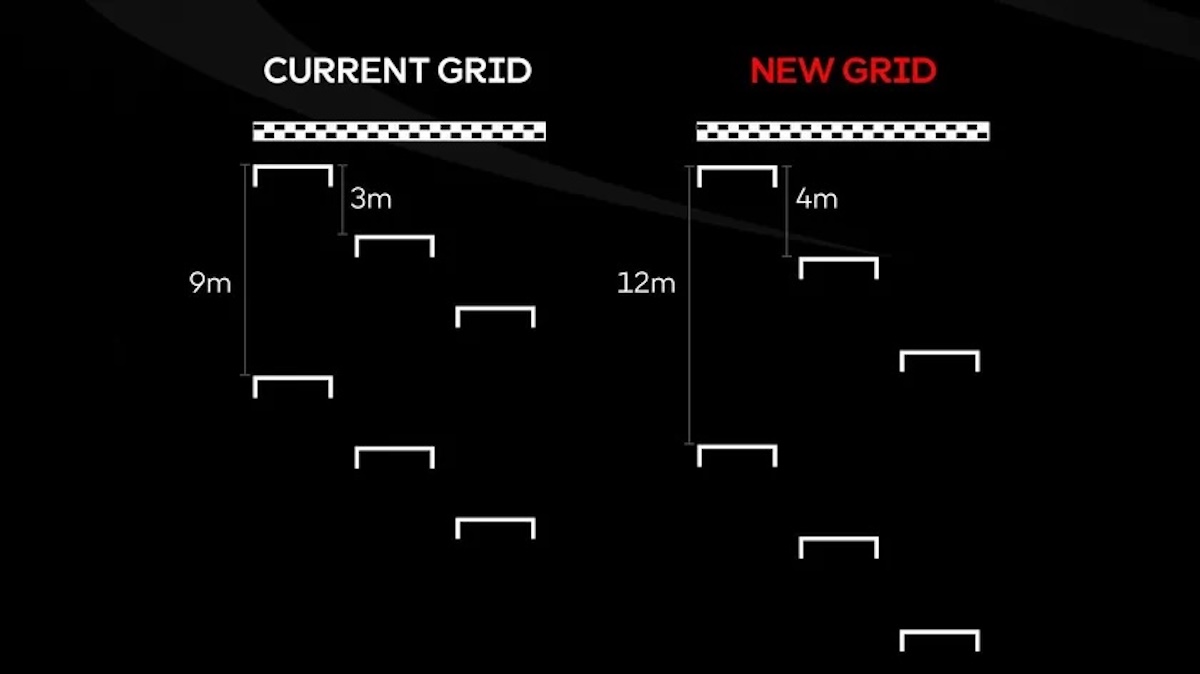
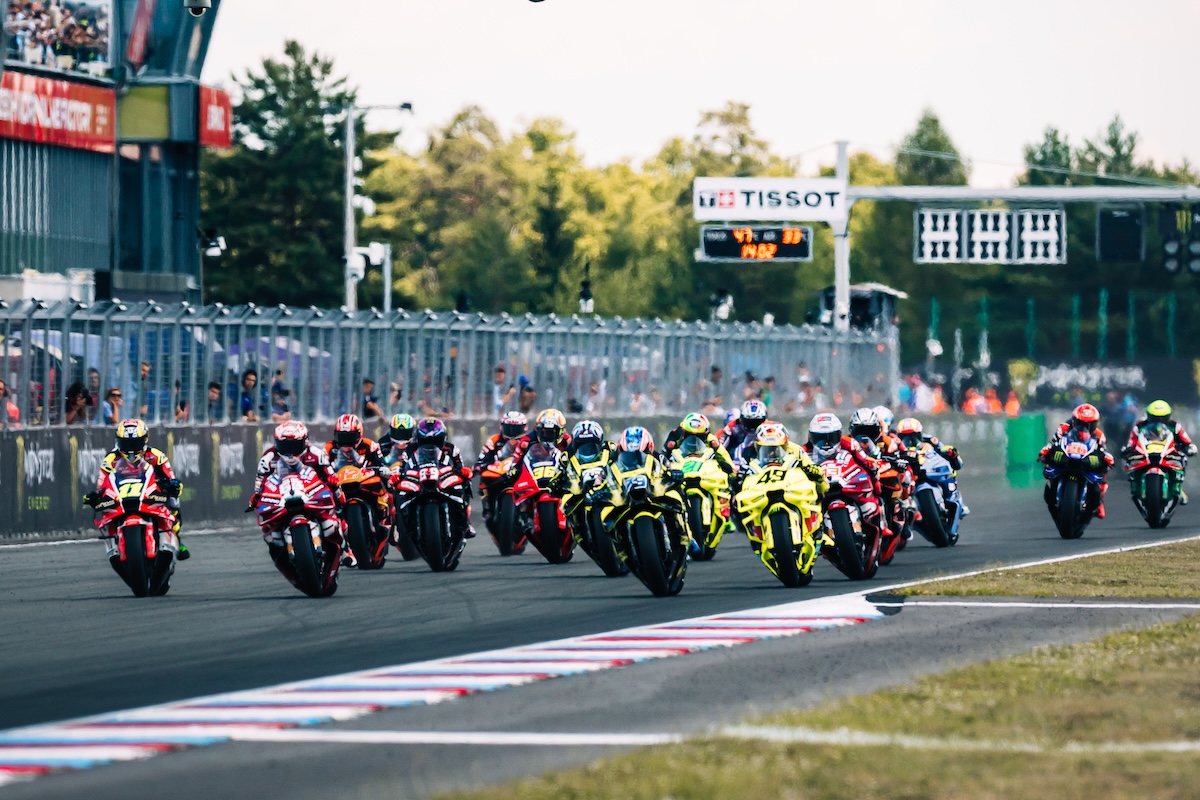
From the German Grand Prix, the vertical spacing between grid rows in all classes increases from three metres to four — extending the total distance between each three-rider row from nine metres to twelve. Three riders per row remains unchanged. The change is framed as a safety measure, and the context is clear: the Turn 1 incident at Hungary, where five riders were collected at the start, is the most recent and direct example of what happens when a dense grid compresses into a narrow corner opening under full acceleration.
From 2028, a maximum of six riders may race machinery from the same manufacturer in MotoGP — a factory team plus a maximum of two customer teams. The rule applies provided at least five manufacturers are competing at the time. In the context of the 2027–2031 manufacturer framework signed recently, the cap gives the new structure a clear enforcement mechanism: the era of one manufacturer covering the grid in force is being regulated rather than debated.
The MotoGP holeshot device ban arriving at Assen — eight points between Bezzecchi and Martin, Marquez closing at three wins in four races — is consequential timing. Bezzecchi and Martin are Aprilia teammates with a personal history at Turn 1; they now start from a more level mechanical baseline on Saturday. Marquez has always been a starter, with or without device assistance, and the removal may suit his style as much as hinder it.
What remains to be seen is which manufacturer’s machine now launches cleanest on raw rider skill, and whether the teams who had the most developed implementations can adapt their setup in four days at a circuit as directionally demanding as Assen. The grid spacing change — four metres between rows from Germany onwards — suggests the Commission is not done yet. Assen looks like a first step rather than the full answer.
About The Author


1 thought on “MotoGP Holeshot Device Ban — Plus Two More Grand Prix Commission Decisions”