
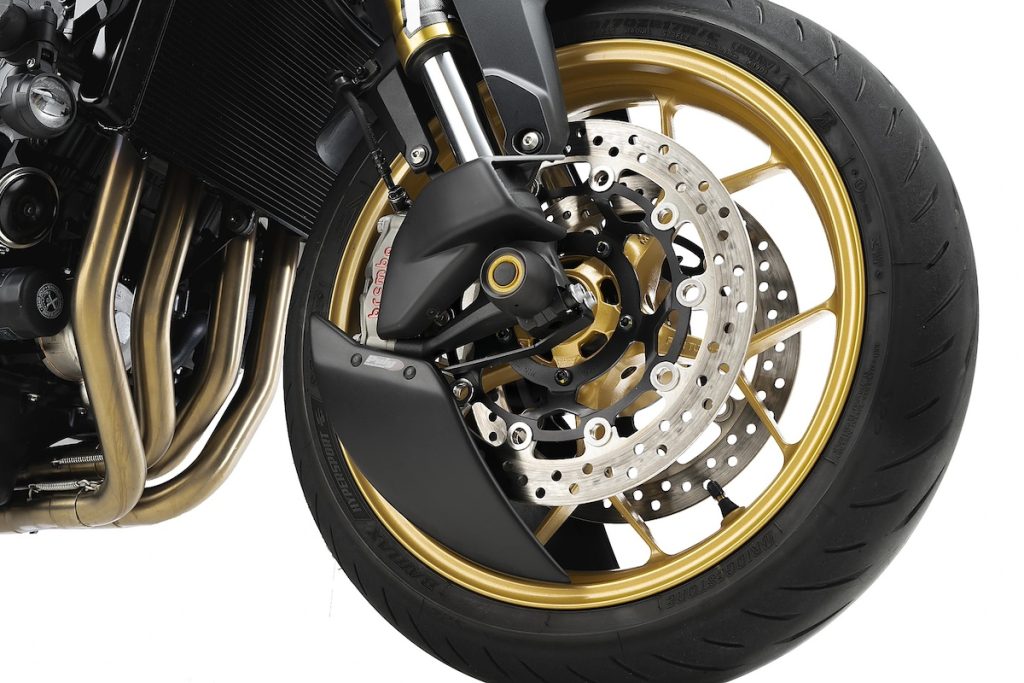

The Puig Aero Wheel Deflector is a new front-wheel aero accessory built from a direct collaboration between Puig and the MotoGP Honda HRC factory team — not inspired by racing, developed alongside it. The set of two deflectors, one per side, adapts the front-wheel turbulence management technology that factory MotoGP machines have been running for the last several seasons and makes it a bolt-on for sport bikes, naked bikes, and maxi scooters.
If you’ve been watching MotoGP closely, you’ve seen aero wheel deflectors on the Ducati Corse, Aprilia, and Honda factory machines. What Puig is doing with the Aero Wheel Deflector is bridging the gap between what those teams are running on the grid and what a street rider can actually mount. The HRC collaboration isn’t marketing language — Puig has been Honda HRC’s aero parts partner for multiple seasons. They’re not adapting someone else’s tech. They built it with the factory team.
What the Puig Aero Wheel Deflector Does
The function is specific. A spinning front wheel generates a significant turbulent wake — the rotating tire and wheel act like a low-pressure turbine, pulling chaotic air toward the lower fairing, the brake caliper stack, and the front axle area. At MotoGP speeds, managing that turbulence is worth measurable gains in braking performance and front-end stability. At street speeds the delta is smaller, but the physics are the same. The Puig Aero Wheel Deflector clears that turbulence by redirecting the airflow before it compounds into the front axle area.
The claimed results from the HRC collaboration data: improved braking performance, better front axle stability, and more precise handling — particularly in high-speed corners where the front wheel’s aero behavior has the most influence on the bike’s planted feel. Puig is measured about the claim, which is the right call. This isn’t a horsepower part. It’s an aero stability part, and the gains are more about feel and consistency than raw numbers on a timing board.
From the Honda HRC Grid to the Street
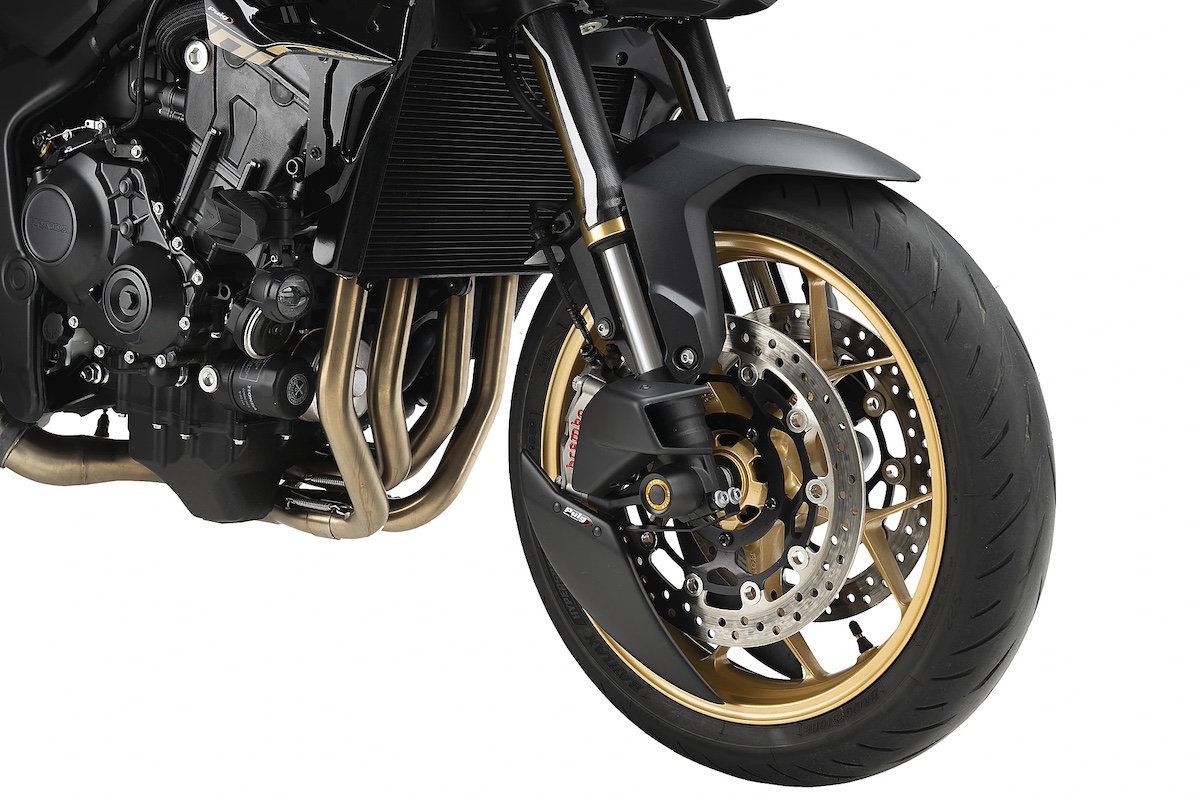
Puig’s involvement with Honda HRC isn’t a licensing arrangement — they’re an active aero development partner on the factory effort. That means the Aero Wheel Deflector’s geometry comes from real wind-tunnel work and on-bike data, not from watching races and reverse-engineering what teams are running. The “racing to streets” framing Puig uses in the press kit is appropriate: this is a filtered-down application of validated factory technology, not a look-alike accessory.
The same pattern has shown up across Puig’s recent catalog — the Streetfighter V2 Downforce Spoilers brought 3.4 kg of quantified front-end load to the street, and the ZX6-R Racing windscreens came with actual CFD data. Puig’s aero program has credibility with SBI’s readers because they’ve consistently backed the claims with engineering rather than marketing deck slides. The Aero Wheel Deflector sits in the same pipeline.
Puig Aero Wheel Deflector Specifications and Fitment
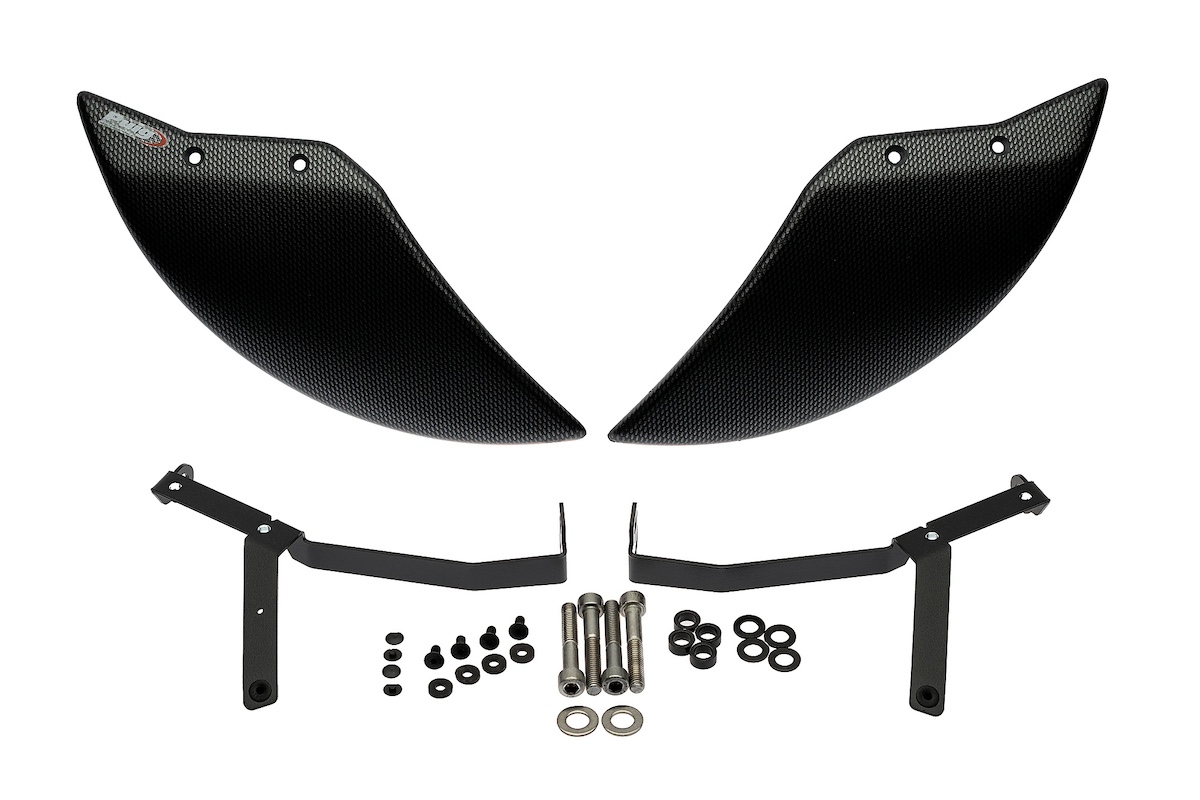
The Puig Aero Wheel Deflector ships as a pair — one left, one right — each measuring 220mm × 53mm. Construction is high-quality ABS with metal steel supports that handle the rigidity requirements at speed. The profile is low enough to integrate cleanly into the fork/wheel area without telegraphing “aftermarket accessory,” and Puig offers three finishes: Matte Black, Gloss Black, and carbon-look for builds where the aesthetic match matters.
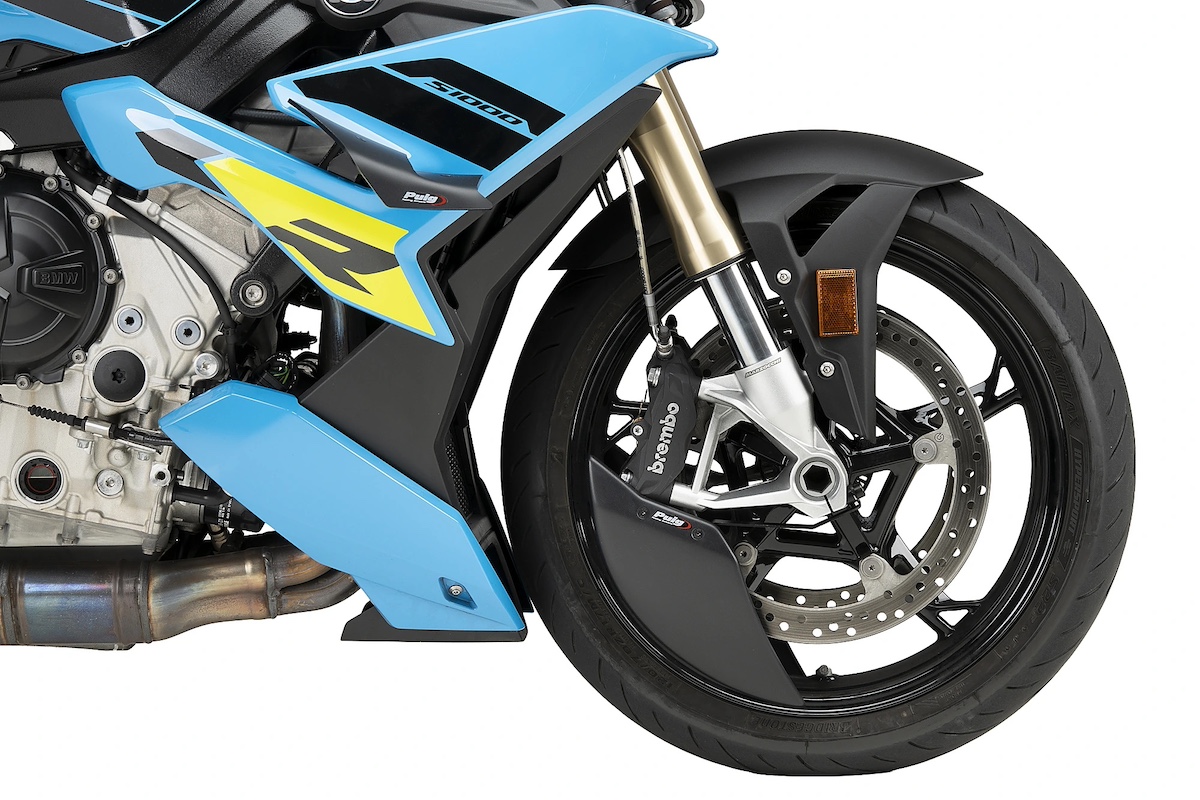
Compatibility covers sport bikes, naked bikes, and maxi scooters. One fitment note worth flagging: on certain models, the Aero Wheel Deflector ships bundled inside Puig’s Brake Cooler 2.0 product — if you’re already looking at that piece for your bike, check whether the deflector is included before buying it separately.
Pricing isn’t published in the official release — check puigusa.com for current availability and pricing as the product rolls out to dealers. The Revzilla listing for the Aero Wheel Deflector isn’t live yet; we’ll update with the IMPACT link when Revzilla indexes the product. For now, the Puig USA site is the direct path.
MotoGP aero has been trickling down to street-legal hardware for the last few years — winglets, downforce spoilers, and now front-wheel deflectors. The Puig Aero Wheel Deflector is the first time the specific front-wheel turbulence management technology from an active factory team’s aero program has been productized for the consumer aftermarket at this level. If you’re running a sport bike or naked and want the same aero thinking that’s on a factory Honda at Jerez, this is the bolt-on that gets you there.

About The Author