
Superleggera V4 Centenario and the Meaning of Centenary Excess
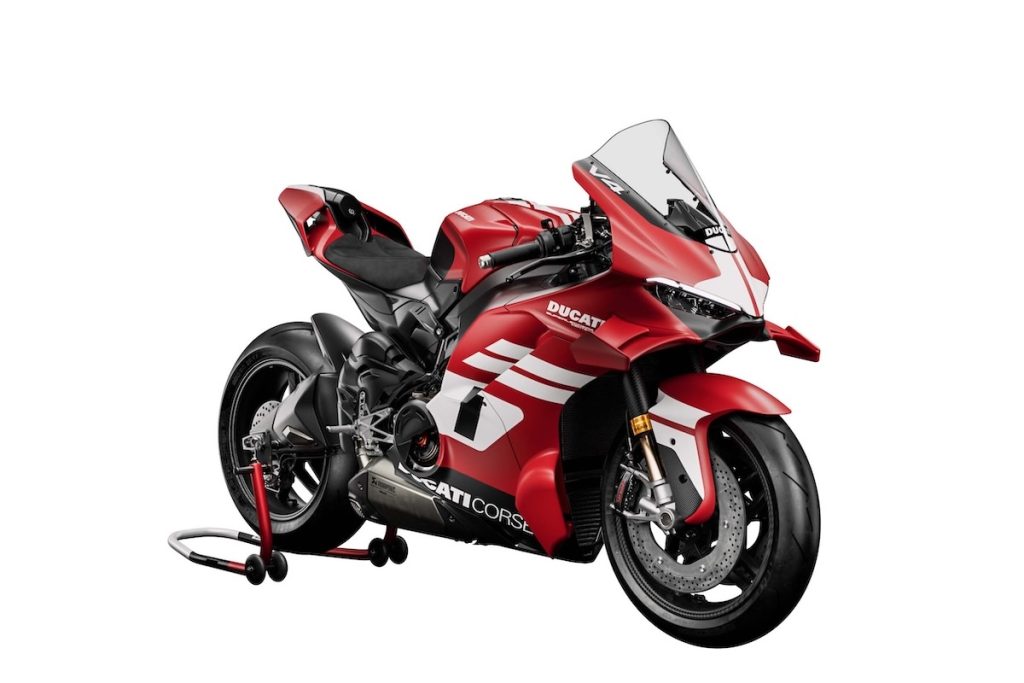
The Superleggera V4 Centenario reminds you why Ducati continues to occupy a space all its own in the universe. Built to celebrate the 100th anniversary of the Borgo Panigale manufacturer, this limited-production machine is not simply another halo bike with commemorative paint and inflated mythology. It is Ducati doing what Ducati does best when the engineers are told to stop thinking about boundaries and start thinking about legacy. The result is a motorcycle positioned as the most extreme road-legal Ducati ever developed, and based on the seventh generation of Ducati’s Superbike platform.
Ducati frames the Superleggera line as the place where rules are rewritten, and the historical path supports that claim. The 1199 Superleggera pushed materials science with magnesium alloy construction. The 1299 Superleggera took the carbon-fibre chassis concept to production. The 2020 Panigale V4 Superleggera sharpened the aerodynamic knife edge. Now the Superleggera V4 Centenario arrives as the centennial statement piece, bringing with it the first carbon-ceramic braking system approved for road use and the first road-legal motorcycle fitted with a fork using carbon-fibre sleeves.
Ducati will build just 500 numbered examples of the standard model, reinforcing the exclusivity that has always defined the Superleggera bloodline. Alongside those machines, the brand is also producing 100 Superleggera V4 Centenario Tricolore motorcycles that connect Ducati’s future-facing engineering to one of its most emotionally resonant design references, the 750 F1 Endurance Racing of the 1980s. Availability, then, is defined not by showroom abundance but by rarity and collector demand. In the materials provided, Ducati does not disclose pricing, but everything about this motorcycle makes it clear that ownership is aimed at the connoisseur tier of the market.
Superleggera V4 Centenario Design, Rosso Centenario, and Carbon Artistry
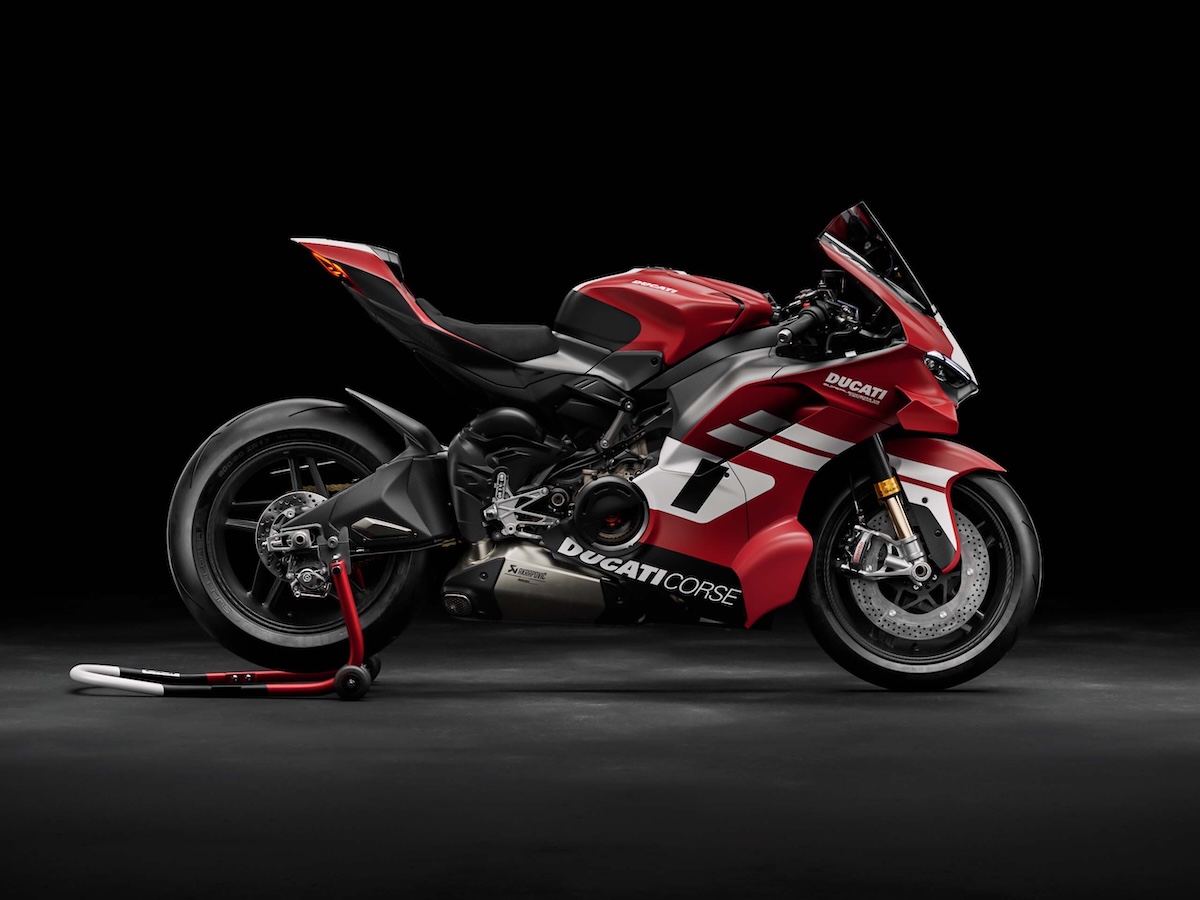
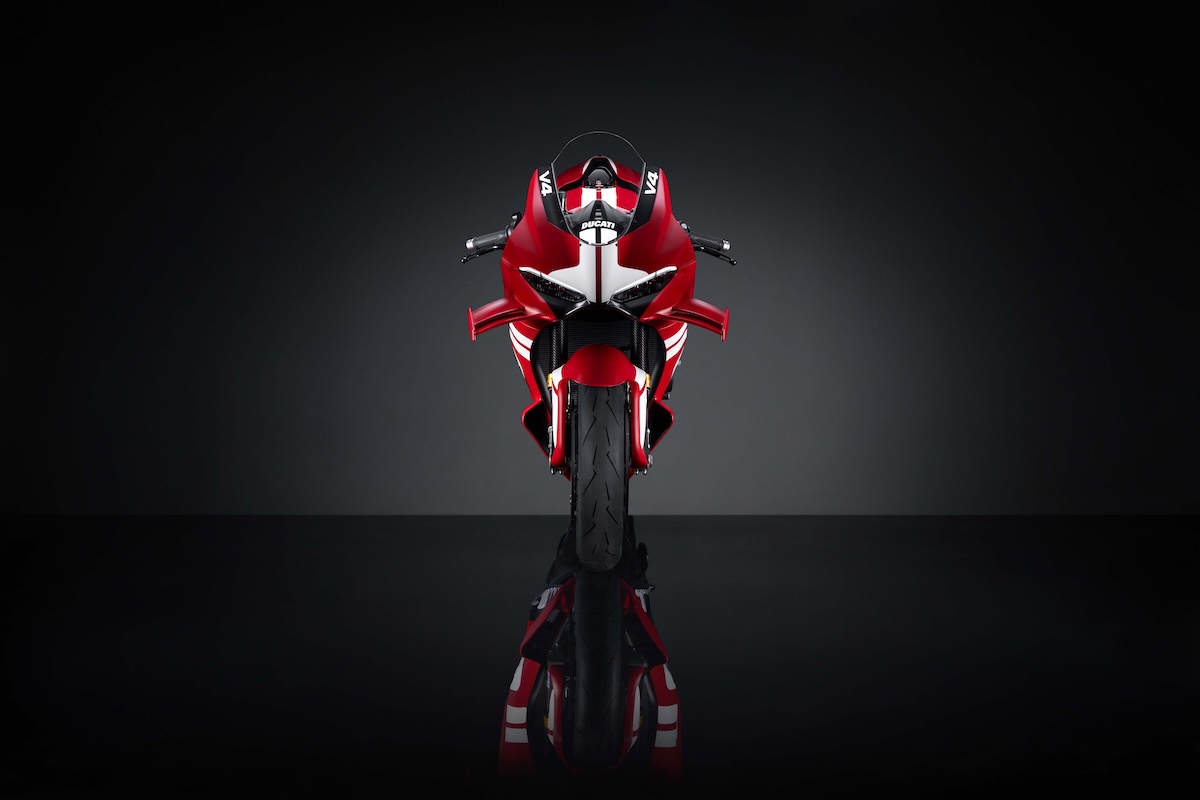
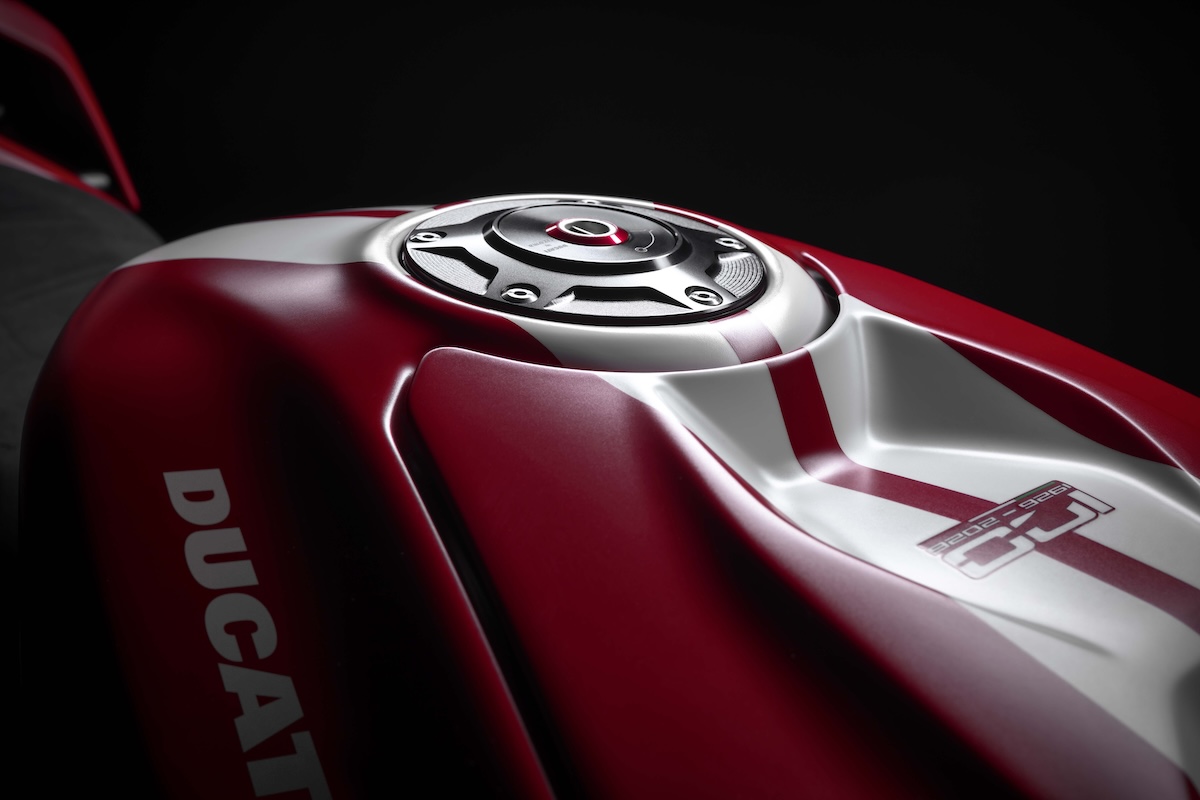
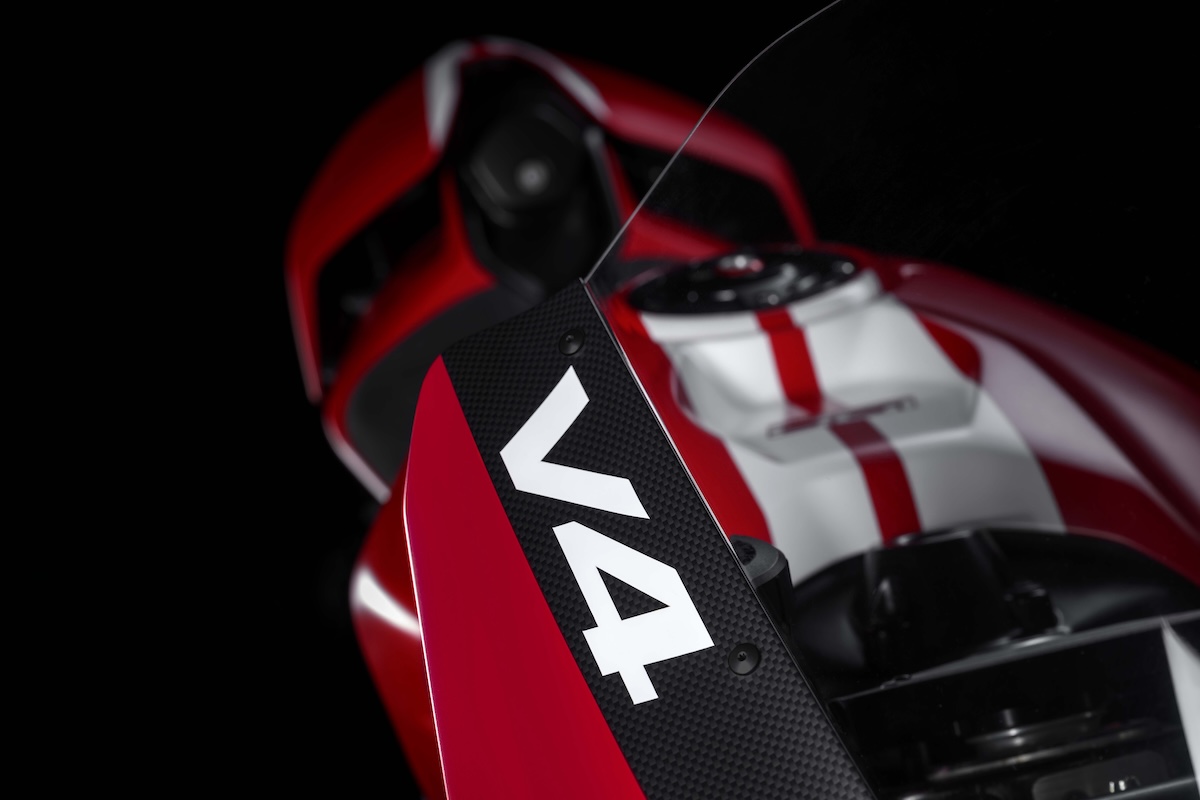
Visually, the Superleggera V4 Centenario is a motorcycle shaped as much by reverence as by wind tunnel data. Ducati says the bike’s livery is built around the new matt Rosso Centenario red, a dark, heritage-minded red that reaches back to key milestones in the company’s history, from the 1949 Ducati 60 to the 1955 Gran Sport “Marianna.” Paired with Ducati’s iconic white striping, the GP26 Rosso Centenario livery bridges the past and present in a way that feels appropriately Italian: emotional, deliberate, and impossibly elegant. More importantly, Ducati notes that this very livery inspired the official 2026 MotoGP and SBK race liveries, which gives the road bike an even deeper tie to the factory’s modern racing identity.
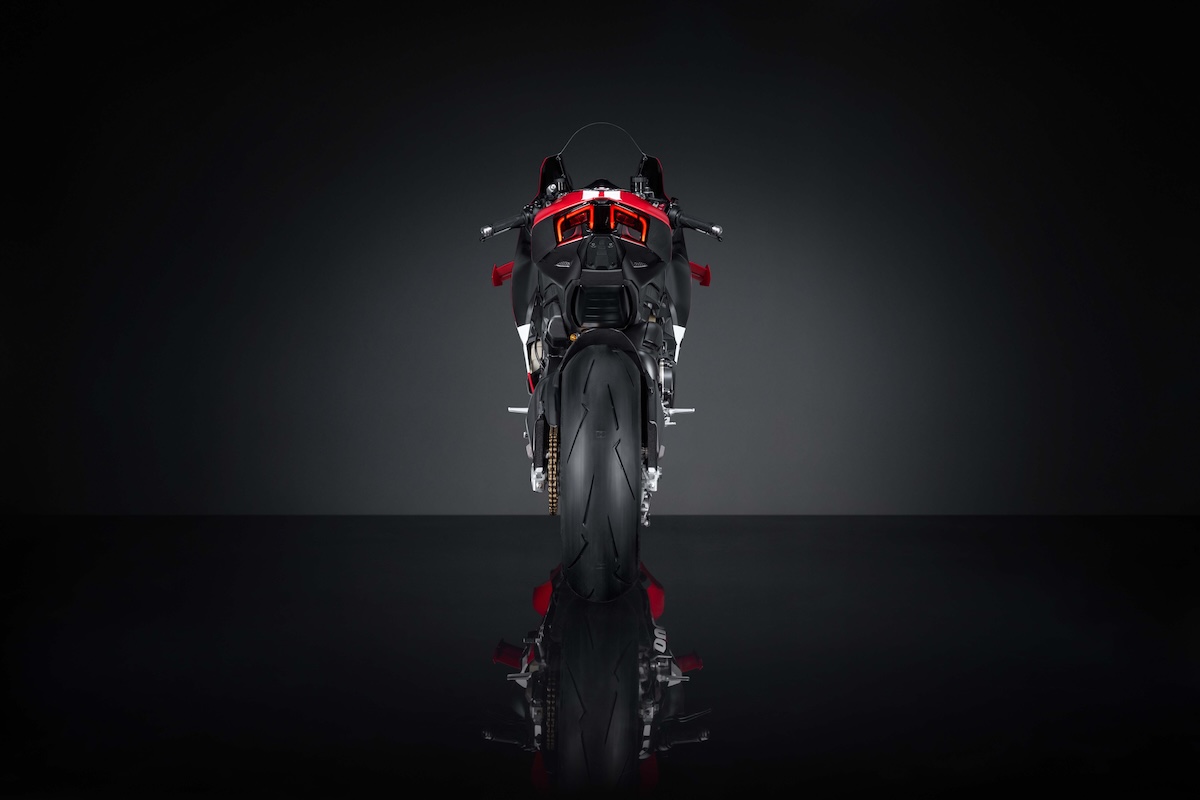
The Superleggera V4 Centenario also earns its beauty honestly. Its bodywork is entirely carbon fibre and partially left exposed, allowing the material itself to become part of the visual language. On a machine like this, exposed carbon is not decoration. It is evidence. The mudguards, tank cover, radiator duct, sprocket cover, heel guards, steering splash guards, seat base, intake duct, licence plate holder, and rear bank cover all reinforce the point that this motorcycle has been stripped to its most purposeful form.
The billet aluminium upper and lower steering plates, the laser-etched production number, the numbered ignition key insert, and the dedicated dashboard animation all turn ownership into ritual. Even the presentation matters. Ducati delivers the Superleggera V4 Centenario in a dedicated wooden crate with a certificate of authenticity, paddock stands, a mat, and a bike cover. This is not just packaging. It is Ducati acknowledging that motorcycles like this are collected, admired, and discussed almost as much as they are ridden.
Superleggera V4 Centenario Carbon Chassis and Radical Weight Savings
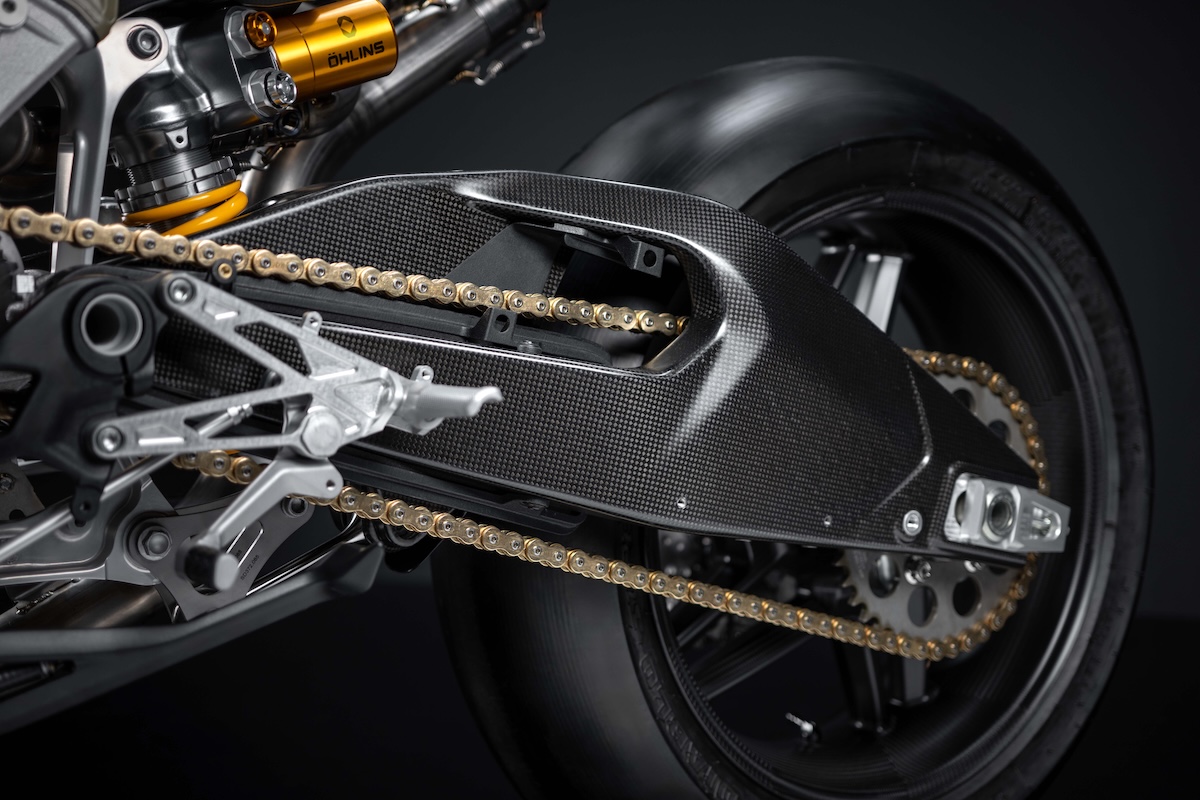
The deeper you get into the Superleggera V4 Centenario, the more the numbers begin to feel surreal. Ducati says the entire chassis is made from carbon fibre, including the frame, swingarm, subframes, and wheels, using processes derived from MotoGP and Formula 1. That full-system commitment to carbon construction is the core of the bike’s identity. Ducati is not chasing lightness with isolated parts-bin tricks. It is engineering an ecosystem.
The carbon front frame is said to be 17 percent lighter than the aluminium unit on the Panigale V4, while also offering tuned stiffness characteristics that improve grip and line-closing feel in corners. The carbon swingarm, produced through a sacrificial mandrel process, is 21 percent lighter than its aluminium counterpart while maintaining equivalent lateral and torsional stiffness. The carbon five-spoke wheels come in nearly 300 grams lighter than those on the Panigale V4 S Carbon. The front subframe drops another 200 grams, and the rear monocoque trims 1.4 kilograms. Add those choices together, and you get a road configuration wet weight without fuel of just 173 kilograms. Fit the supplied racing kit, and that figure falls to 167 kilograms.
That kind of obsessive weight discipline is only half the story. Ducati also subjects every carbon component on each Superleggera V4 Centenario to three non-destructive inspection methods: Transient Active Thermography, Phased Array Ultrasonics, and Computed Axial Tomography. That aerospace-style validation process says a lot about what Ducati believes a flagship limited-edition machine should be.
Superleggera V4 Centenario Engine Performance and Racing Hardware
The Superleggera V4 Centenario is powered by the new Desmosedici Stradale R 1100 engine, developed specifically for this project. Ducati increases displacement from 998 cc to 1,103 cc by extending stroke from 48.41 mm to 53.5 mm, a move designed to add more torque and stronger midrange thrust without sacrificing acceleration. In Euro 5+ road trim, the engine produces 228 horsepower at 14,500 rpm and 117.6 Nm of torque at 10,500 rpm. With the Akrapovič racing exhaust and Ducati Corse Performance oil, output rises to 247 horsepower at 14,750 rpm and 126.3 Nm at 12,500 rpm. Ducati claims a power-to-weight ratio of 1.48 hp/kg in track configuration, which is a staggering figure for anything wearing a licence plate.
The Desmosedici Stradale R 1100 is also 3.6 kilograms lighter than the 1,103 cc Panigale V4 unit with dry clutch. Titanium intake valves, titanium connecting rods, titanium engine bolts, lightweight two-ring pistons with an 18 mm piston pin, and a lightened crankshaft with tungsten inserts all contribute to the package. The hand-adjusted desmodromic valve timing, certified by a signed nameplate from the technician who performed the setup, adds a human signature to a machine otherwise defined by bleeding-edge engineering.
Airflow and response receive the same meticulous attention. The engine breathes through 56 mm oval throttle bodies, larger than the 52 mm components used on the Desmosedici Stradale, while the intake trumpets use optimized fixed lengths to improve flow. The upper injectors are refined for better atomization, and the intake and exhaust ports are polished like competition hardware.
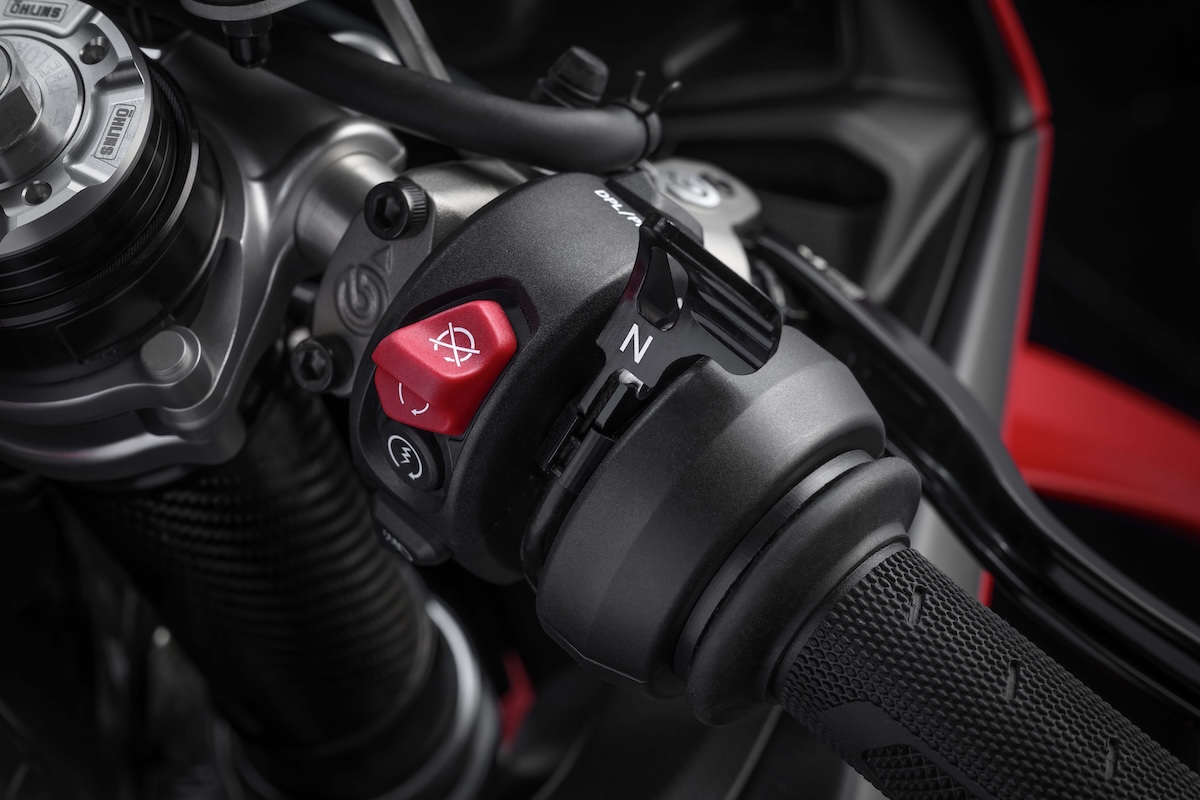
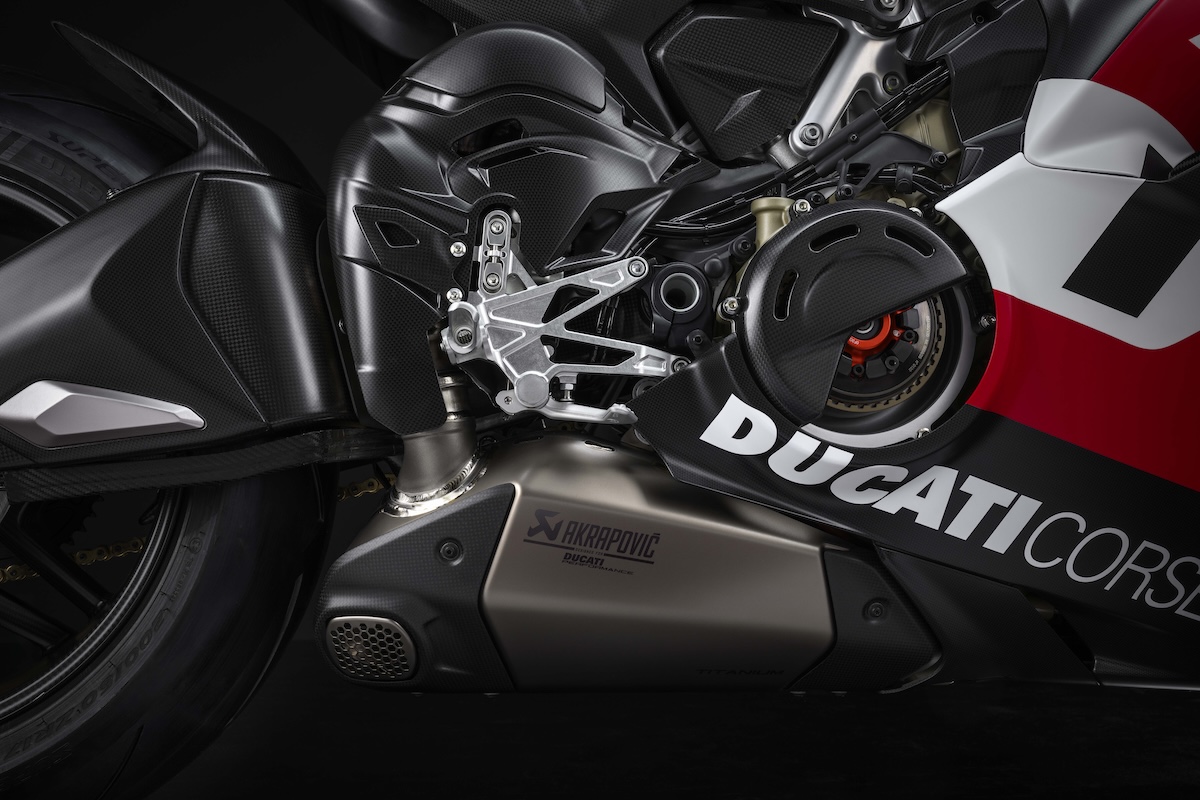
Titanium exhaust manifolds measure 41.7 mm in diameter and pair with an approved Akrapovič silencer in road form, while the racing kit unlocks the full performance envelope. Power reaches the rear wheel through Ducati’s Racing Gearbox with Ducati Neutral Lock, placing neutral below first gear rather than between first and second to prevent accidental neutral selection during critical braking and corner-entry moments. It is a racetrack-first solution that directly reflects Ducati’s competition DNA.
Superleggera V4 Centenario Brakes, Suspension, and Electronics
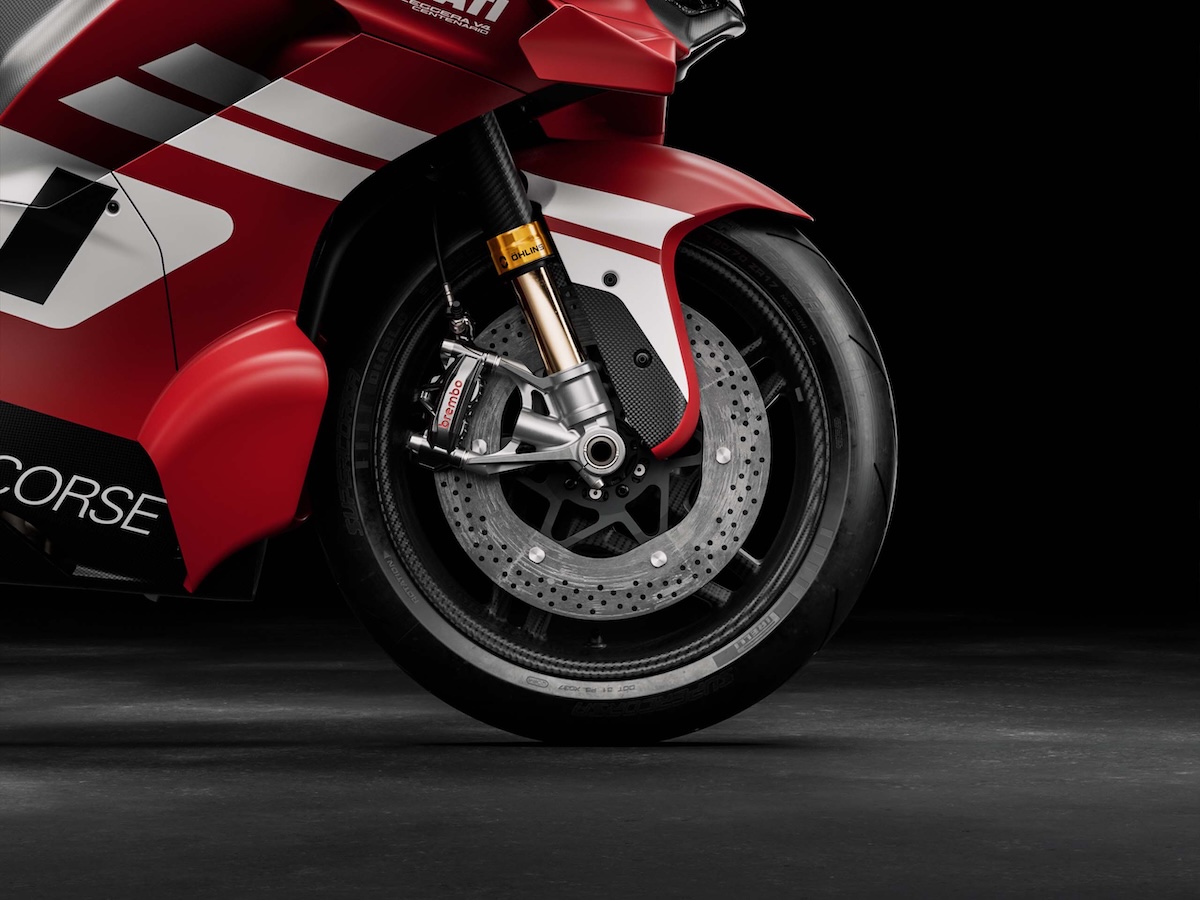
This is where the Superleggera V4 Centenario makes its strongest case as a genuine rules-changer. Ducati states that it is the world’s first road bike equipped with carbon-ceramic brake discs approved for street use. The new Brembo discs use a carbon fibre-reinforced ceramic compound and promise the same braking power as steel discs while saving 450 grams per disc and reducing rotational inertia by 40 percent. Lower inertia means sharper agility and more natural turn-in, while the thermal stability of carbon-ceramic construction should deliver consistency under punishing track conditions.
The calipers are just as serious. Brembo GP4-HY billet monoblock calipers feature integrated cooling fins, differentiated 30 and 34 mm pistons, and an anti-drag system that completely releases the disc once the lever is released. That detail alone speaks volumes about the level of refinement Ducati is chasing. The goal is not simply tremendous stopping force, but smoother corner entry and cleaner chassis behavior when the motorcycle transitions off the brakes.
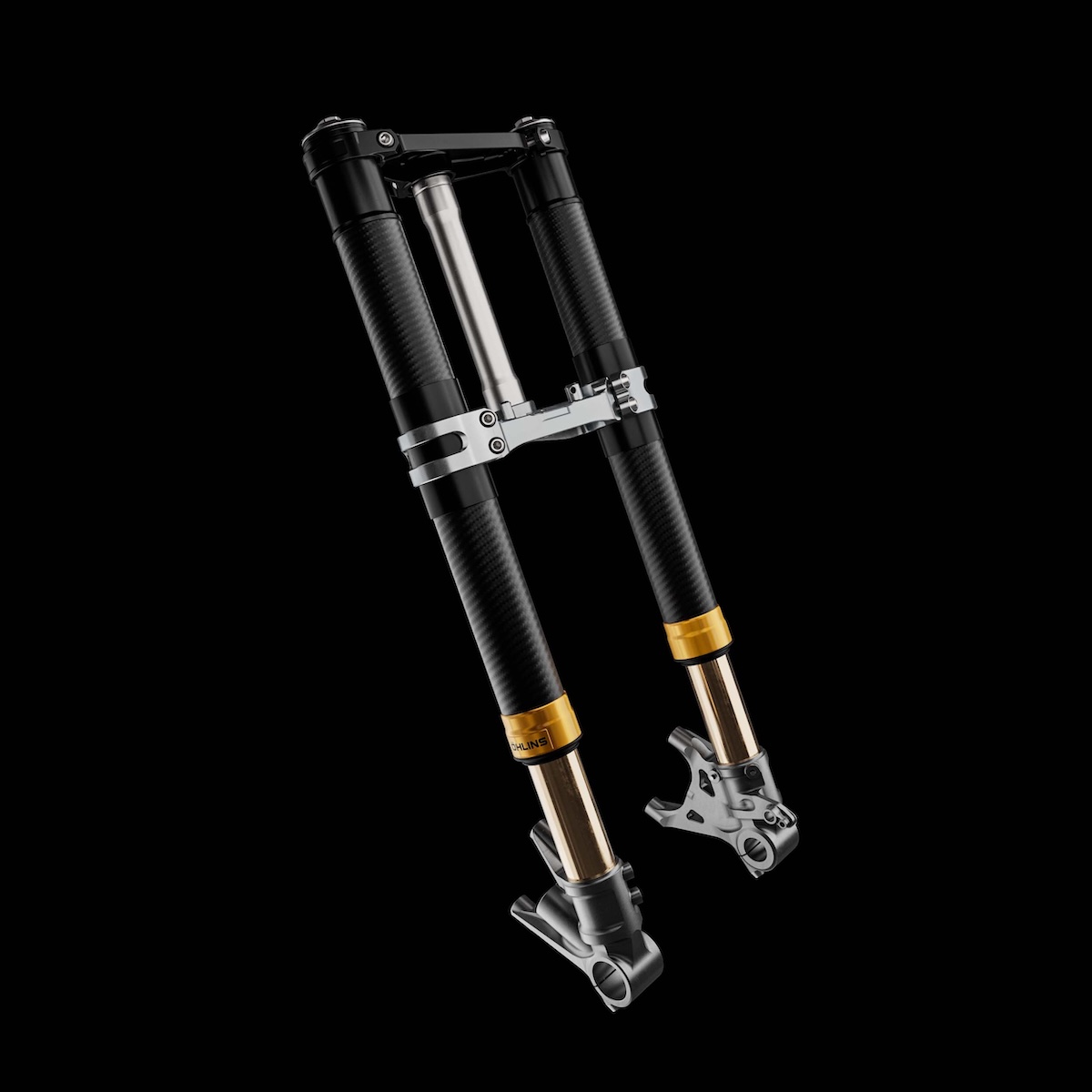
Up front, the mechanical Öhlins NPX 25/30 Carbon fork becomes another industry first, using carbon-fibre sleeves made from unidirectional layers to cut weight. Ducati claims an 8 percent saving versus the Panigale V4 R fork and a 10 percent saving versus the standard Panigale V4, bringing more sensitivity and quicker direction changes. At the rear, an Öhlins TTX36 GP LW shock with a lightweight special steel spring and MotoGP-derived valving works with titanium suspension linkages for maximum response and minimal mass. The package reads less like premium road equipment and more like race-spec hardware adapted just enough for legal registration.
Electronics complete the picture. Ducati gives the Superleggera V4 Centenario a latest-generation suite built around a 6D IMU and derived from the Panigale V4 R platform, then recalibrates it with newer DVO strategies. Ducati Traction Control DVO, Ducati Wheelie Control DVO, Ducati Slide Control, Ducati Power Launch DVO, Ducati Quick Shift 2.0, and four-level cornering ABS are all present. The standout addition is Engine Brake Control DVO with Dynamic Engine Brake, a system that automatically modulates engine-brake contribution and even leverages the rear brake to maximize grip and improve corner entry. Ducati says it mimics techniques used by professional riders, helping even less experienced pilots tighten lines and build confidence.
Superleggera V4 Centenario Ownership Experience, Kit, and Tricolore Rarity
Ducati understands that the Superleggera V4 Centenario is not just a motorcycle purchase. It is an ownership event. The supplied standard equipment includes the Akrapovič racing exhaust with DAVC software and dedicated calibration, a lower fairing, open carbon-fibre clutch cover, swingarm and alternator protectors, a headlight and plate-holder removal kit, a machined aluminium racing fuel cap, a brake lever guard, battery charger, and a neoprene racing seat. Including the racing kit as standard reinforces the brand’s intent: this bike is meant to exist on the road legally, but its soul unquestionably belongs to the circuit.
There is also an experience layer built into the ownership proposition. Twenty-six owners will gain access to the MotoGP Experience on July 6 and 7, immediately after World Ducati Week 2026, where they will ride on track with Ducati instructors and finish the day aboard the DesmosediciGP26. Ducati notes that this experience is not included in the purchase price, but its availability adds another degree of exclusivity to an already rare machine.
Then there is the Superleggera V4 Centenario Tricolore, limited to 100 units. Its design pays tribute to the 750 F1 Endurance Racing, revisiting classic tricolore race colors through a modern lens. That derivative broadens the emotional reach of the platform. If the standard GP26 Rosso Centenario version feels like a centennial expression of Ducati’s modern race-bred future, the Tricolore feels like a conversation between the brand’s heritage and its technical ambition.
Superleggera V4 Centenario Final Thoughts
The Superleggera V4 Centenario demonstrates what happens when Ducati treats engineering ambition as a moral obligation. This machine advances material usage, braking technology, suspension design, and production superbike performance in one sweeping gesture. It is lighter, more powerful, and more technologically adventurous than the Panigale-based machines that came before it, and it builds directly on the lineage established by the 1199 Superleggera, 1299 Superleggera, and 2020 Panigale V4 Superleggera.
What makes the Superleggera V4 Centenario so stimulating is not one isolated specification, though 247 horsepower in track trim and 167 kilograms with the racing kit would be enough to command attention on their own. It is the totality of the motorcycle. The carbon-fibre chassis, carbon-ceramic brakes, pressurized carbon-sleeved fork, hand-finished desmo timing, and Rosso Centenario livery all work together to create something that feels unmistakably Ducati and undeniably historic.

About The Author
Discover more from SportBikes Inc Magazine
Subscribe to get the latest posts sent to your email.