
The Ducati DesertX V2: A Sharper, Smarter ADV Weapon
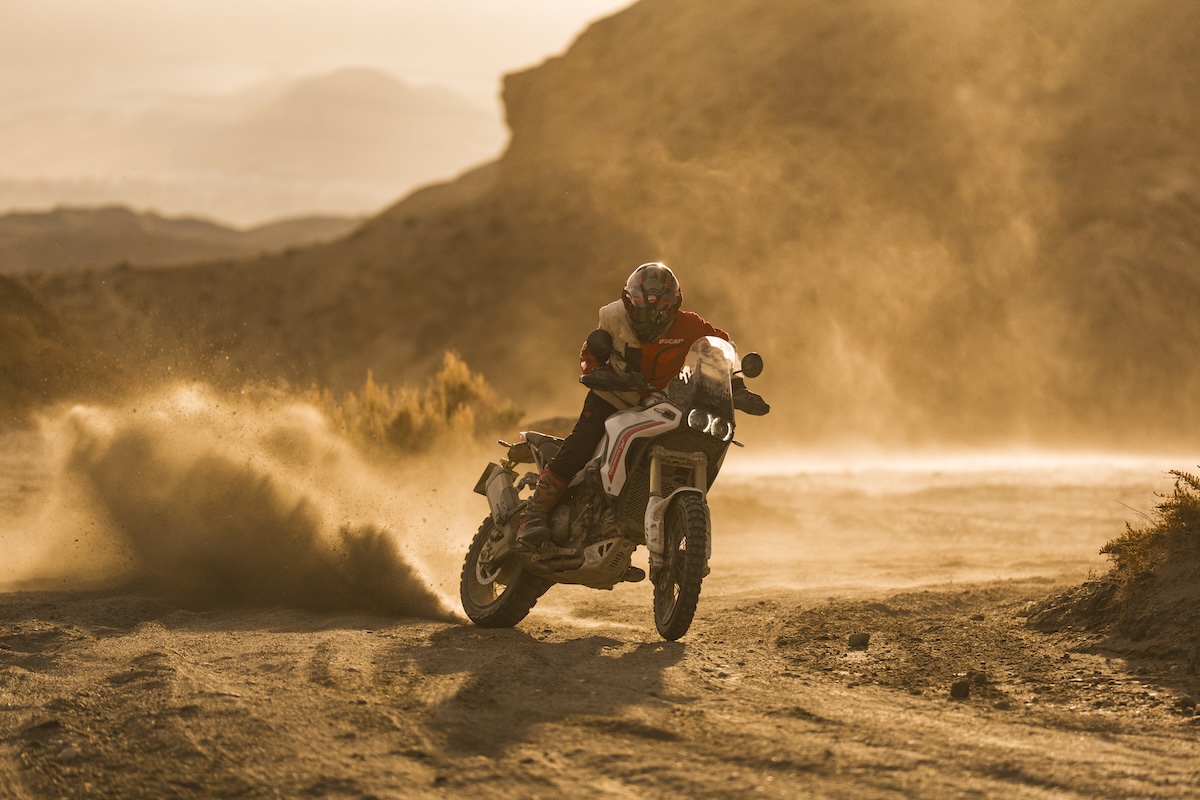
The adventure category is crowded with machines that promise capability, but the ones that stand out are the bikes that actually feel purpose-built the moment you throw a leg over them. On paper, the 2026 Ducati DesertX V2 is that motorcycle. This second-generation redesign is not a mild refresh. It is a full rethink built around Ducati’s new V2 engine and a dedicated monocoque frame, with a clear mission: improve off-road performance, preserve on-road excitement, and make the platform more approachable for more riders without dulling its edge.
Ducati says the new model is the result of years of development, feedback, and competition experience gathered on demanding terrain. This bike was not redesigned in a vacuum. The Ducati DesertX V2 was shaped by real-world punishment and real off-road lessons, then refined into a production machine aimed at riders who want one bike that can handle weekday roads, weekend dirt, and proper long-haul adventure travel.
Ducati DesertX V2 Engine and Chassis Raise the Performance Ceiling
Under the tank of the Ducati DesertX V2 is the new 890 cc Ducati V2 engine, and it sounds like the right move for this platform. Ducati describes it as the lightest twin-cylinder engine with four valves per cylinder the company has ever produced, and the use of IVT variable intake valve timing gives it a rare combination of flexibility and response for this segment.
Output is rated at 110 hp at 9,000 rpm, with 92 Nm of torque at 7,000 rpm, and Ducati notes that 70 percent of peak torque is already available at 3,000 rpm. For a travel enduro, that broad torque delivery is the story. It should translate into tractable low-speed control off-road and lively punch when the road opens up.
The transmission setup also reinforces the bike’s dual-purpose intent. Ducati specifies shorter ratios in the first four gears to help the Ducati DesertX V2 deal with technical terrain and obstacles, while a longer sixth gear is tuned for fuel economy and comfort during faster transfers. That is the gearing logic I like to see on an adventure machine that is expected to do real mileage. The service intervals also deserve attention, with valve clearance checks at 45,000 km and oil changes every 15,000 km or two years, which adds a practical ownership advantage to the performance package.
The chassis is equally interesting. The Ducati DesertX V2 uses a dedicated monocoque aluminum frame that employs the engine as a structural element and also functions as the airbox. Ducati’s approach here is all about compactness, rigidity, and handling precision, with the added benefit of easier air filter access for cleaning after off-road rides. The rear trellis frame maintains that unmistakable Ducati DNA while being designed for easier access to engine components, and the dedicated aluminum swingarm is engineered for the strength demands of off-road riding. This is a modern chassis architecture with old-school Ducati identity still intact, which is exactly the balance many riders want.
Ducati DesertX V2 Off-Road Ergonomics and Suspension Look Dialed In
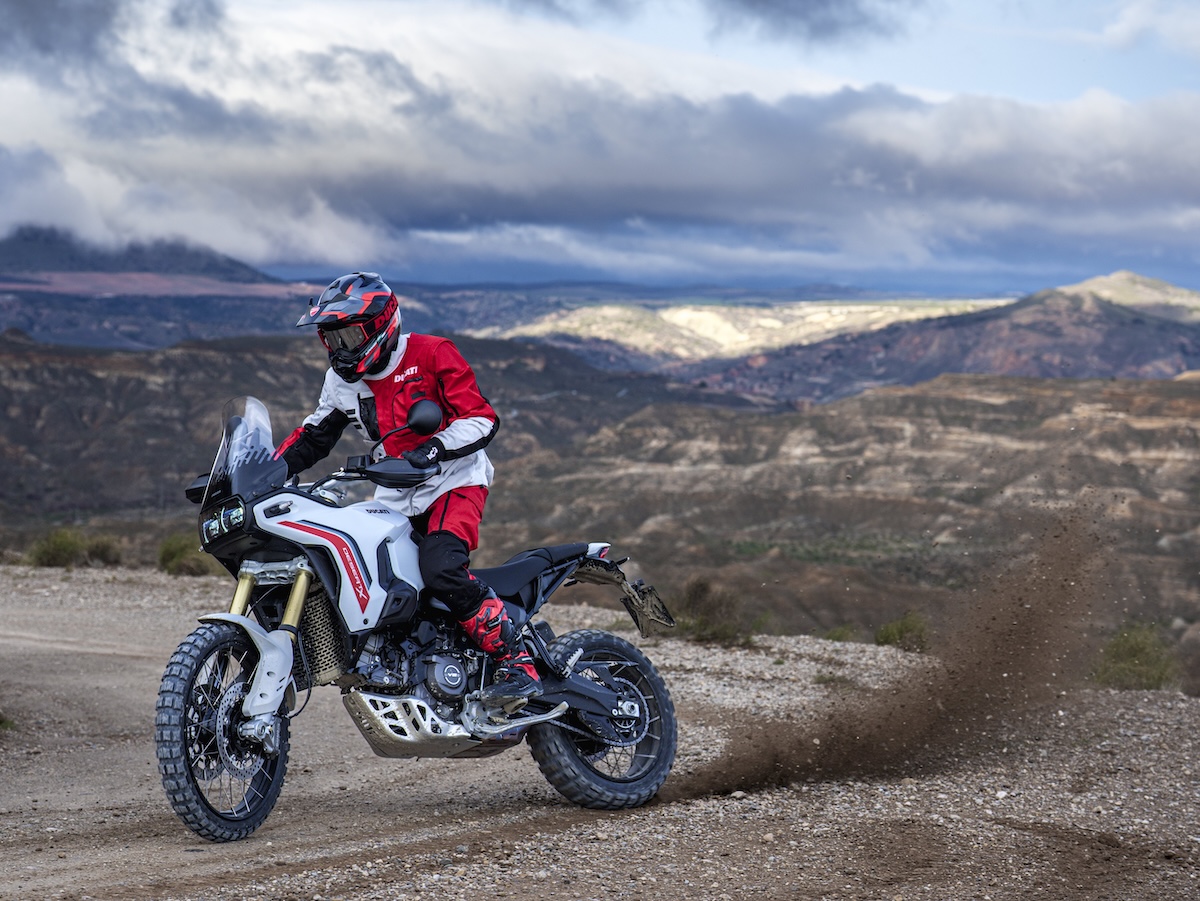
Where the Ducati DesertX V2 really starts to sound like a serious evolution is in its suspension, braking, and rider triangle. Ducati states that the second-generation model has been designed to be easier for beginners while still high-performing in the hands of professionals, and that is a difficult line to walk. The rear suspension now uses progressive linkages to improve comfort and off-road behavior, while the new Kayaba fork is described as smoother over rough terrain and features independent hydraulic adjustments on both legs for more precise tuning.
The travel numbers back up the intent. The Ducati DesertX V2 gets a fully adjustable 46 mm KYB upside-down fork with 230 mm of travel and a fully adjustable KYB monoshock with remote preload adjustment and 220 mm of rear travel. That is real suspension for real terrain, not just adventure styling. Ducati also keeps the proper off-road wheel package with 21-inch front and 18-inch rear tubeless spoked wheels, wrapped in Pirelli Scorpion Rally Street tires in 90/90 and 150/70 sizes. Ducati notes triple homologation within the Pirelli Scorpion range, which gives riders flexibility to push the setup more toward dirt or road, depending on how they use the bike.
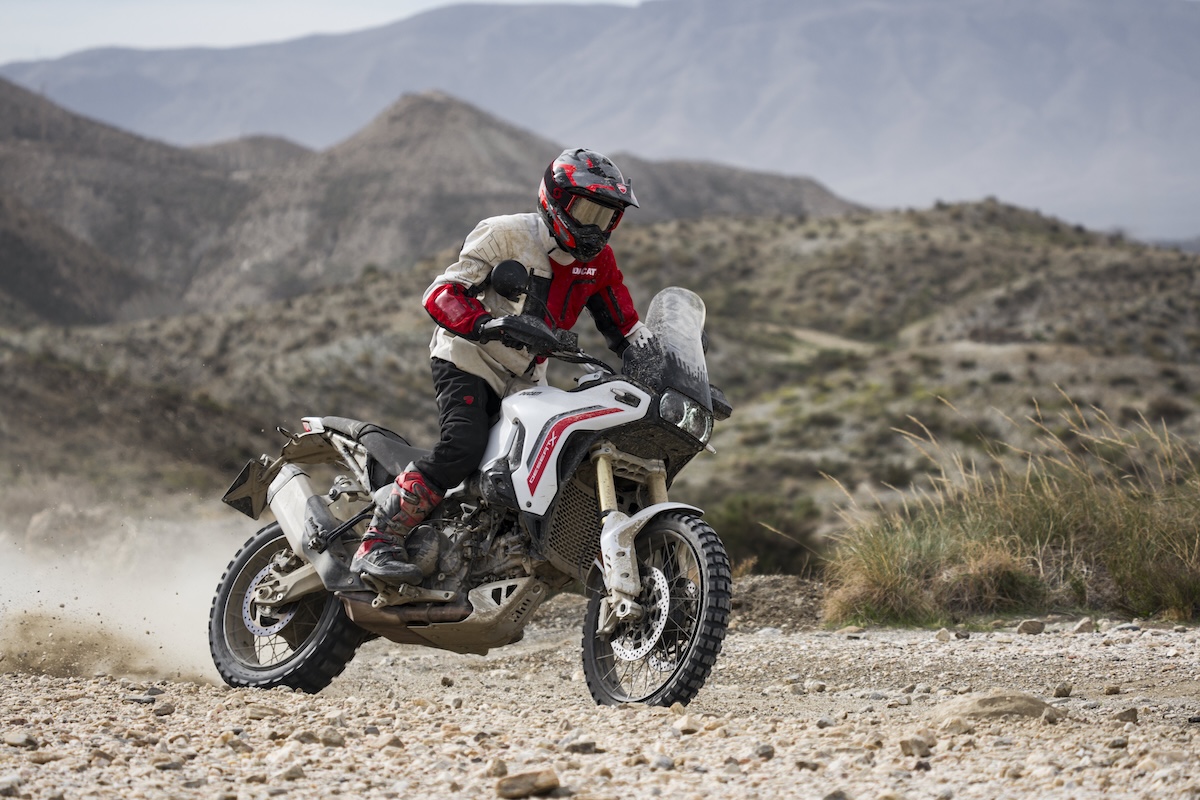
Ergonomically, Ducati clearly focused on rider movement and control. The Ducati DesertX V2 has a revised ergonomic triangle with the footpegs moved back, and the seat and handlebars moved forward, creating a less seated rider position that should improve both sporty road riding and off-road control. The new 18-liter polymer tank is slimmer and lighter, with protective crash pads for low-speed falls and a structure that places fuel volume low to help reduce the center of gravity. That low fuel mass placement is a smart move on a tall ADV bike because it can make a noticeable difference in slow-speed maneuverability and confidence.
The side panels are shaped and textured to improve grip while standing, and the higher front mudguard adds more clearance for muddy terrain, which is a practical upgrade over the prior model. Ducati also notes a horizontal dashboard layout with a standard utility bar that opens space in the upper fairing for navigation devices and improves visibility of the terrain directly in front of the bike when riding standing up. Seat height is listed at 880 mm standard, with options to go lower.
Ducati says it can be reduced to 840 mm with the lowered seat and suspension kit, and the spec sheet also details additional seat configurations, including a high seat and low seat options, which broaden accessibility for different riders.
The braking package is another area where the Ducati DesertX V2 appears to have been sharpened. Up front are Brembo M4.32 radial calipers with dual 305 mm discs, paired with a revised axial pump and newly designed lever to improve modulation and lever feel off-road while preserving strong road braking performance. Ducati also points out that the new front brake setup allows fitment of a high front mudguard without extra kits, which is a nice detail for riders building a more dirt-focused configuration.
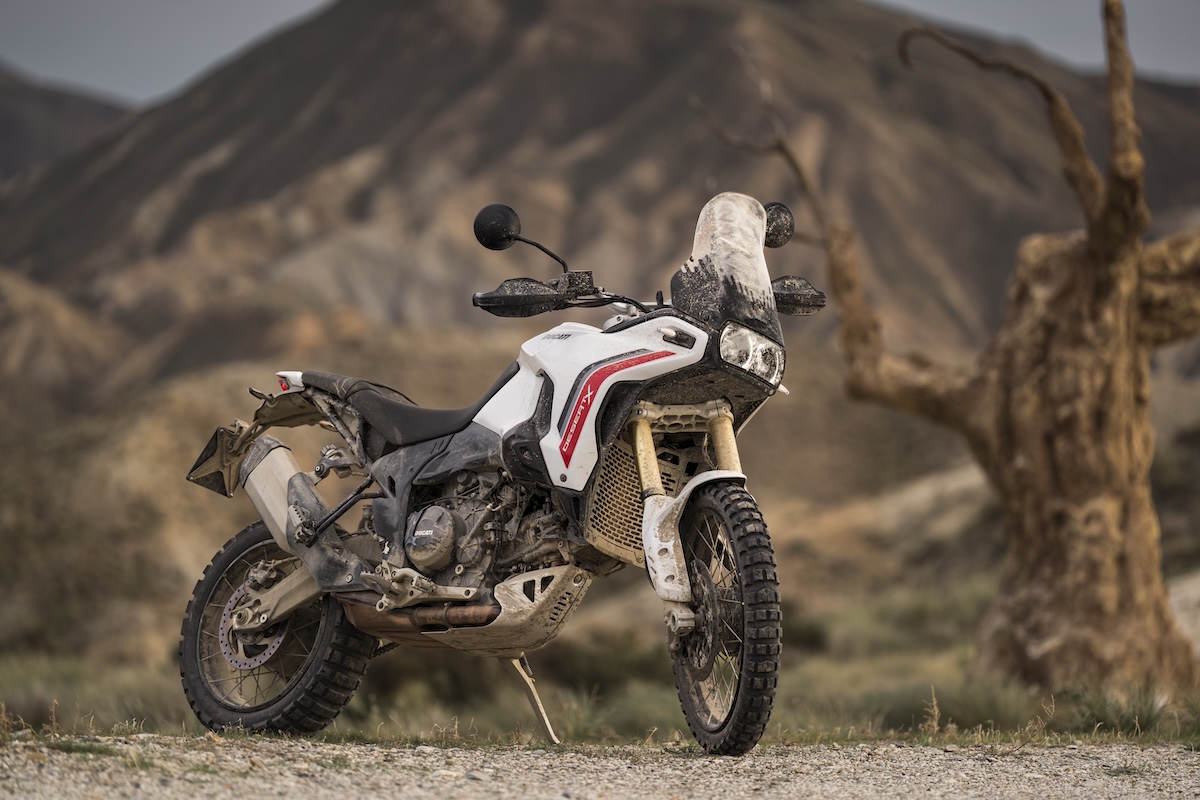
Ducati DesertX V2 Electronics, Style, Price, and Availability
Ducati has also loaded the Ducati DesertX V2 with a modern electronics suite that sounds genuinely useful rather than just spec-sheet noise. The bike uses a latest-generation package based on a 6-axis inertial platform, with real-time roll, pitch, and yaw detection managing systems like Cornering ABS, Ducati Traction Control, Ducati Wheelie Control, and Engine Brake Control. Ducati emphasizes that the calibrations were developed specifically for off-road use with input from riders and testers, which is important because off-road-friendly electronics require a different philosophy than road-only tuning.
The Ducati DesertX V2 comes with six predefined Riding Modes: Sport, Touring, Urban, Wet, Enduro, and Rally. The two dedicated off-road modes are where Ducati’s experience seems to show. Cornering ABS has four levels, with levels 1 and 2 specifically tuned for off-road use. Ducati says level 1 is aimed at faster riders, while level 2 helps less experienced riders learn off-road maneuvers while still reducing braking distance on dirt and preserving stability. Levels 3 and 4 are optimized for road use. ABS can also be disabled in Enduro and Rally modes, which serious off-road riders will appreciate. The updated Ducati Quick Shift 2.0, now without external sensors, should also be more robust in mud, dust, and impact-prone conditions.
The interface gets a major step forward, too. Ducati specifies a new 5-inch TFT dashboard with 800 x 480 resolution, two USB ports as standard, and three selectable Info Modes called Road, Road Pro, and Rally, with automatic day/night switching. Rally mode turns the display into a navigation-focused tool with tripmaster functionality, which is exactly the kind of feature that makes the Ducati DesertX V2 feel purpose-built for adventure travel rather than just adventure-themed.
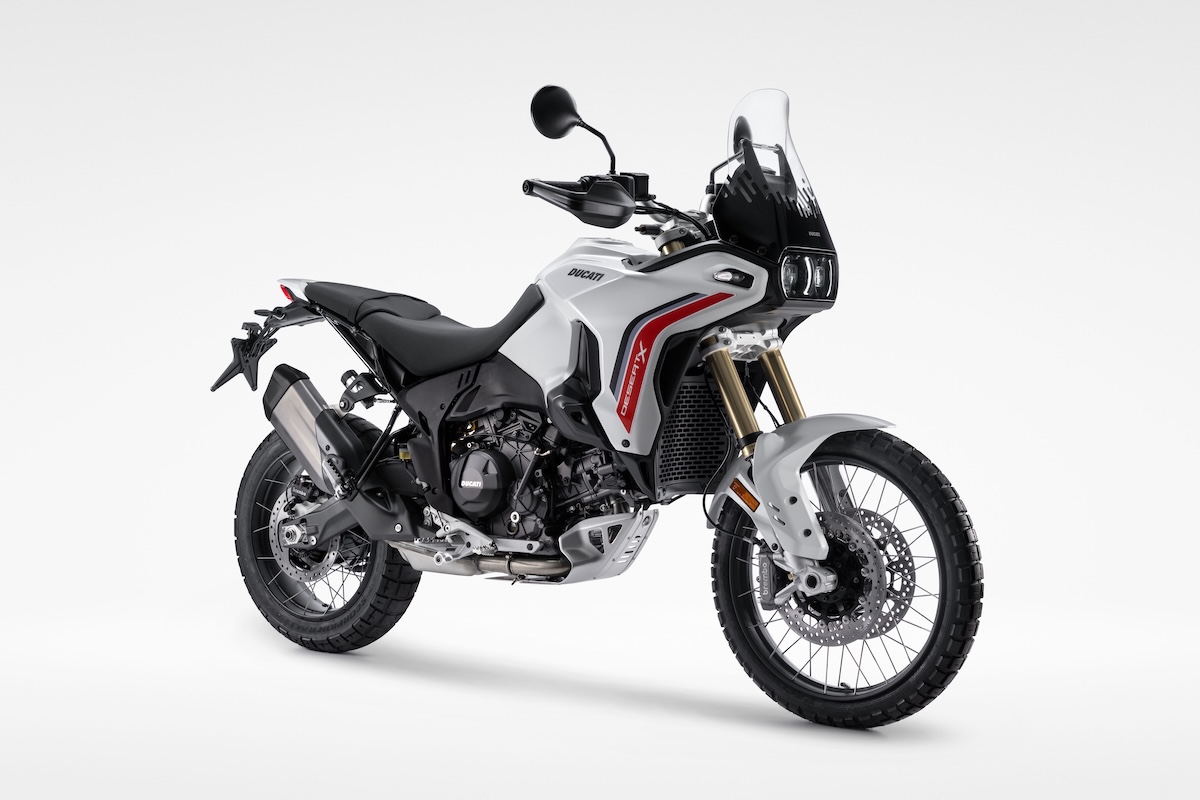
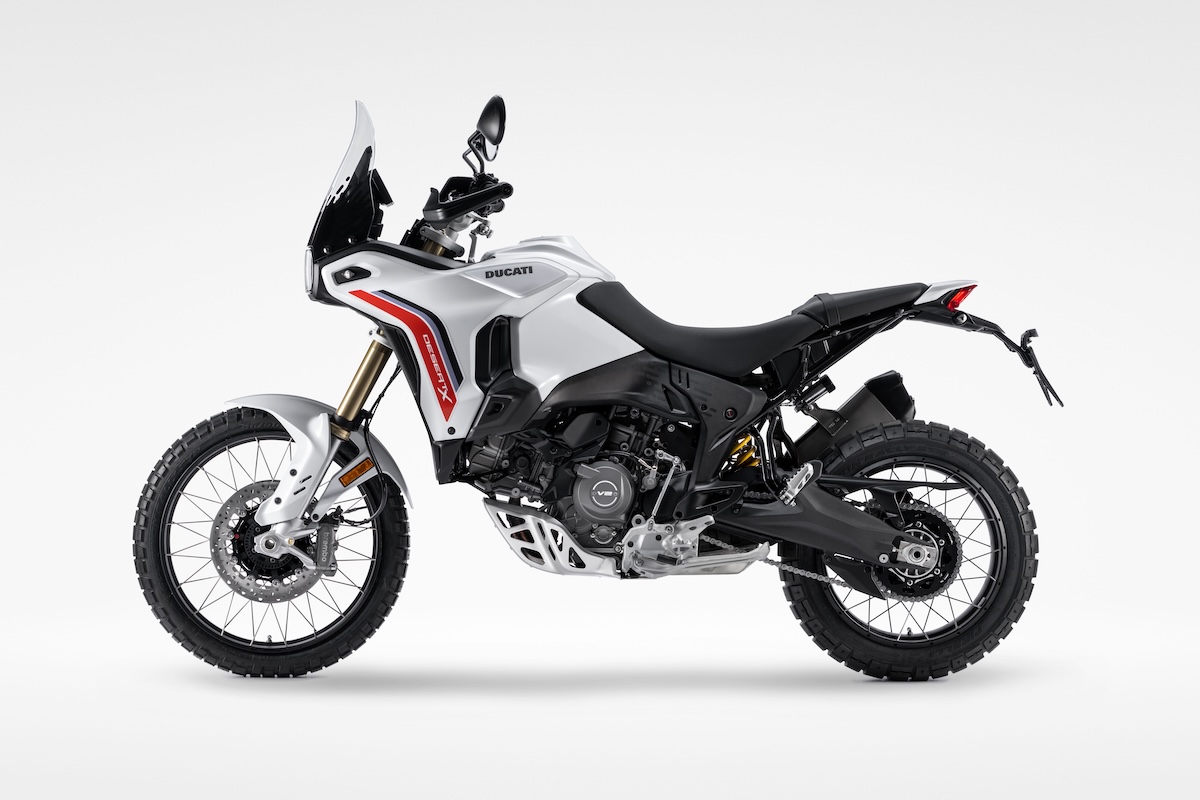
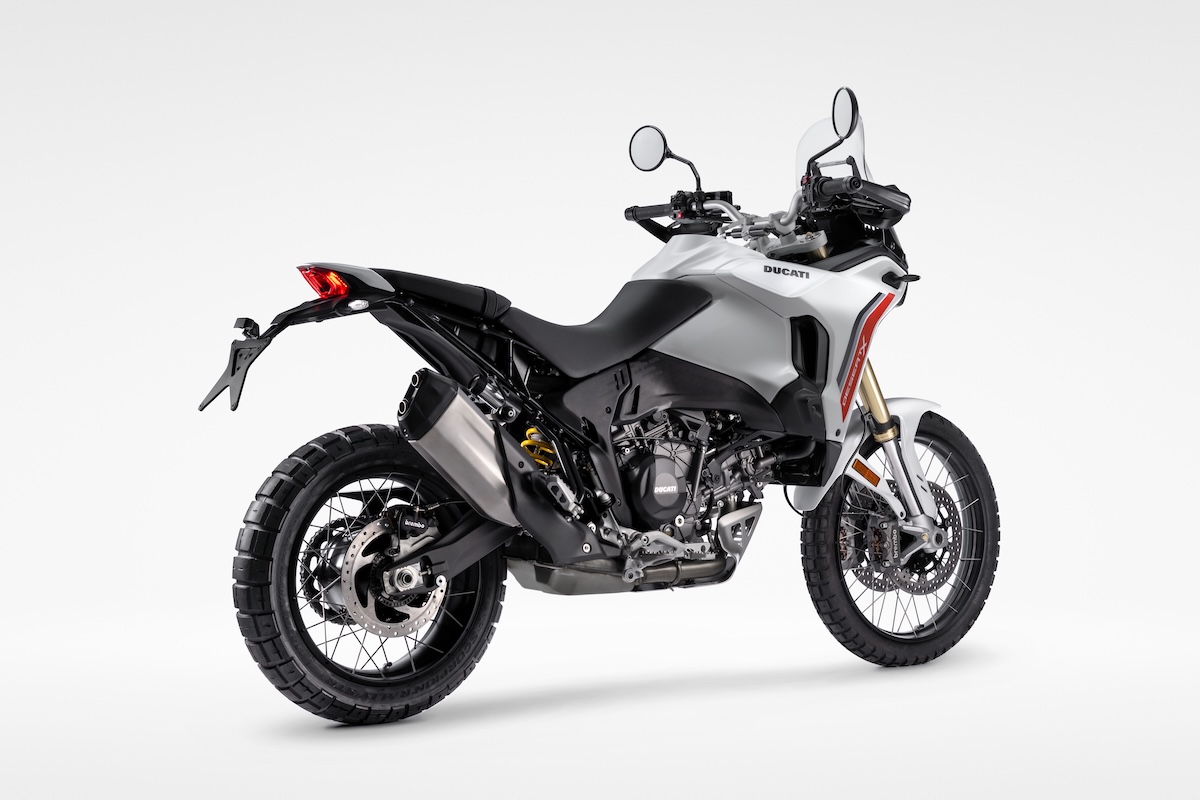
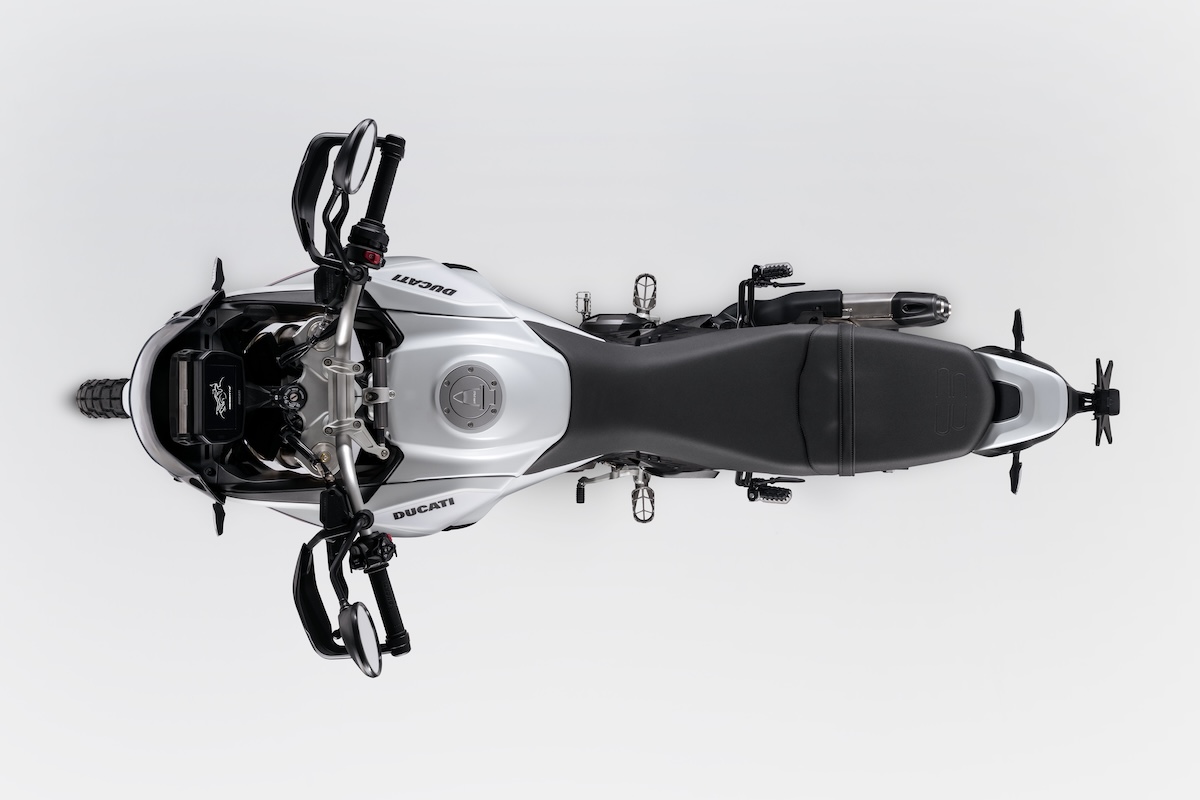
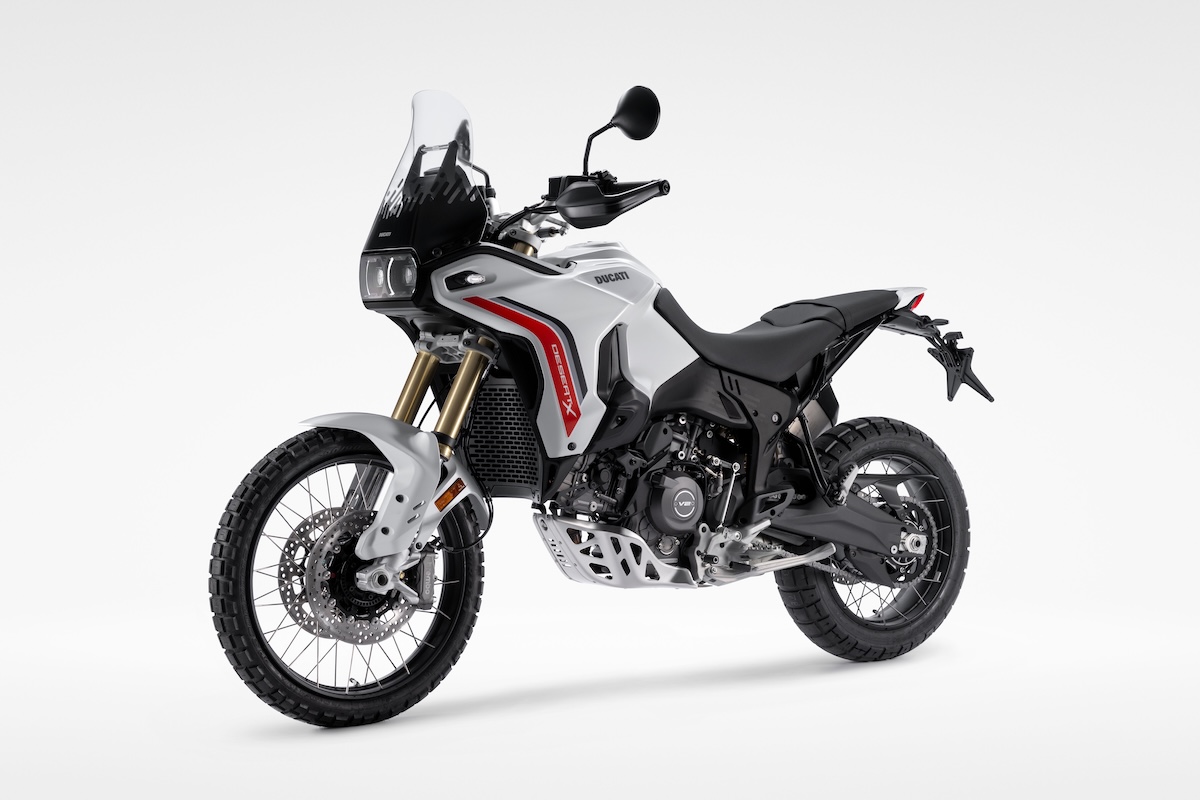
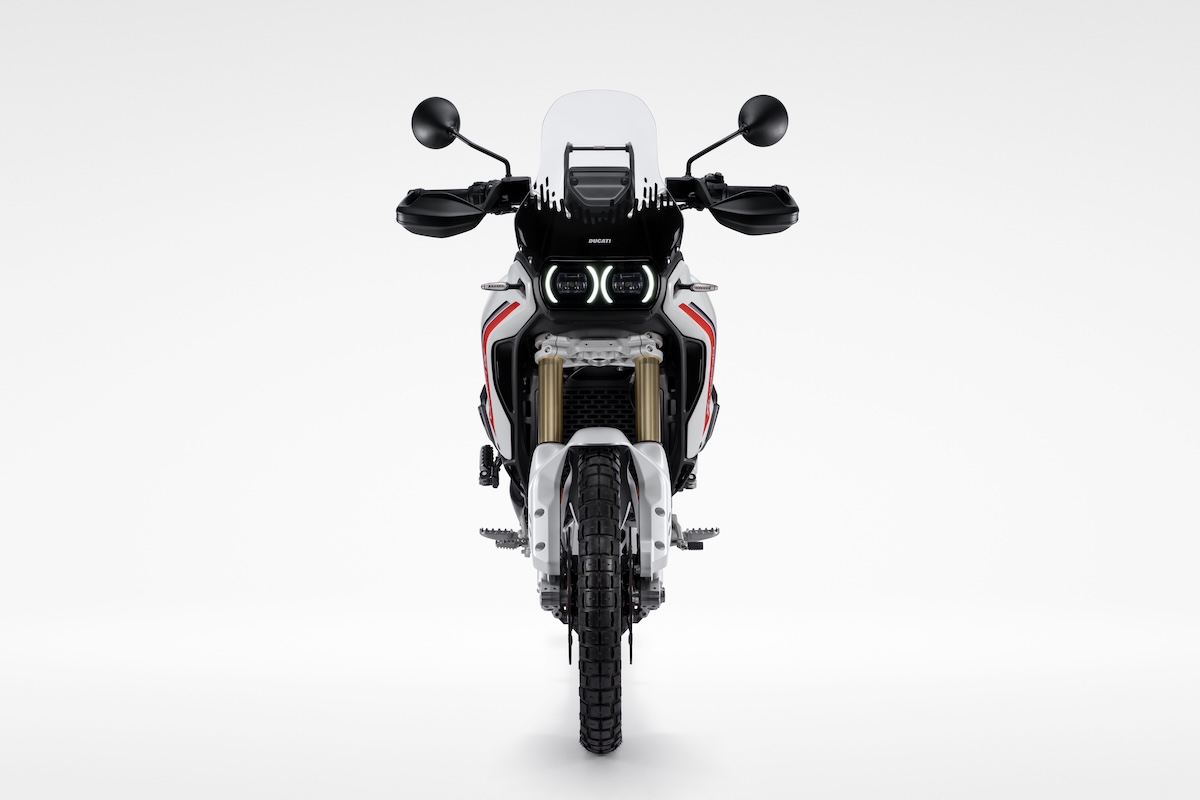
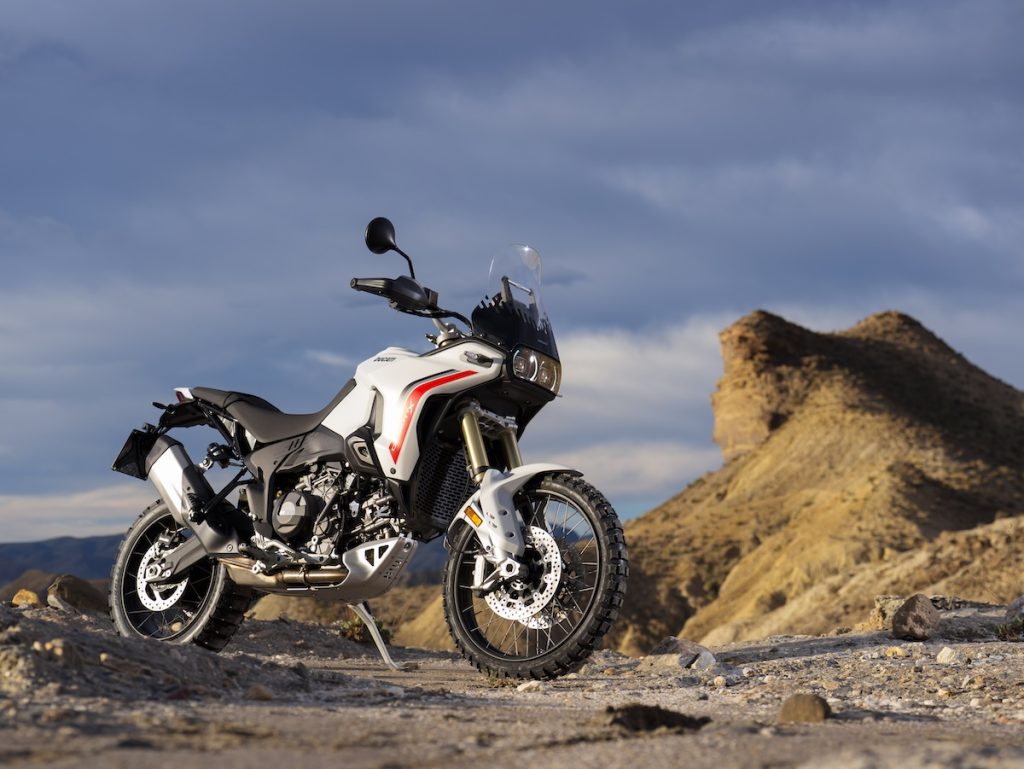
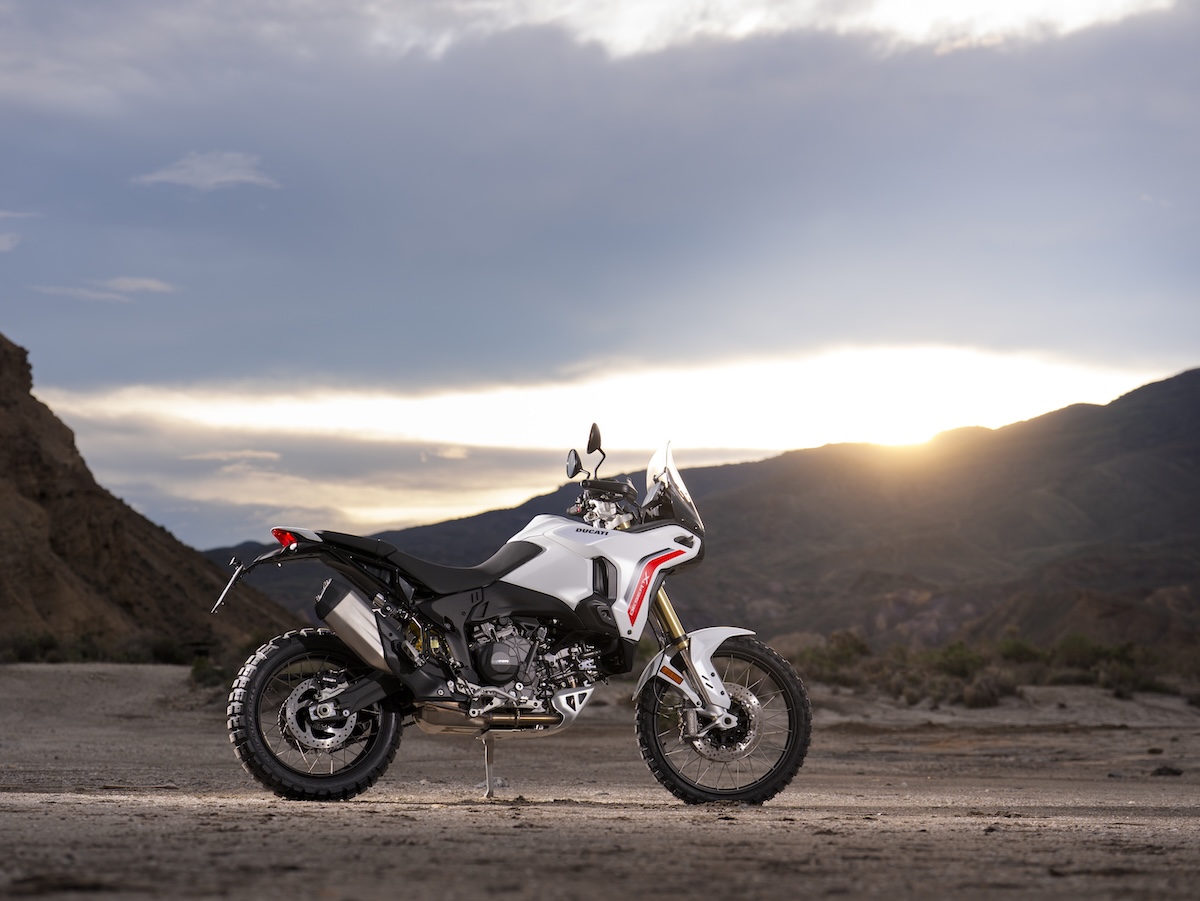
Stylistically, Ducati appears to have kept the DesertX identity intact while making it leaner and more technical. The front end is 20 mm lower for a more dynamic look, the side profile and lighting reinterpret the previous model in a more modern way, and details like airflow ducts for thermal comfort and the slimmer tank reinforce the “form follows function” design approach. The tail is minimal and technical, with provisions for accessories such as an auxiliary tank, passenger grab rail, and side case frames, while leaving key mechanical elements visible. The Ducati DesertX V2 is offered in Matt Star White Silk, and from a design perspective, that livery suits the machine’s rally-adventure personality perfectly.
Ducati also outlines a strong catalog of Ducati Performance accessories, which adds real versatility. Riders can increase range with an 8-liter rear auxiliary tank, add protection with radiator guards and a bull bar, improve touring comfort with a larger plexiglass and reinforced hand guards, and choose between aluminum panniers or a Mosko Moto-developed soft luggage kit. There are also tech upgrades, such as Ducati Multimedia System and turn-by-turn navigation, plus a Termignoni-approved silencer with titanium liners and carbon end caps for riders who want a bit more soundtrack and style.
As for pricing and availability, Ducati lists the Ducati DesertX V2 at an MSRP of $16,995. European dealership arrivals begin in April 2026, with United States distribution continuing in May 2026. For a fully redesigned, electronics-rich, off-road-capable Ducati adventure machine with this level of chassis and suspension hardware, that pricing positions the Ducati DesertX V2 as a very serious contender in the premium middleweight-to-maxi ADV conversation.
About The Author
Discover more from SportBikes Inc Magazine
Subscribe to get the latest posts sent to your email.